
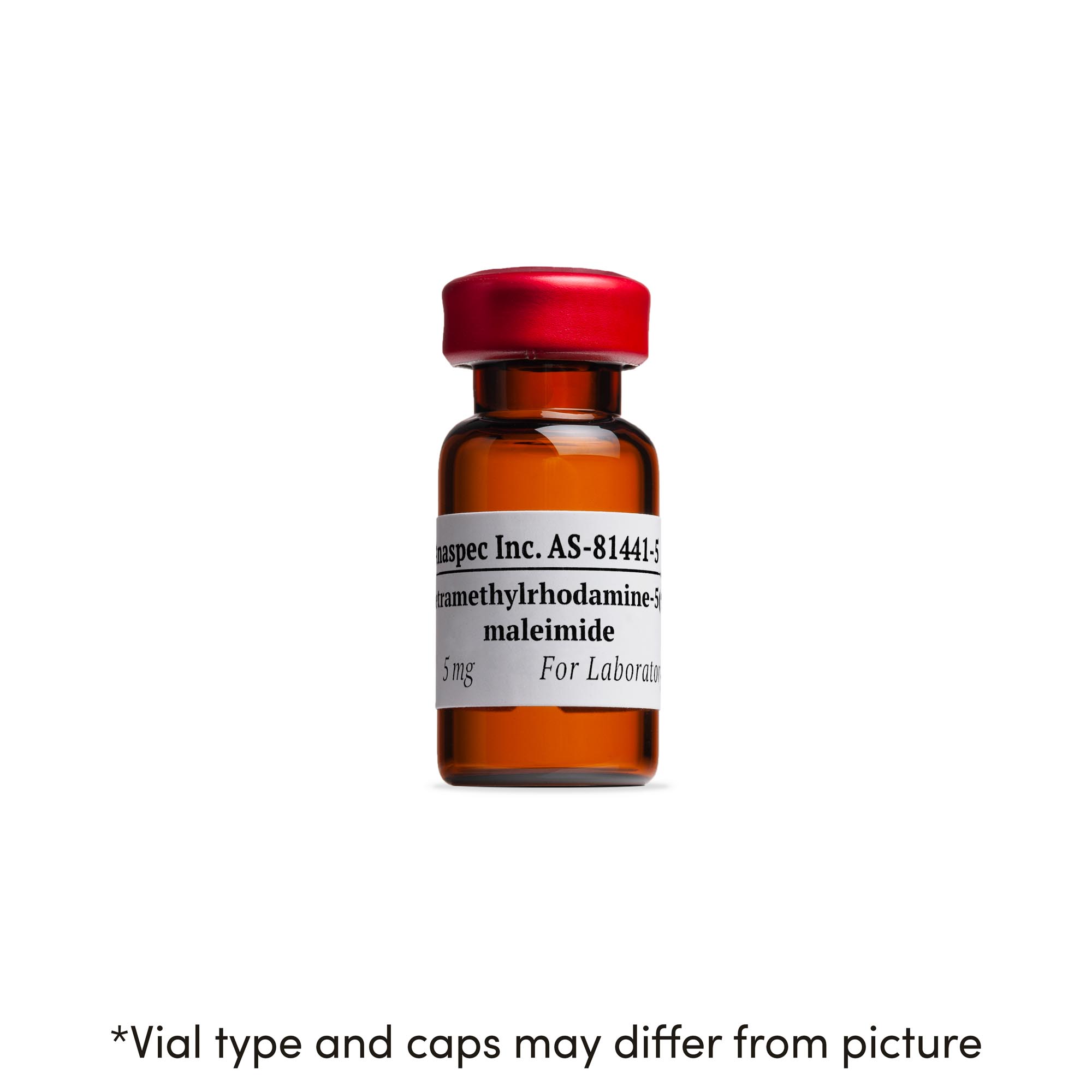
Tetramethylrhodamine-5-(and-6) C2 maleimide
Price range: $210.00 through $772.00
Tetramethylrhodamine-5-(and-6) C2 maleimide can be used for thiol modification of proteins, antibodies and peptides.
Overview
Tetramethylrhodamine-5-(and-6) C2 maleimide is an effective choice for enhancing your research with protein, antibody, and peptide thiol modifications. With its excitation and emission wavelengths of 544 nm and 572 nm respectively, this product serves as a superb alternative to traditional tetramethylrhodamine-5-(and-6)-maleimide. By offering very similar spectral characteristics, only 2 nm apart, this C2 variant allows you to achieve high-quality results at a significantly lower cost, about 40% less than its predecessor.
When you incorporate Tetramethylrhodamine-5-(and-6) C2 maleimide into your labeling processes, you can rely on high levels of fluorescence for precise detection in various assays. The compatibility of this compound with a wide range of thiol-containing biomolecules unlocks numerous applications in both research and diagnostic settings. Whether you’re aiming to track proteins in complex mixtures or conduct quantitative analysis, this product is your reliable partner for clear and consistent results.
Key Features
- Excitation/Emission wavelengths: 544/572 nm
- Cost-effective compared to traditional tetramethylrhodamine derivatives
- Ideal for thiol modification in proteins, antibodies, and peptides
- Excellent fluorescence properties for enhanced detection
- Versatile applications in research and diagnostics
Specifications
| Property | Details |
|---|---|
| Product Name | Tetramethylrhodamine-5-(and-6) C2 maleimide |
| Category | Orange (565-620 nm) |
| Price | Competitive pricing |
FAQ
How do I use Tetramethylrhodamine-5-(and-6) C2 maleimide?
To use this product, simply follow standard protocols for thiol labeling. Ensure that your proteins, antibodies, or peptides are in a compatible buffer, and then introduce the maleimide for optimal labeling.
What are the advantages over other labeling dyes?
This C2 maleimide provides similar spectral properties to the standard tetramethylrhodamine at a reduced cost, making it a practical choice for many applications. Its fluorescence intensity also helps to achieve better detection results.
Can it be used for multiplex assays?
Yes, Tetramethylrhodamine-5-(and-6) C2 maleimide can be effectively used in multiplex assays alongside other fluorescent dyes, including those from our CyLyte range, such as CyLyte Fluor 3, acid and CyLyte Fluor 3, NHS ester.
For those interested in specific applications or additional fluorescent options, check out our collection of orange fluorescent labeling dyesincluding products like 5(6)-TAMRA.
| Size | 25 mg, 5 mg |
|---|
Be the first to review “Tetramethylrhodamine-5-(and-6) C2 maleimide”
Related products
Orange (565-620 nm)
Orange (565-620 nm)
5(6)-TAMRA [5-(and-6)-Carboxytetramethylrhodamine] “Formulated”
Orange (565-620 nm)
5-TAMRA cadaverine [Tetramethylrhodamine-5-carboxamide cadaverine] – 5 mg
Reviews
There are no reviews yet.