
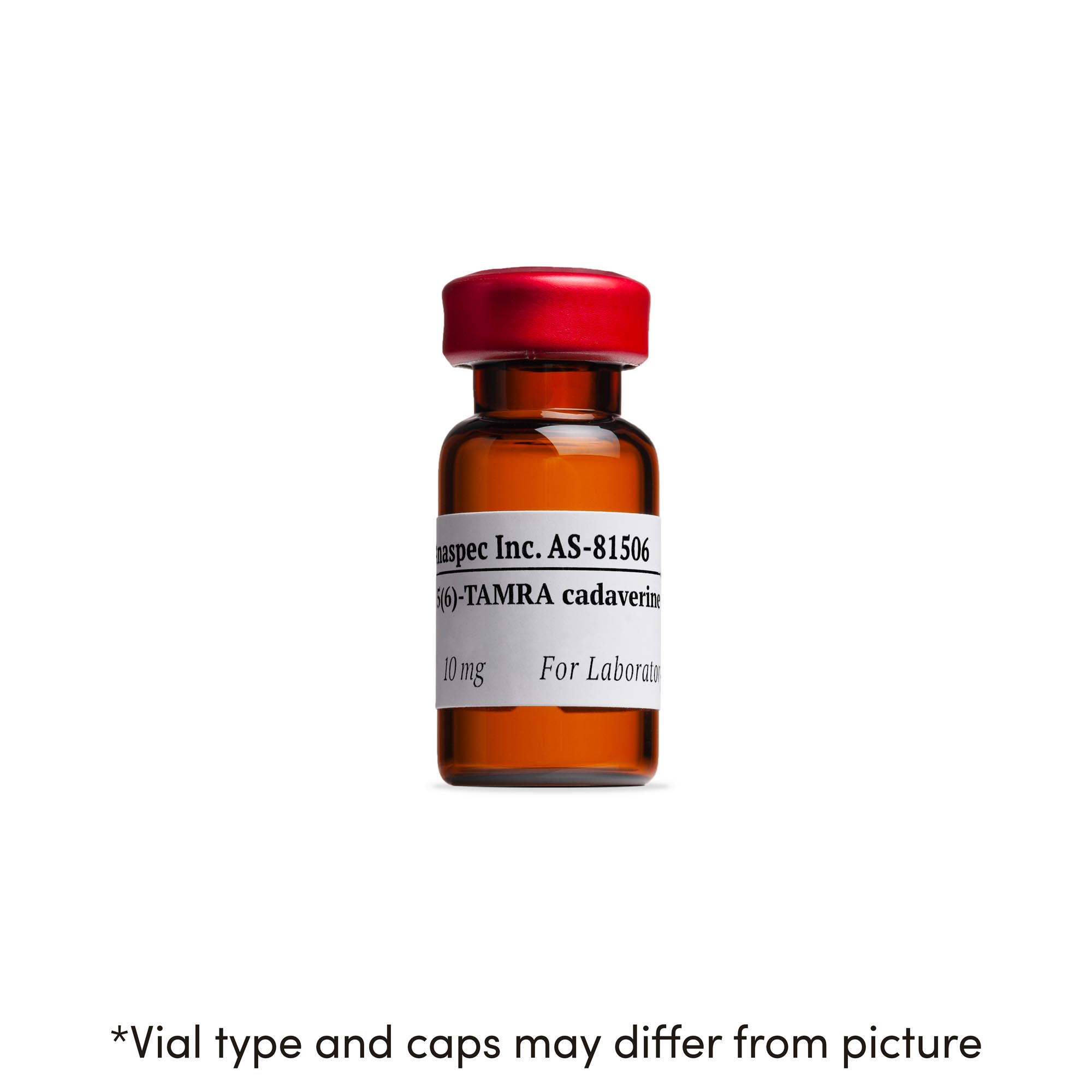
5(6)-TAMRA cadaverine [Tetramethylrhodamine 5-(and-6)-carboxamide cadaverine] – 10 mg
$290.00
5(6)-TAMRA cadaverine is a useful reagent for modifying carboxy groups via EDC-mediated reactions. It is a good glutamate transglutaminase substrate and a useful building block for small fluorescent molecules.
Overview
5(6)-TAMRA cadaverine is an essential reagent for scientists looking to modify carboxy groups efficiently via EDC-mediated reactions. This powerful compound acts as an excellent glutamate transglutaminase substrate and serves as a vital building block for synthesizing small fluorescent molecules. Its unique structure enables straightforward conjugation of the dye to proteins or soluble biomolecules that contain carboxylic acid, aldehyde, or ketone groups.
Key Features
- Versatile reagent for modifying carboxy groups
- Excellent substrate for glutamate transglutaminase
- Effective building block for small fluorescent molecules
- Facilitates easy conjugation to various biomolecules
- Ideal for labeling proteins and other soluble compounds
Specifications
| Product Name | 5(6)-TAMRA cadaverine |
| Weight | 10 mg |
| Color | Orange (565-620 nm) |
FAQ
What is 5(6)-TAMRA cadaverine used for?
5(6)-TAMRA cadaverine is primarily used for modifying carboxy groups in biomolecules, making it crucial for labeling proteins and other compounds to study their interactions in biochemical assays.
How does 5(6)-TAMRA cadaverine work?
This compound acts through EDC-mediated reactions that link the fluorescent dye to carboxylic acids, aldehydes, or ketones present in biomolecules, enhancing their visibility during analysis.
Can I find related products?
Absolutely! Check out our CyLyte Fluor 3, acid and CyLyte Fluor 3, NHS ester for additional fluorescent labeling options that complement 5(6)-TAMRA cadaverine.
For an extensive range of fluorescent dyes, visit our Orange (565-620 nm) collection.
Related Products
Be the first to review “5(6)-TAMRA cadaverine [Tetramethylrhodamine 5-(and-6)-carboxamide cadaverine] – 10 mg”
Related products
Orange (565-620 nm)
Reviews
There are no reviews yet.