
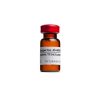
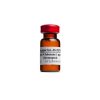
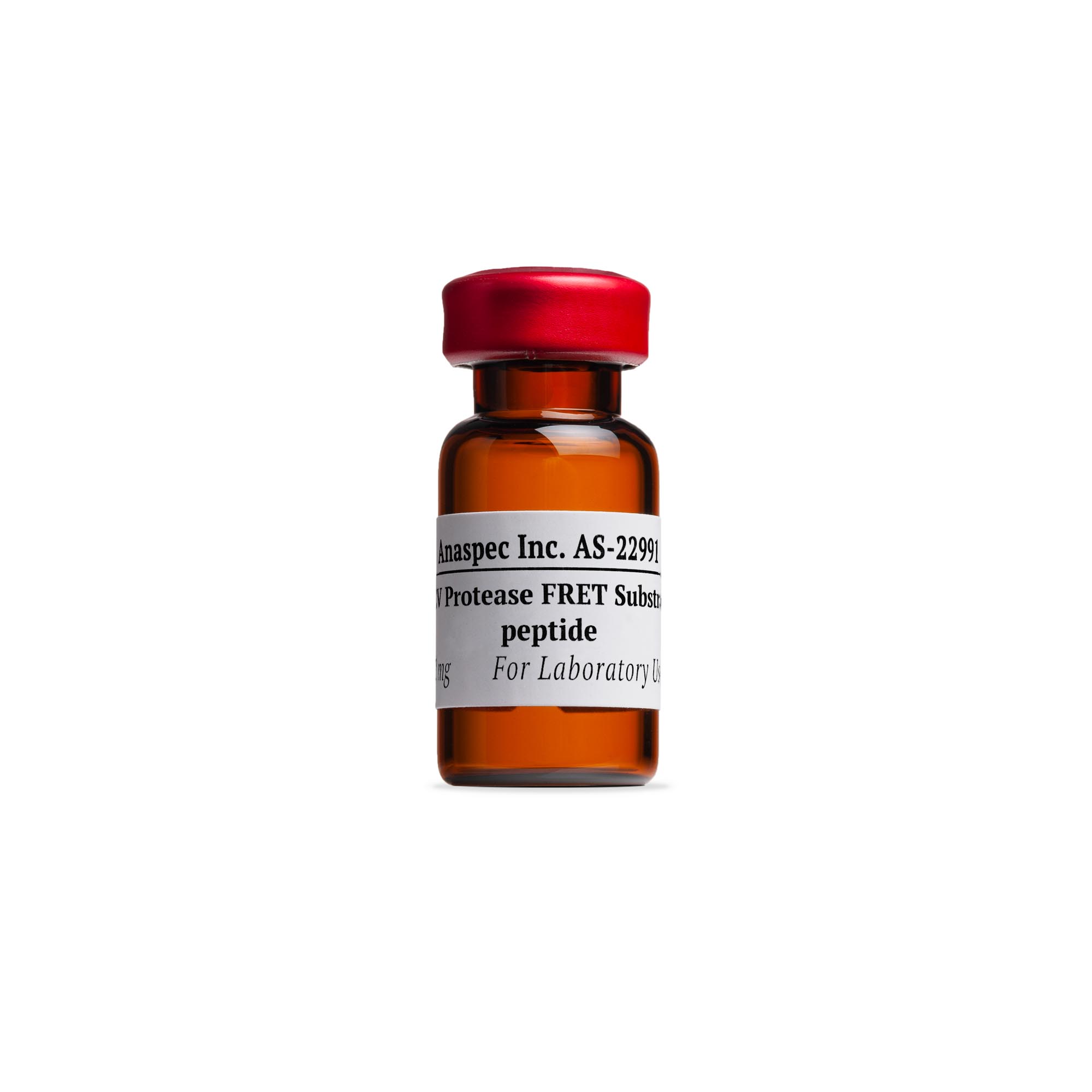
HCV Protease FRET Substrate (RET S1)
Price range: $244.00 through $26,363.00
This peptide is a HCV protease substrate, used to assay NS3 protease activity. Substrate cleavage is proportional to the enzyme concentration.
Overview
The HCV Protease FRET Substrate (RET S1) is specifically designed for assaying Hepatitis C virus (HCV) NS3 protease activity. This peptide is a highly effective substrate that features an ester bond between residues P1 and P1, allowing for efficient substrate cleavage. When you’re looking to detect NS3 protease activity with precision, this peptide provides a viable solution. Its unrivaled capability enables researchers to measure enzyme concentrations as low as subnanomolar levels while maintaining accurate results.
Key Features
- Designed for continuous assay of NS3 protease activity
- High kcat/Km values for optimal performance
- Substrate cleavage directly correlates with enzyme concentration
- Effective for detecting low concentrations of nonstructural protein 3
- Easy to use in a variety of laboratory settings
Specifications
| Property | Details |
|---|---|
| Product Type | Peptide |
| Function | HCV protease substrate |
| Application | Continuous assay |
| Detection Limit | Subnanomolar |
FAQ
What is the primary use of HCV Protease FRET Substrate (RET S1)?
This peptide is primarily intended for assaying NS3 protease activity, making it essential for research focused on Hepatitis C.
How does substrate cleavage relate to enzyme concentration?
Substrate cleavage is directly proportional to the concentration of the NS3 protease, allowing for accurate quantification of the enzyme’s activity.
Can this substrate detect low levels of the NS3 protease?
Yes, the HCV Protease FRET Substrate (RET S1) can detect NS3 protease concentrations as low as subnanomolar.
For further research on protease substrates, explore products like PKG Substrate and Autocamtide-2. You can also check out our extensive range of peptides for diverse applications.
Related Products
| Size | 0.25 mg, 1 mg, 100 mg, 50 mg |
|---|
Be the first to review “HCV Protease FRET Substrate (RET S1)”
Related products
Peptides
Peptides
Peptides
Peptides
Reviews
There are no reviews yet.