
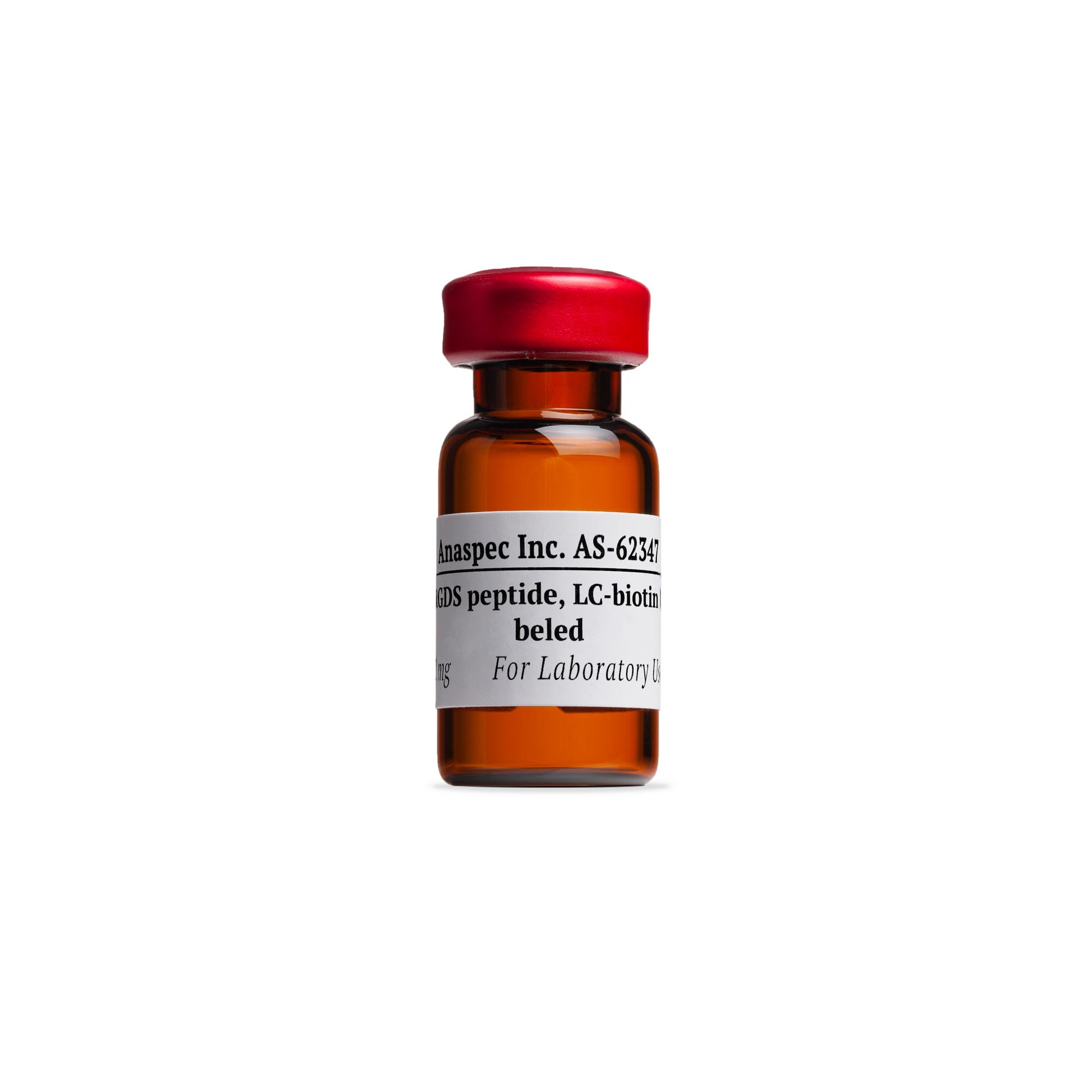
GRGDS, LC-biotin labeled – 1 mg
$113.00
GRGDS, LC-biotin labeled, RGD-containing synthetic peptides are known to inhibit attachment of endothelial cells to substrates.
Overview
The GRGDS, LC-biotin labeled peptide is a powerful tool for researchers focusing on cellular interactions and angiogenesis inhibition. This synthetic peptide contains the amino acid sequence Arg-Gly-Asp (RGD), a well-known motif involved in the interaction between extracellular matrix (ECM) molecules and cell membrane receptors. By blocking the attachment of endothelial cells to substrates, GRGDS provides significant insights into angiogenesis and cellular behavior.
Key Features
- Contains the effective RGD motif essential for cell adhesion research.
- Biotin labeling facilitates easy detection and quantification.
- Inhibits angiogenesis, making it ideal for vascular biology studies.
- High purity, suitable for a variety of experimental applications.
- Available in a convenient 1 mg package for your research needs.
Specifications
| Catalog Number | GRGDS-1MG |
| Form | Lyophilized powder |
| Storage | -20°C |
| Purity | ≥95% by HPLC |
FAQ
What research applications can I use the GRGDS peptide for?
You can use GRGDS for a variety of applications, including studies on cell adhesion, migration, and angiogenesis. The peptide mimics cellular binding sites, allowing researchers to investigate ECM interactions and related cellular processes.
How should I store the GRGDS peptide?
For optimal stability, store the GRGDS LC-biotin labeled peptide at -20°C. Proper storage extends the shelf life and ensures the peptide remains effective for your research.
Is the GRGDS peptide suitable for in vivo studies?
The GRGDS peptide can be used in vitro and is often applied to cell cultures. While some studies also explore in vivo applications, it is essential to consider the specific experimental design and any potential effects on biological systems.
If you’re looking to enhance your research toolkit with high-quality peptides, explore our complete range of peptides. You can also check out products like Autocamtide-2 or CREBtide for additional options tailored to your research needs.
Related Products
Be the first to review “GRGDS, LC-biotin labeled – 1 mg”
Related products
Peptides
Peptides
Reviews
There are no reviews yet.