
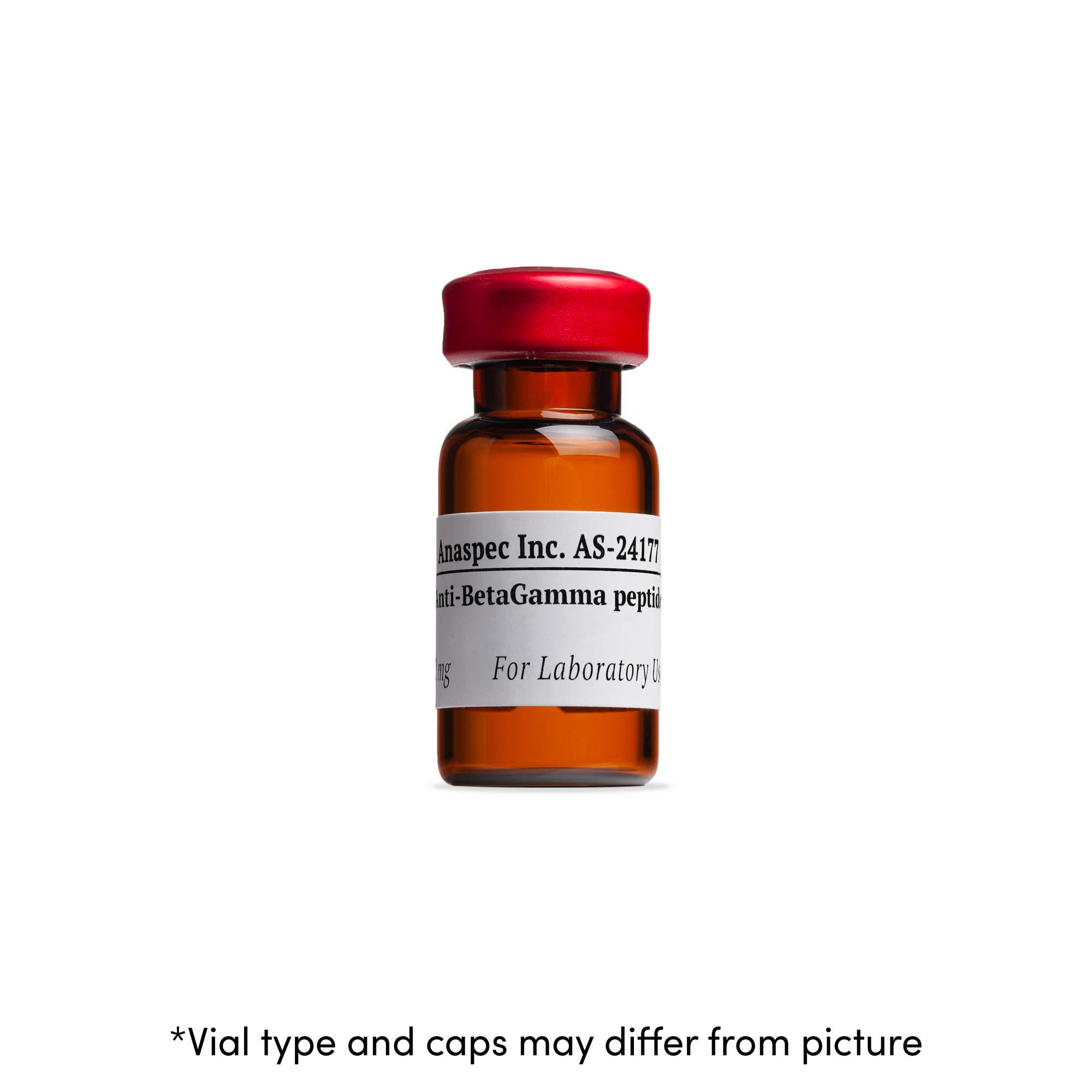
Anti-BetaGamma (MPS-Phosducin-like protein C terminus)
Price range: $327.00 through $582.00
This is anti-BetaGamma (MPS-Phosducin-like protein C terminus) membrane-permeable phosphoducin-like peptide, whose MP sequence is derived from PhLP .
Overview
The Anti-BetaGamma (MPS-Phosducin-like protein C terminus) is a specialized peptide designed to interact with Gβγ-mediated signaling pathways. This membrane-permeable phosphoducin-like peptide is derived from the C-terminal residues of phosducin-like protein (PhLP), allowing it to effectively modulate important cellular processes. Its unique structure facilitates the binding to Gβγ, playing a crucial role in regulating G protein-coupled receptor activity and enhancing your research in neurobiology and pharmacology.
Key Features
- Membrane-permeable for efficient cellular uptake.
- Inhibits Go GTPase activity to impact signaling pathways.
- Interferes with Gβγ-enhanced rhodopsin phosphorylation by βARK.
- Derived from the C-terminal sequence of PhLP for targeted action.
- Ideal for studies in neurological and physiological contexts.
Specifications
| Product Name | Anti-BetaGamma (MPS-Phosducin-like protein C terminus) |
| Category | Peptides |
| Form | Lyophilized powder |
| Size | 1 mg |
FAQ
What research applications is this peptide suitable for?
This peptide is particularly useful for studies involving G protein signaling, especially in research focused on neurobiology and physiological signaling pathways.
How should I store the Anti-BetaGamma peptide?
The peptide should be stored at -20°C for long-term stability. It’s best to avoid repeated freeze-thaw cycles to maintain its integrity.
Can this peptide be used in vivo?
Yes, the membrane-permeable nature of this peptide allows for potential in vivo applications, making it a valuable tool for understanding complex biological processes.
Enhance your research capabilities and explore the benefits of this specialized anti-BetaGamma peptide. Learn more about our range of reliable peptides available at AnaSpec. Whether you’re studying G protein signaling or investigating neurological pathways, this peptide can support your endeavors. Shop now and elevate your experiments to new heights!
Related Products
| Size | 0.5 mg, 1 mg |
|---|
Be the first to review “Anti-BetaGamma (MPS-Phosducin-like protein C terminus)”
Related products
Peptides
Peptides
Reviews
There are no reviews yet.