
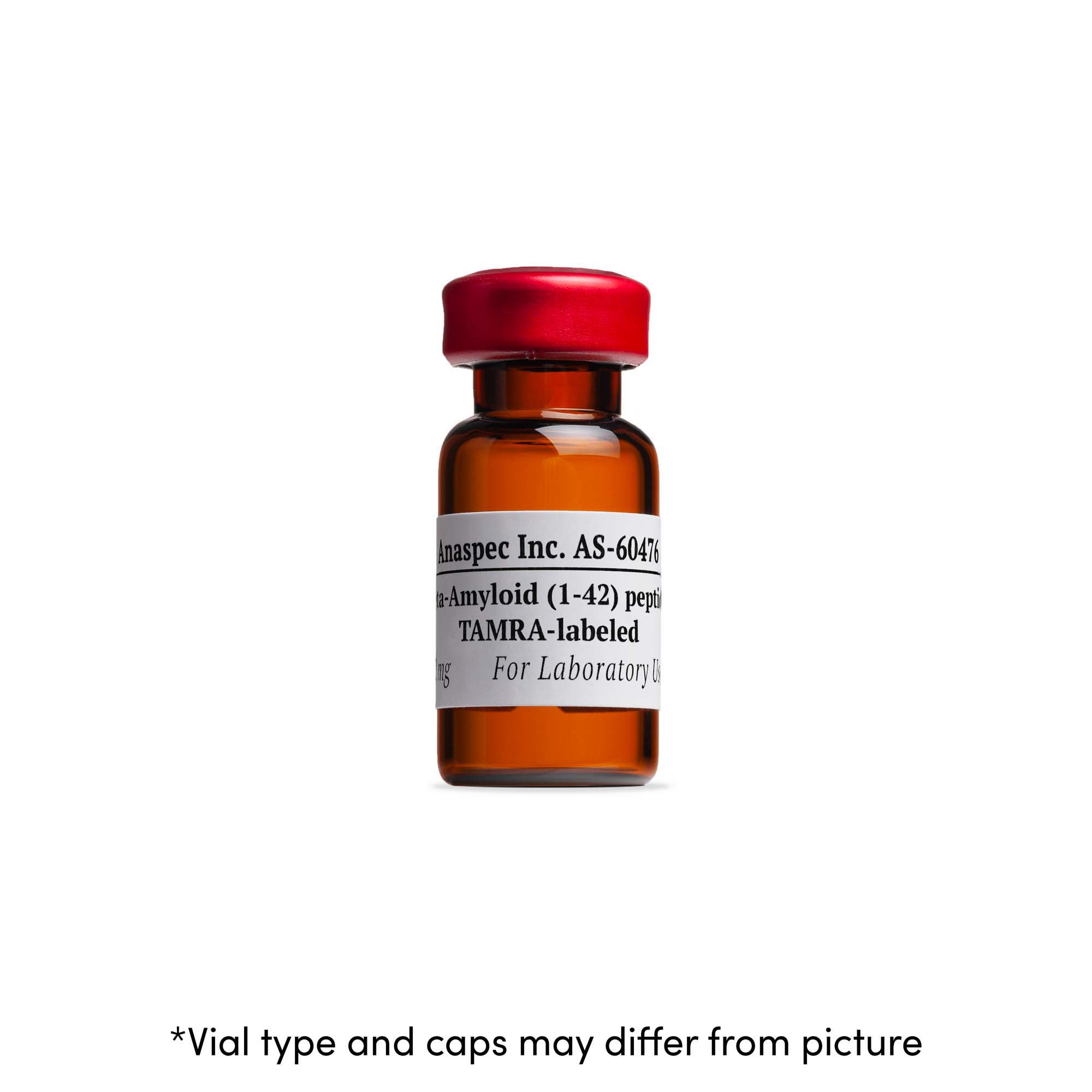
Beta-Amyloid (1-42), TAMRA-labeled – 0.1 mg
$340.00
Beta-Amyloid (1-42), TAMRA-labeled. Aß (1-42), a major component of amyloid plaques, accumulates in neurons of Alzheimer’s disease brains.
Overview
The Beta-Amyloid (1-42), TAMRA-labeled peptide is an essential tool for researchers studying Alzheimer’s disease. This peptide, known as Aß (1-42), is a significant component of amyloid plaques that accumulate in the neurons of Alzheimer’s brains. By investigating the accumulation of Aß (1-42), you can gain insights into the biochemical processes associated with Alzheimer’s pathology and its role in neurodegeneration.
Key Features
- High-quality TAMRA-labeled peptide for enhanced detection
- Specific focus on Aß (1-42), crucial for Alzheimer’s research
- Fluorescent properties with Abs/Em = 544/572 nm
- Reliable for various biochemical and analytical applications
- Available in a convenient 0.1 mg size
Specifications
| Property | Value |
|---|---|
| Peptide Sequence | Aß (1-42) |
| Labeling Dye | TAMRA |
| Fluorescent Absorption/Emission | 544/572 nm |
| Size | 0.1 mg |
FAQ
What is the significance of Aß (1-42) in Alzheimer’s research?
Aß (1-42) is a major protein fragment that forms amyloid plaques in the brains of Alzheimer’s patients, making it critical for studying the disease’s pathology and progression.
How can I use the Beta-Amyloid (1-42), TAMRA-labeled peptide?
This peptide can be utilized in various assays, including fluorescence-based detection techniques, allowing for the exploration of amyloid plaque formation and aggregation.
Where can I find more peptides suitable for similar studies?
You can browse our extensive range of peptides, such as PKG Substrate and Autocamtide-2to find additional options for your research needs.
For any researcher focused on Alzheimer’s disease, purchasing the Beta-Amyloid (1-42), TAMRA-labeled peptide is a strategic choice. This product brings both quality and precision to your experiments, reinforcing your research in neurodegenerative conditions.
Related Products
Browse more in Peptides.
Be the first to review “Beta-Amyloid (1-42), TAMRA-labeled – 0.1 mg”
Related products
Peptides
Peptides
Reviews
There are no reviews yet.