
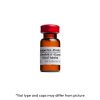
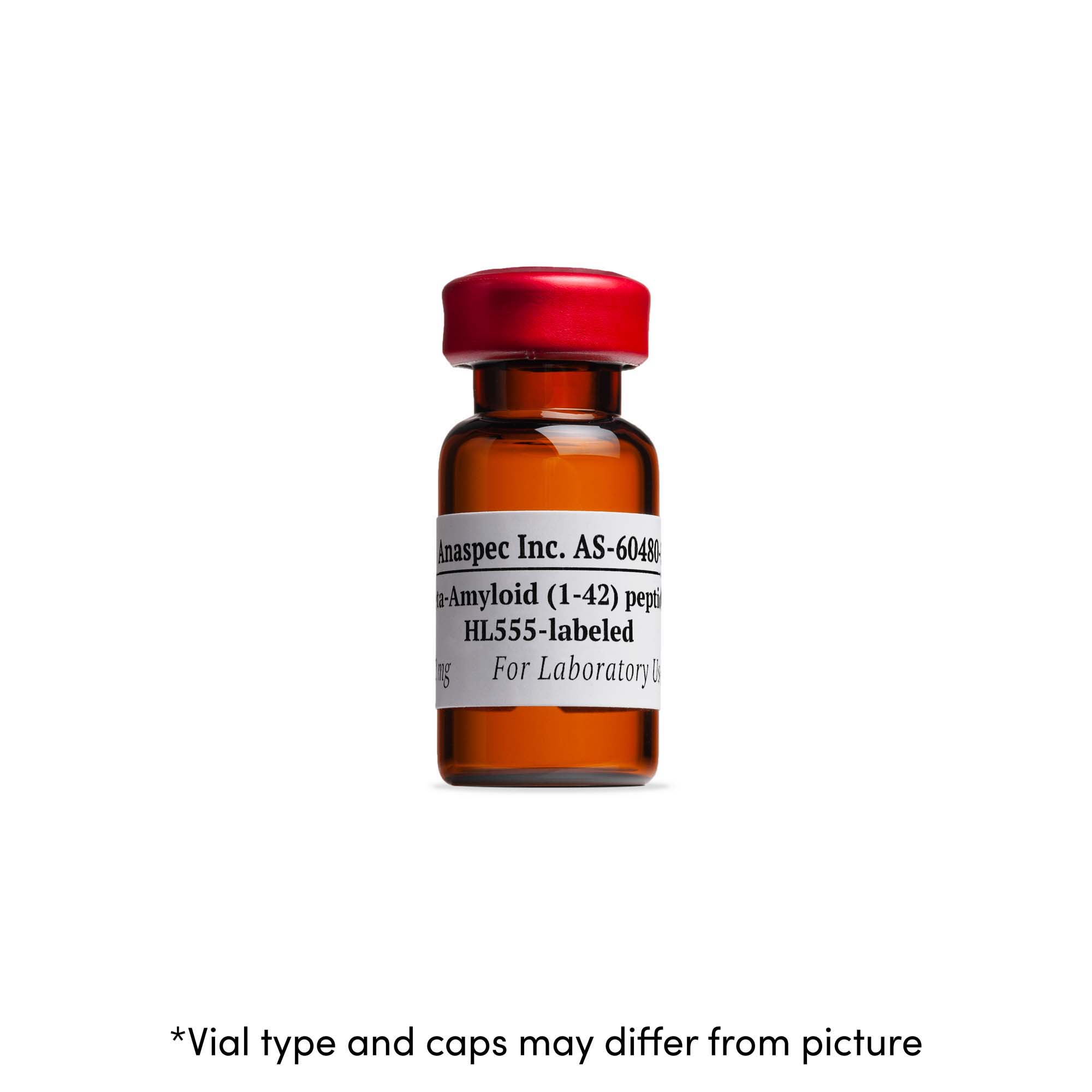
Beta-Amyloid (1-42), HiLyte™ Fluor 555-labeled – 0.1 mg
$327.00
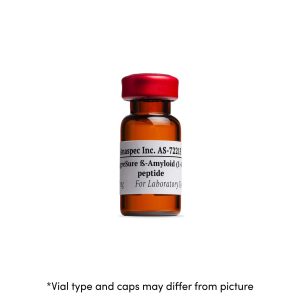
Beta-Amyloid (1-42), HiLyte™ Fluor 555-labeled. Aß (1-42), a major component of amyloid plaques, accumulates in neurons of Alzheimer’s disease brains.
Overview
Beta-Amyloid (1-42), HiLyte™ Fluor 555-labeled is a vital peptide used in Alzheimer’s research. This peptide plays a pivotal role in understanding the pathology of Alzheimer’s disease, specifically due to its association with amyloid plaques found in affected brains. Accumulation of Aß (1-42) in neurons leads to oxidative stress and neuroinflammation, contributing to cognitive decline. By utilizing our fluorescently labeled version of this peptide, researchers can visualize and quantify its presence in biological samples, making it an indispensable tool for those studying neurodegenerative diseases.
Key Features
- HiLyte™ Fluor 555 labeling for enhanced fluorescence detection
- Specifically targets Aß (1-42), a major Alzheimer’s disease biomarker
- Facilitates research on neurodegenerative mechanisms
- Generated for high purity and stability
- Ideal for multiplex assays and advanced imaging techniques
Specifications
| Product Name | Conjugate | Quantity |
|---|---|---|
| Beta-Amyloid (1-42) | HiLyte™ Fluor 555 | 0.1 mg |
FAQ
What is the significance of Aß (1-42) in Alzheimer’s research?
Aß (1-42) is considered one of the key components of amyloid plaques, which are hallmark features of Alzheimer’s disease. Understanding its dynamics helps in developing potential therapeutic strategies.
How can I use the HiLyte™ Fluor 555-labeled peptide?
This peptide can be utilized in a variety of applications, including but not limited to, fluorescence microscopy, ELISA, and flow cytometry. Its fluorescent properties allow for effective visualization in experimental assays.
Can I combine this peptide with other assays?
Yes, the HiLyte™ Fluor 555-labeled Beta-Amyloid (1-42) can be used in conjunction with other fluorescent labels, such as the ones found in our PKG Substrate or Autocamtide-2to study multiple targets simultaneously.
Explore our full range of peptides to enhance your research capabilities further.
Related Products
Be the first to review “Beta-Amyloid (1-42), HiLyte™ Fluor 555-labeled – 0.1 mg”
Related products
Peptides
Reviews
There are no reviews yet.