
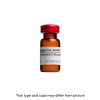
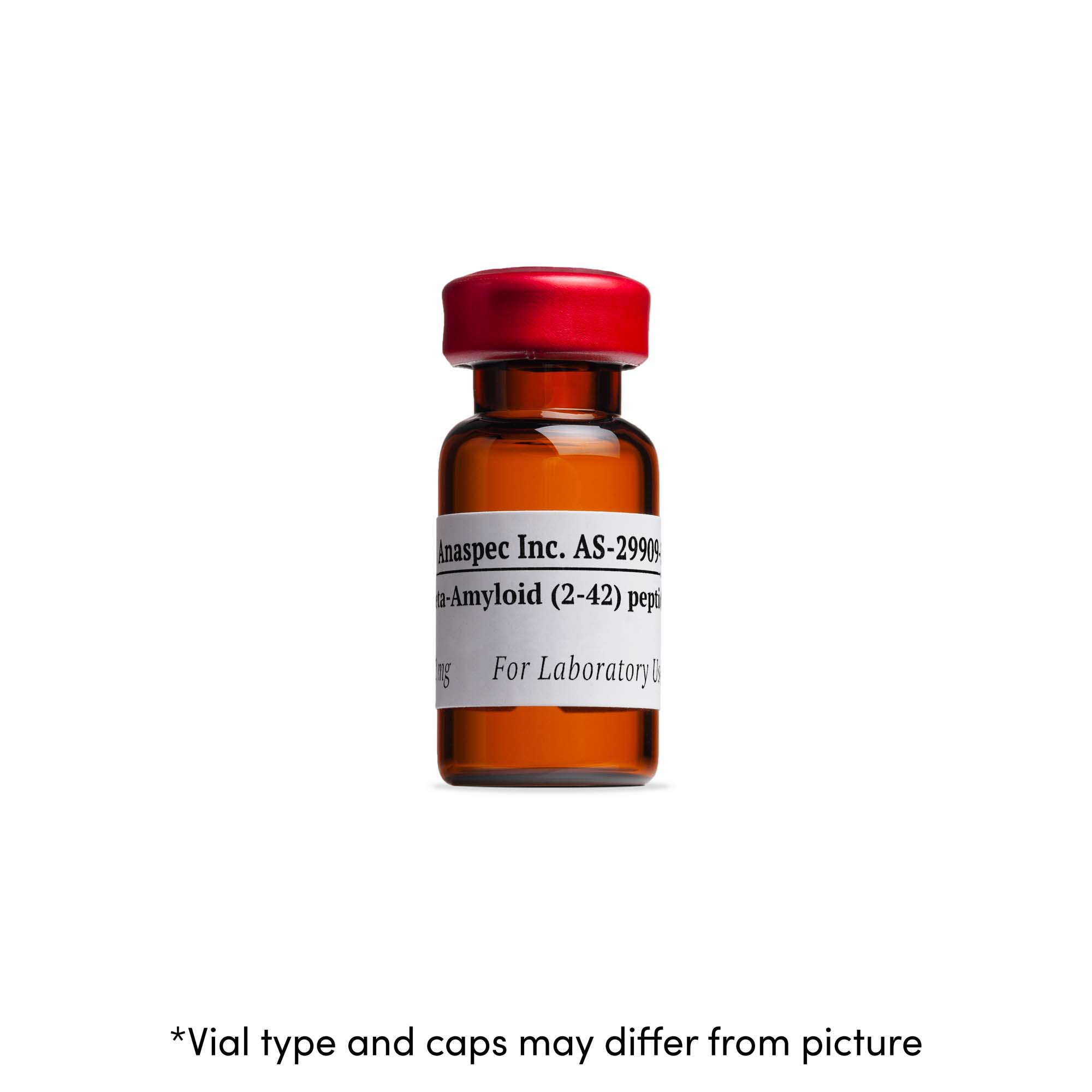
Beta-Amyloid (2-42)
Price range: $131.00 through $648.00
This peptide Beta-Amyloid (2-42), N-terminally truncated form. Supplementing media with N-terminally truncated Aß induce phagocytosis by human monocytes.
Overview
The Beta-Amyloid (2-42) peptide, a N-terminally truncated form of beta-amyloid, plays a crucial role in neuroscience research and is vital for studying Alzheimer’s disease mechanisms. When media is supplemented with this peptide, it has been shown to induce phagocytosis in human monocytes, highlighting its importance in immune response studies. This makes it an essential component for researchers working on neurodegenerative disorders.
Key Features
- N-terminally truncated form of beta-amyloid (2-42)
- Induces phagocytosis by human monocytes
- Crucial for Alzheimer’s disease research
- Available in various quantities for flexible purchasing
- Compatible with numerous assay applications
Specifications
| Product Name | Form | Purity | Storage |
|---|---|---|---|
| Beta-Amyloid (2-42) | Lyophilized powder | ≥95% | -20°C |
FAQ
What is the significance of the Beta-Amyloid (2-42) peptide?
This peptide is significant because it helps researchers understand the role of beta-amyloid in Alzheimer’s disease, particularly how N-terminal truncation affects cellular responses.
How can I use this peptide in my experiments?
You can use Beta-Amyloid (2-42) in various assays to study immune responses, particularly the activation of phagocytosis in monocytes. For related applications, consider looking into our PKG Substrate.
Is there a recommended storage condition for this peptide?
It is recommended to store Beta-Amyloid (2-42) at -20°C to maintain its stability and effectiveness for your experiments.
Adding Beta-Amyloid (2-42) to your research toolkit will provide you with a powerful tool for advancing your studies in neurological disorders. Explore our complete range of peptides to find more products that can enhance your research capabilities.
Related Products
| Size | 0.1 mg, 1 mg |
|---|
Be the first to review “Beta-Amyloid (2-42)”
Related products
Peptides
Peptides
Peptides
Peptides
Peptides
Reviews
There are no reviews yet.