
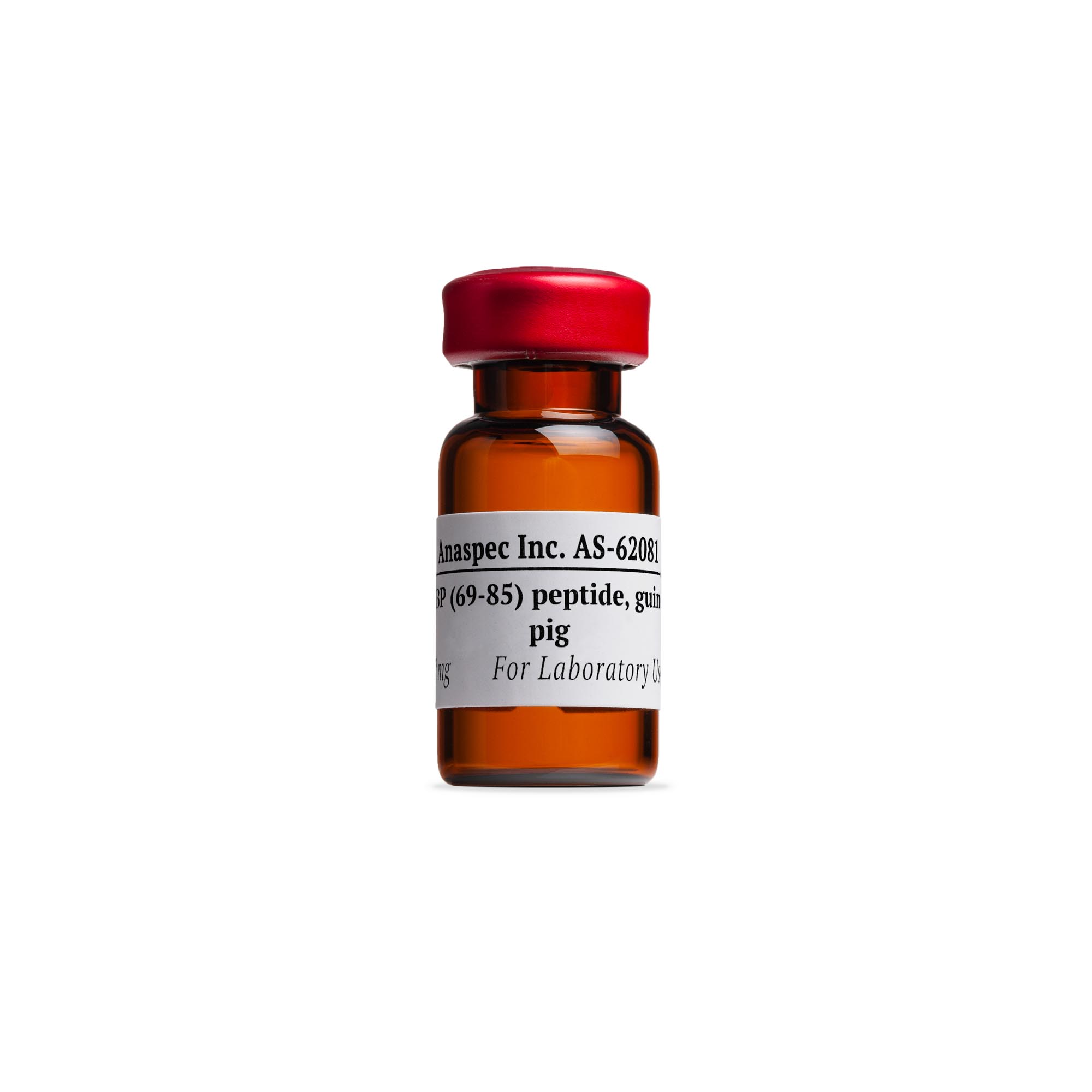
MBP (69-85), guinea pig – 1 mg
$148.00
MBP (69-85), guinea pig, myelin basic protein (MBP) encephalitogenic epitope used to induce experimental autoimmune encephalomyelitis (EAE) in rats.
Overview
The MBP (69-85) peptide, derived from guinea pig myelin basic protein (MBP), is critical for research in neurological disorders. This specific sequence corresponds to the encephalitogenic epitope, which is instrumental in inducing experimental autoimmune encephalomyelitis (EAE) in rats. EAE serves as a significant model for studying multiple sclerosis and related demyelinating diseases. Its relevance in immunology and neurobiology makes it an essential component for scientists exploring the complexities of autoimmune responses and neurodegeneration.
Key Features
- Originates from guinea pig myelin basic protein, ensuring reliability in research applications.
- Encodes the encephalitogenic epitope crucial for EAE induction.
- Supports the study of autoimmune disorders, particularly multiple sclerosis.
- Available in a 1 mg unit, ideal for various experimental setups.
- High purity grade to ensure consistent results in your assays.
Specifications
| Property | Details |
|---|---|
| Peptide Sequence | MBP (69-85) |
| Source | Guinea pig |
| Weight | 1 mg |
| Applications | Research, diagnostic |
FAQ
What is the purpose of the MBP (69-85) peptide?
This peptide is used primarily to induce experimental autoimmune encephalomyelitis (EAE) in rat models, providing insight into multiple sclerosis mechanisms.
Is this peptide suitable for in vivo studies?
Yes, the MBP (69-85) peptide is designed for in vivo applications, particularly in animal models to study autoimmune responses.
How can I incorporate this peptide into my research?
You can use this peptide in conjunction with PKG Substrate for various immunological assays or explore its effects alongside models like Autocamtide-2.
For more information on other related products, check out our extensive collection of peptides that can support your research requirements.
Related Products
Be the first to review “MBP (69-85), guinea pig – 1 mg”
Related products
Peptides
Reviews
There are no reviews yet.