
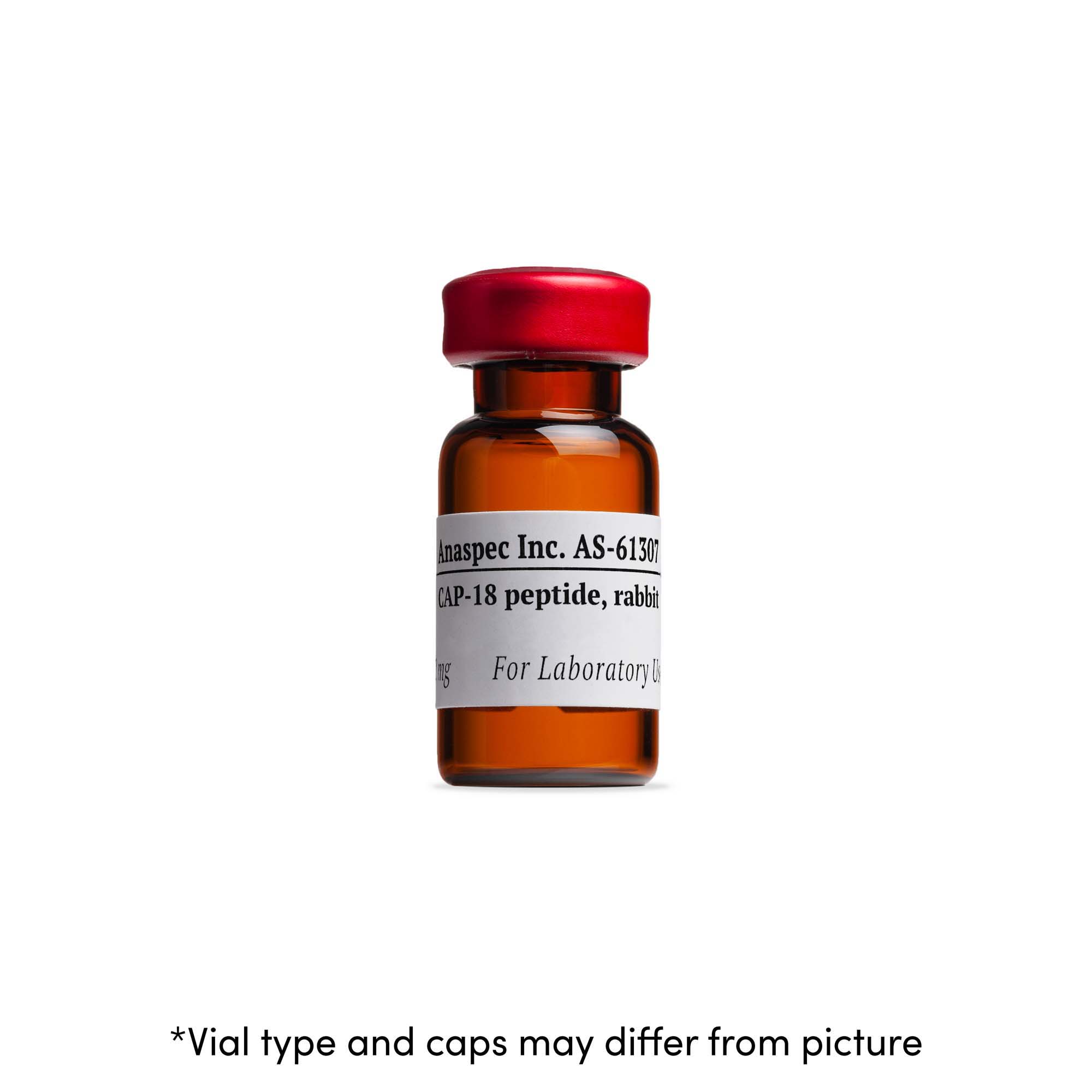
CAP-18, rabbit – 0.5 mg
$312.00
CAP-18, rabbit, antimicrobial agent in rabbits. The CAP-18 cathelicidin-derived peptide kills bacteria by disrupting the bacterial membrane.
Overview
The CAP-18 peptide, derived from rabbit cathelicidin, is a powerful antimicrobial agent designed to target and eliminate harmful bacteria. This 37-residue peptide is particularly effective at disrupting bacterial membranes, making it a promising candidate for treating bacterial infections, especially in individuals with compromised immune systems or conditions like cystic fibrosis. CAP-18 has shown significant activity against more than 20 clinical strains of Pseudomonas aeruginosaa common and challenging pathogen.
Key Features
- Effective antimicrobial properties against over 20 strains of Pseudomonas aeruginosa.
- Potential therapeutic applications for bacterial infections in immunocompromised patients.
- Derived from rabbit cathelicidin, known for its natural antibacterial function.
- Useful in research and clinical studies focused on infection control.
Specifications
| Property | Details |
|---|---|
| Peptide Sequence | CAP-18 |
| Source | Rabbit |
| Concentration | 0.5 mg |
| Category | Peptides |
FAQ
What is the main use of CAP-18?
CAP-18 is primarily used for its antimicrobial properties. It is effective in research settings for studying bacterial infections and potential treatments.
How is CAP-18 administered?
CAP-18 can be administered in various experimental setups, typically as part of in vitro studies targeting bacterial strains.
Is CAP-18 safe for use in clinical studies?
While CAP-18 shows promise, its safety and efficacy must be evaluated in clinical settings as part of research trials.
Explore our extensive range of peptides to enhance your research projects, or consider checking our PKG substrate for additional applications.
Related Products
Be the first to review “CAP-18, rabbit – 0.5 mg”
Related products
Peptides
Peptides
Peptides
Reviews
There are no reviews yet.