
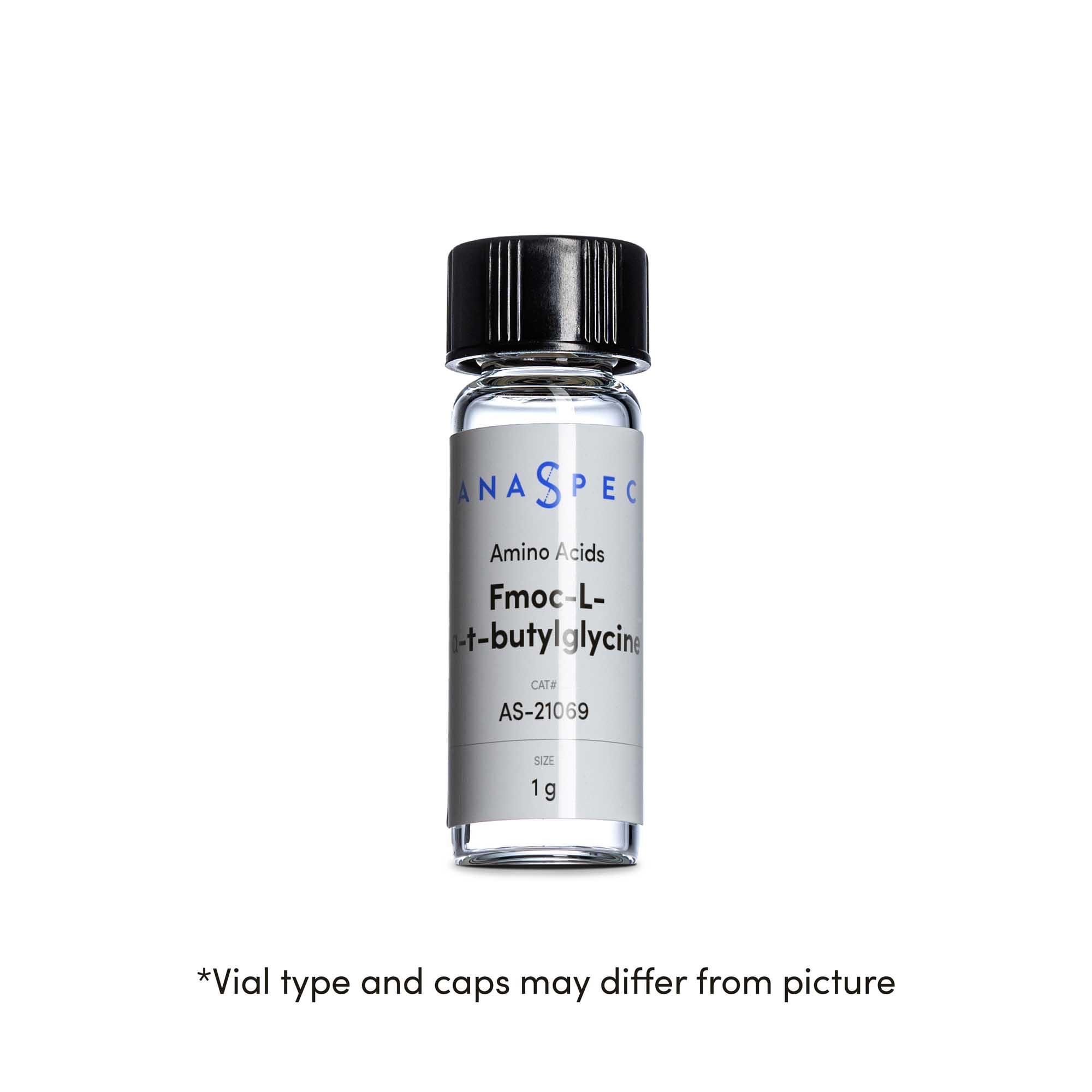
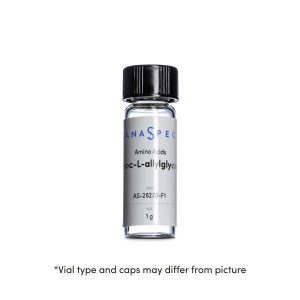
Fmoc-L-alpha-t-butylglycine – 1 g
$176.00
Fmoc-L-alpha-t-butylglycine. Analogs of Alanine, Glycine, Valine, and Leucine. Unusual Amino Acid. Reagent for peptide synthesis.
Overview
Fmoc-L-alpha-t-butylglycine is an innovative analog of classic amino acids like alanine, glycine, valine, and leucine. This unusual amino acid serves as a key reagent for peptide synthesis, allowing researchers to explore diverse biochemical pathways. With a solid understanding of how Fmoc-L-alpha-t-butylglycine functions in your experiments, you can enhance your peptide synthesis processes significantly.
Key Features
- Unique structure: This compound’s t-butyl group makes it distinct in various applications.
- Versatile reagent: Ideal for peptide synthesis and related research.
- High purity: Quality assured for reliable results in your experiments.
- Available in a convenient 1 g package: Perfect for lab-scale applications.
- Compatible with a range of peptide synthesis protocols: Flexibility for different research needs.
Specifications
| Property | Value |
|---|---|
| Product Name | Fmoc-L-alpha-t-butylglycine |
| Weight | 1 g |
| Category | Analogs of Alanine, Glycine, Valine, and Leucine |
FAQ
What is Fmoc-L-alpha-t-butylglycine used for?
Fmoc-L-alpha-t-butylglycine is primarily used as a reagent in peptide synthesis. Its unique structure allows for the incorporation of distinct properties into peptides, which can be crucial for various biochemical applications.
How does Fmoc-L-alpha-t-butylglycine compare to other amino acids?
This analog differs from traditional amino acids due to its bulky t-butyl group, which can influence the folding and stability of peptides. This characteristic makes it valuable for specific research contexts, especially where steric effects play a crucial role.
Can I use this in combination with other amino acid analogs?
Yes, Fmoc-L-alpha-t-butylglycine can be combined with other amino acid analogs to create peptides with tailored properties. You might find interest in exploring related products like Fmoc-(N-beta-allyloxycarbonyl)-L-alpha,beta-diaminopropionic acid and Fmoc-5,5,5-trifluoro-DL-leucine for various experimental needs.
For thorough research into peptide synthesis and analogs of alanine, glycine, valine, and leucine, take a look at our full catalog of related products. Understanding the diverse applications of Fmoc-L-alpha-t-butylglycine can help you maximize its potential in your specific studies.
Related Products
Browse more in Analogs of Alanine, Glycine, Valine, and Leucine.
Be the first to review “Fmoc-L-alpha-t-butylglycine – 1 g”
Related products
Analogs of Alanine, Glycine, Valine, and Leucine
Analogs of Alanine, Glycine, Valine, and Leucine
Analogs of Alanine, Glycine, Valine, and Leucine
Fmoc-(N-gamma-4-methyltrityl)-L-alpha,gamma-diaminobutyric acid – 1 g
Reviews
There are no reviews yet.