
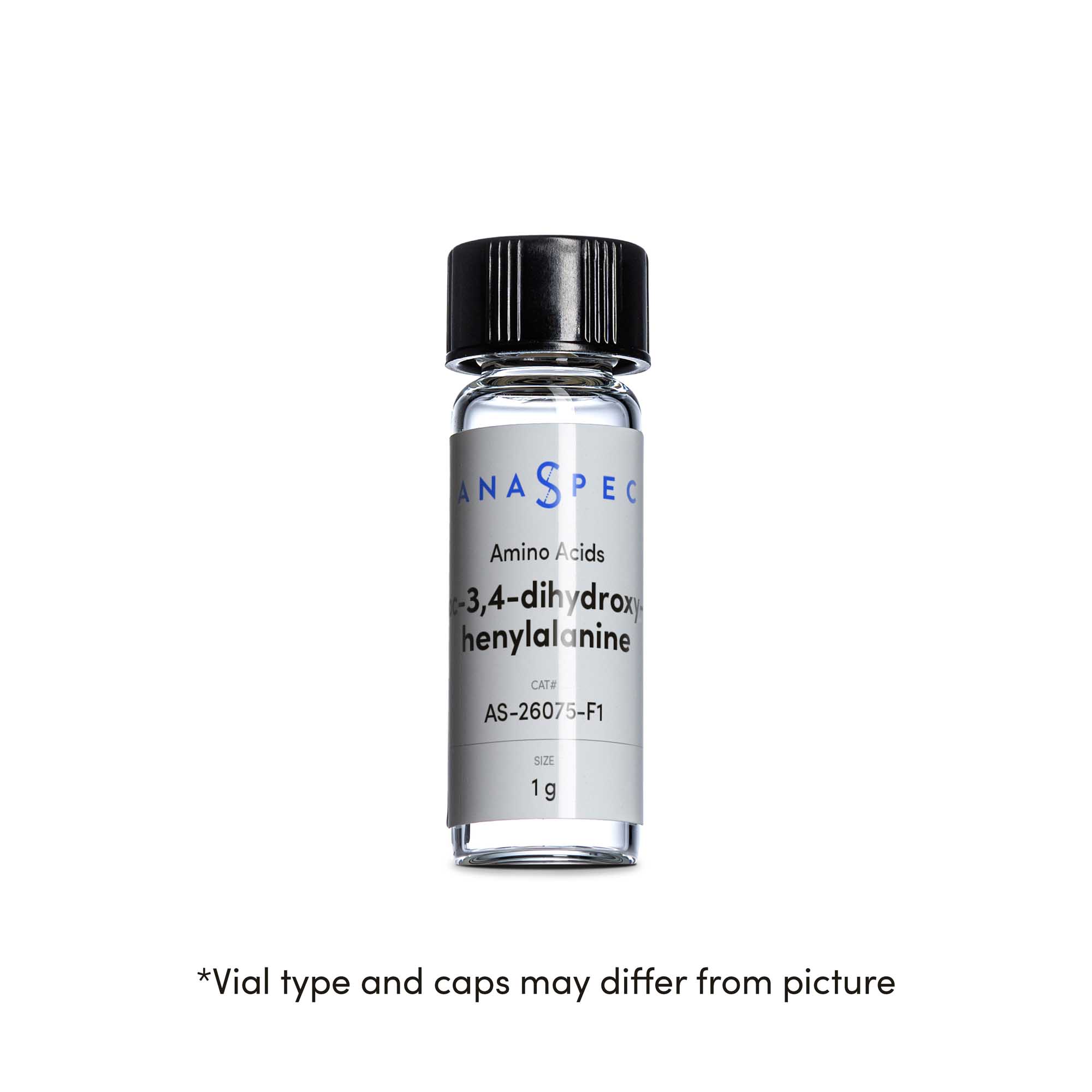
Fmoc-3,4-dihydroxy-L-phenylalanine – 1 g
$323.00
Fmoc-3,4-dihydroxy-L-phenylalanine. Analogs of Phenylalanine and Tyrosine. Unusual Amino Acid. Peptide synthesis.
Overview
Fmoc-3,4-dihydroxy-L-phenylalanine is an unusual amino acid widely used in peptide synthesis. This compound, sold in a convenient 1 g quantity, is a vital building block for researchers looking to create novel peptides with unique properties. Its distinct structure allows for various applications in chemical biology and pharmaceutical research, making it an essential item in any lab focused on protein labeling or peptide development.
Key Features
- Available in 1 g quantities for flexibility in research use.
- Specific for use in peptide synthesis, offering new avenues for protein design.
- A unique analog of phenylalanine, enhancing your research with novel functionality.
- Compatible with standard peptide synthesis protocols.
- Utilizes Fmoc protection strategy, ensuring easy removal during synthesis.
Specifications
| Catalog Number | AS-12629 |
| Purity | ≥ 98% |
| Molecular Weight | 197.19 g/mol |
| CAS Number | 159810-84-8 |
| Storage | Store at -20 °C |
FAQ
What are the applications of Fmoc-3,4-dihydroxy-L-phenylalanine?
This unusual amino acid is primarily used in peptide synthesis, allowing scientists to introduce unique functionalities into peptides, which can be pivotal in various fields like medicinal chemistry and biochemistry.
How does Fmoc protection work?
The Fmoc (Fluorenylmethyloxycarbonyl) protection strategy is commonly used in solid-phase peptide synthesis. It allows the amino group to be temporarily protected during coupling reactions, ensuring that the peptide chain is built accurately before the protection is removed.
Can I use this product in conjunction with other amino acid derivatives?
Yes, Fmoc-3,4-dihydroxy-L-phenylalanine can be used alongside other amino acid derivatives, such as Fmoc-4-benzoyl-D-phenylalanine or Fmoc-4-fluoro-L-phenylalanineto create complex peptides tailored to your specific research needs.
This product is essential for anyone looking to expand their peptide synthesis capabilities. Visit our catalog to discover more about our offerings, including other analogs of phenylalanine and tyrosine.
Related Products
Be the first to review “Fmoc-3,4-dihydroxy-L-phenylalanine – 1 g”
Related products
Analogs of Phenylalanine and Tyrosine
Reviews
There are no reviews yet.