
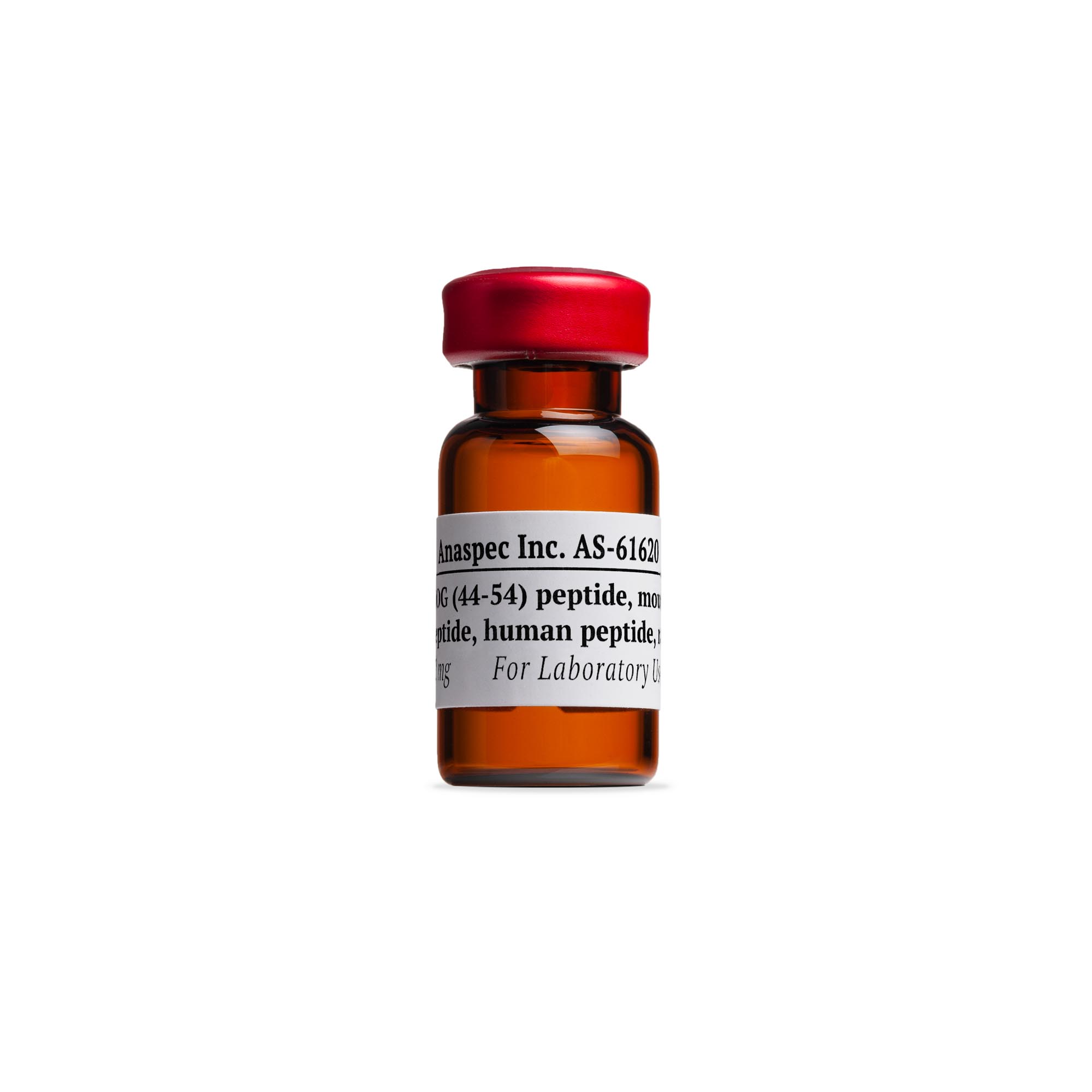
MOG (44-54), mouse, human, rat – 1 mg
$122.00
MOG (44-54) derived from myelin oligodendrocyte glycoprotein (MOG) represents core binding epitope for MOG-specific CD8+ T cells, stimulates proliferation.
Overview
Our MOG (44-54) peptide is derived from myelin oligodendrocyte glycoprotein and consists of eleven amino acids. This specific peptide is significant because it represents the core binding epitope for MOG-specific CD8+ T cells, which are crucial in immunological responses. It is functionally constant and preserved across species, including human, mouse, and rat, making it an essential tool for research into T-cell proliferation and immune response mechanisms.
Key Features
- Derived from myelin oligodendrocyte glycoprotein, amino acids 44-54
- Serves as the critical binding epitope for CD8+ MOG-specific T cells
- Stimulates T cell proliferation in vitro
- Functionally constant across species: human, mouse, rat
- Available in a 1 mg quantity for various applications
Specifications
| Product Name | MOG (44-54) |
| Format | Peptide |
| Size | 1 mg |
| Species | Human, Mouse, Rat |
FAQ
What is the role of MOG (44-54) in T cell activation?
The MOG (44-54) peptide acts as a key binding site for MOG-specific CD8+ T cells, facilitating their activation and subsequent proliferation.
Can MOG (44-54) be used in experiments on different species?
Yes, since this peptide is conserved across human, mouse, and rat species, it can be utilized in cross-species studies involving MOG-specific T cells.
How should I store the MOG (44-54) peptide after purchase?
For optimal stability, it is recommended to store the MOG (44-54) peptide in a cool, dry place, ideally at -20°C to preserve its integrity.
If you’re looking for reliable peptides to advance your research, consider checking out our range of peptides including options like PKG Substrate and Autocamtide-2.
Related Products
Be the first to review “MOG (44-54), mouse, human, rat – 1 mg”
Related products
Peptides
Peptides
Peptides
Reviews
There are no reviews yet.