
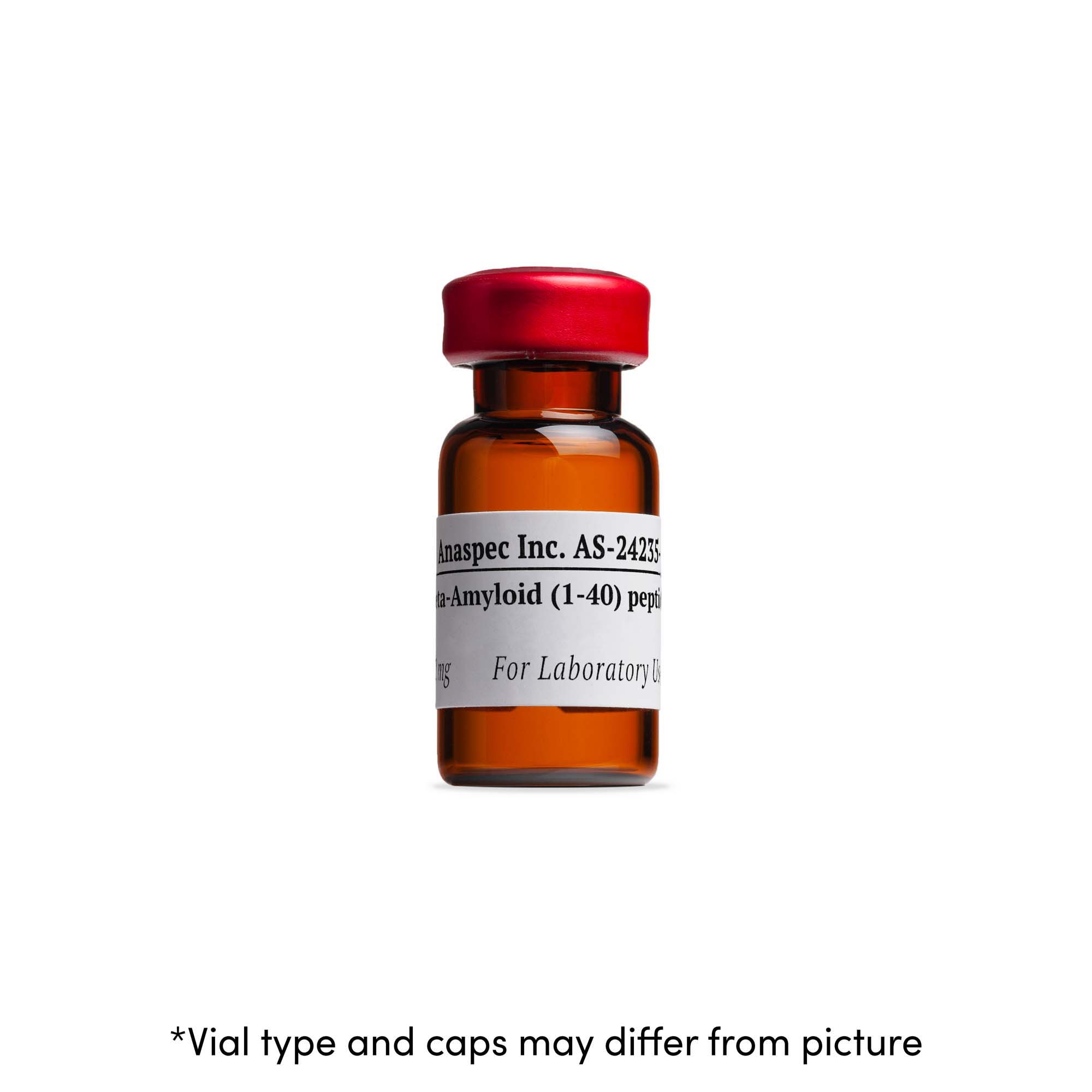
Beta-Amyloid (1-40) Peptide
Price range: $177.00 through $1,371.00
Beta-amyloid (1-40) together with Aß (1-42) are two major C-terminal variants of the Aß. They undergo post-secretory aggregation.
Overview
Beta-amyloid (1-40) peptide is a crucial component in Alzheimer’s research, representing one of the two predominant C-terminal variants of the amyloid-beta (Aβ) protein. This specific peptide undergoes significant post-secretory aggregation, making it an essential molecule for studies related to Alzheimer’s disease. With its vital role in the pathogenesis of this neurodegenerative condition, understanding the aggregation and deposition of beta-amyloid (1-40) in the brain is fundamental for developing potential therapeutic strategies.
Key Features
- Critical for Alzheimer’s disease research
- Purified form for reliable experimentation
- Ideal for studying amyloid aggregation
- Compatible with various labeling techniques
- Electron microscopy data provided for reference
Specifications
| Attribute | Details |
|---|---|
| Product Name | Beta-amyloid (1-40) Peptide |
| Type | Peptide |
| Catalog Number | A315 |
| Molecular Weight | 4,570 Da |
| Form | Lyophilized powder |
| Storage | -20°C |
FAQ
What is the significance of Beta-amyloid (1-40) in Alzheimer’s research?
This peptide is known to form aggregates that are associated with Alzheimer’s disease, making it crucial for understanding the disease’s mechanisms and developing treatments.
How can Beta-amyloid (1-40) be used in experiments?
Researchers can utilize this peptide for aggregation studies, drug testing, and in various assays that investigate Alzheimer’s pathology.
Is there any documentation available for the Beta-amyloid (1-40) peptide?
Yes, electron microscopy data highlighting the aggregation properties of beta-amyloid (1-40) is available and can be referenced for experimental design.
To complement your research, consider exploring our PKG Substrate and Autocamtide-2 for enhanced experimental setups.
Related Products
Browse more in Peptides.
| Size | 0.5 mg, 1 mg, 5 mg |
|---|
Be the first to review “Beta-Amyloid (1-40) Peptide”
Related products
Peptides
Reviews
There are no reviews yet.