
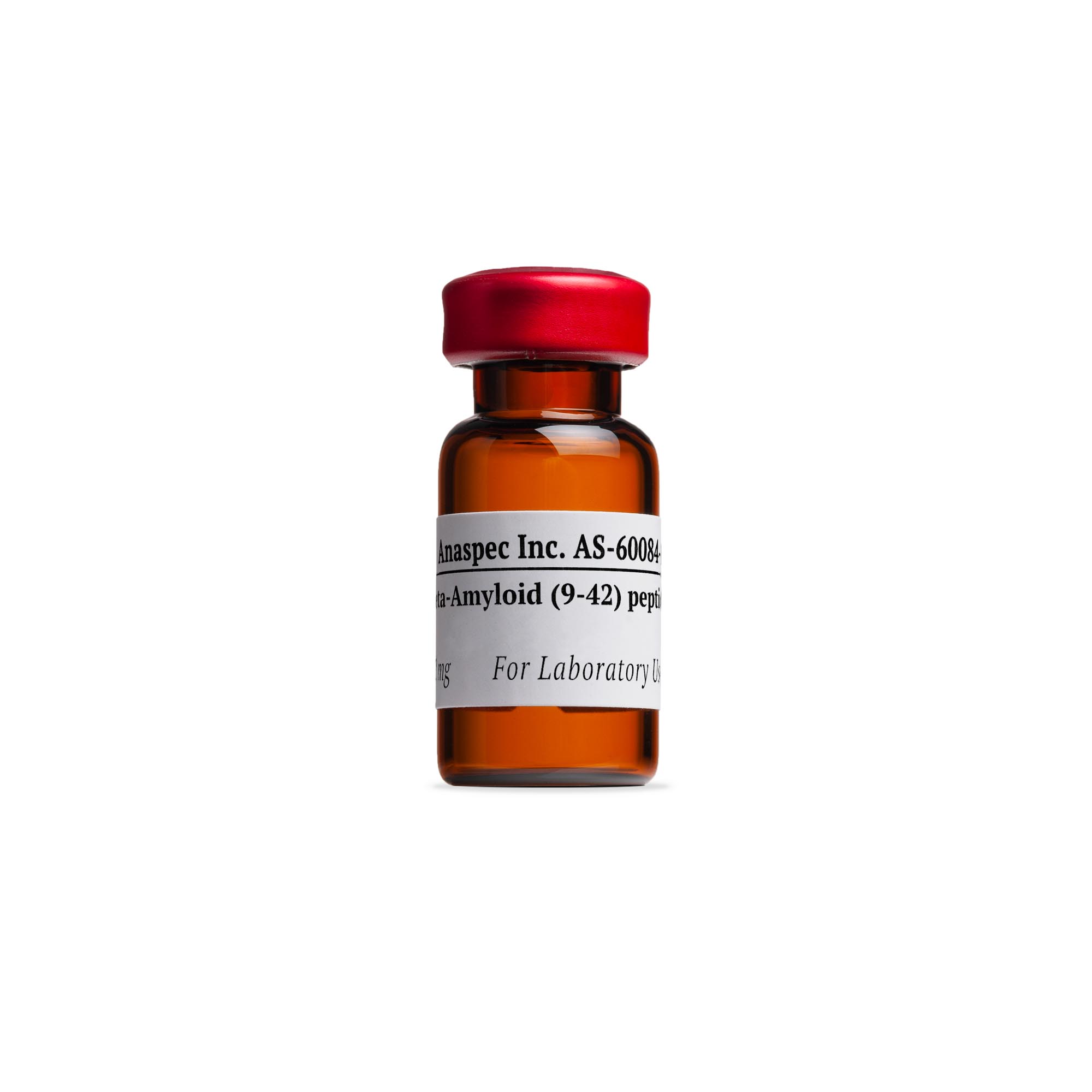
Beta-Amyloid (9-42) – 1 mg
$648.00
Beta-Amyloid (9-42) in studies of Down’s syndrome patients subjected to neuritic plaque extraction, Aßs 1-42, 1-40, 3-42, 4-42, 9-42 were identified .
Overview
Beta-Amyloid (9-42) is a crucial peptide in biomedical research, particularly in studies related to neurological conditions such as Down’s syndrome. This peptide is part of the family of amyloid beta peptides, which are known to contribute to the formation of neuritic plaques in the brain. During investigations involving Down’s syndrome patients, various amyloid beta species including Aßs 1-42, 1-40, 3-42, 4-42, 5-42, 8-42, and 9-42 have been identified through plaque extraction methods. Having access to high-quality Beta-Amyloid (9-42) can be essential when studying these complex interactions in neurobiology.
Key Features
- High-quality peptide for neuroscience research
- Essential in studies of amyloid precursor protein metabolism
- Important for understanding plaque formation in Down’s syndrome
- Available in 1 mg units for flexible purchasing
- Supports various assay kits focusing on peptide interactions
Specifications
| Property | Details |
|---|---|
| Product Name | Beta-Amyloid (9-42) |
| Quantity | 1 mg |
| Category | Peptides |
| Storage Conditions | Store at -20°C |
FAQ
What is Beta-Amyloid (9-42) used for?
Beta-Amyloid (9-42) is primarily used in research on neurodegenerative diseases, especially in understanding amyloid plaque formation associated with Alzheimer’s disease and Down’s syndrome.
How should I store Beta-Amyloid (9-42)?
This peptide should be stored at -20°C to maintain its integrity and prevent degradation over time.
Can I use Beta-Amyloid (9-42) in conjunction with other products?
Yes, this peptide works well in combination with various assay kits and substrates, such as PKG Substrate and Autocamtide-2allowing for comprehensive experimental setups.
Whether you’re looking to advance your research on neurobiology or require specific peptides for assay development, shop our range of peptides and discover the right solutions for your studies.
Related Products
Be the first to review “Beta-Amyloid (9-42) – 1 mg”
Related products
Peptides
Peptides
Peptides
Reviews
There are no reviews yet.