
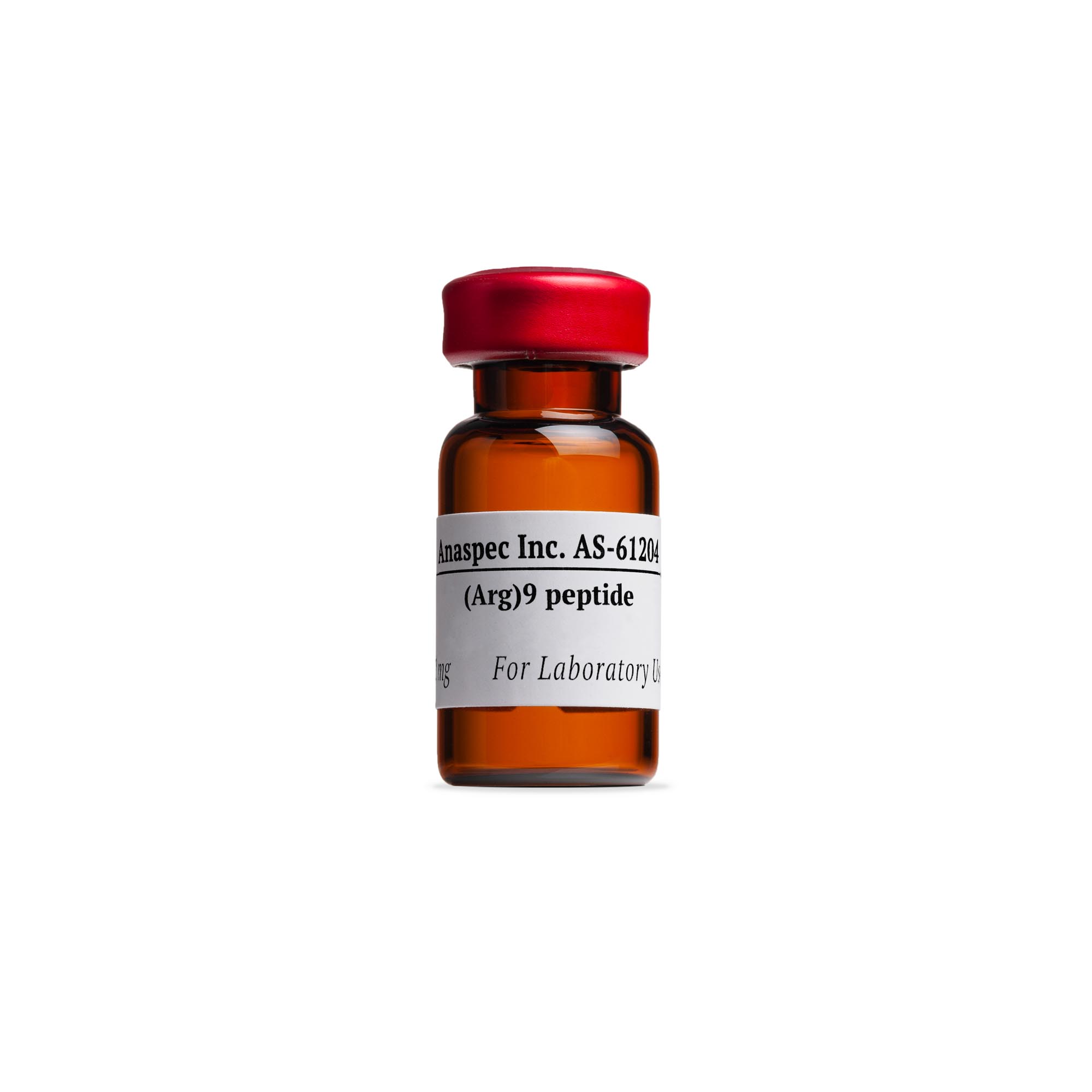
(Arg)9 – 1 mg
$89.00
(Arg)9 cell-permeable peptide used for drug delivery .Poly-Arg peptides composed of 9 arginine residues are able to efficiently translocate across cells.
Overview
(Arg)9 is a highly effective cell-permeable peptide designed for drug delivery applications. This peptide, composed of nine arginine residues, boasts the ability to efficiently translocate across cellular membranes. Understanding its mechanism can enhance your research in drug delivery systems, making (Arg)9 a valuable addition to your laboratory toolkit.
Key Features
- Cell-permeable: Facilitates effective drug delivery.
- Efficient translocation: Transports across cell membranes with ease.
- Transient pore formation: Nucleates pores to allow ion flow.
- Electrostatic interaction: Binds to membrane phosphate groups for improved delivery.
- Versatile applications: Useful in various experimental systems.
Specifications
| Product Name | (Arg)9 |
| Weight | 1 mg |
| Category | Peptides |
FAQ
What are the main applications of (Arg)9?
(Arg)9 is primarily used in drug delivery research, where its ability to permeate cell membranes effectively allows for the transport of therapeutic agents.
How does (Arg)9 facilitate translocation across cell membranes?
The translocation process involves nucleation of transient pores, which enable the flow of ions across the membrane, facilitated by the electrostatic attraction between (Arg)9 and the phosphate groups on cell membranes.
Can (Arg)9 be used with other peptides?
Yes, (Arg)9 can be effectively used alongside other peptides, such as PKG Substrate or Autocamtide-2to enhance drug delivery methods in your research.
For those interested in peptide research, exploring our catalog of peptides can provide additional insights into complementary products.
Related Products
Be the first to review “(Arg)9 – 1 mg”
Related products
Peptides
Peptides
Peptides
Reviews
There are no reviews yet.