
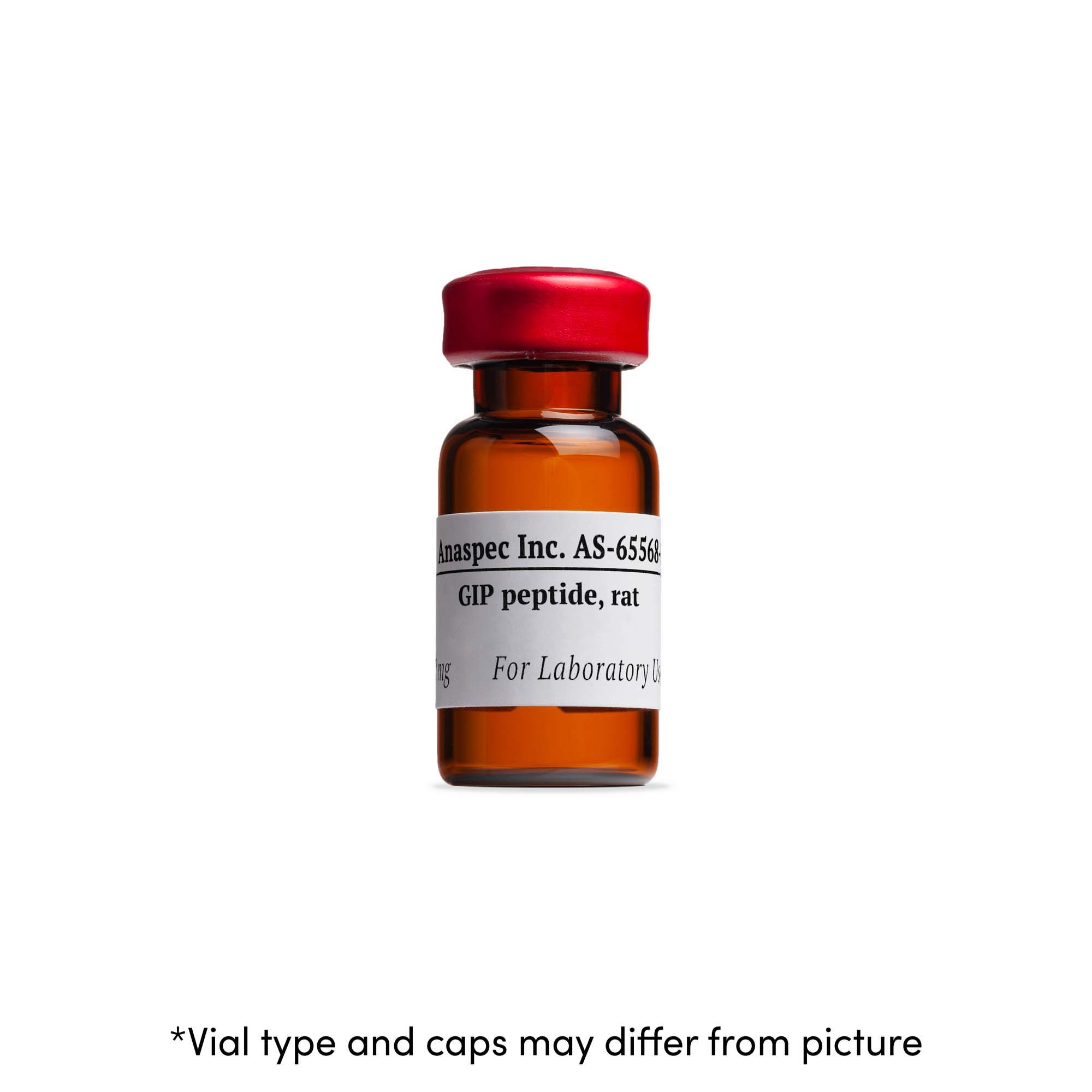
GIP, rat
Price range: $254.00 through $431.00
GIP, rat (Glucose-dependent Insulinotropic Polypeptide or Gastric Inhibitory Polypeptide) released by the K cells of duodenum in response to food intake.
Overview
GIP (Glucose-dependent Insulinotropic Polypeptide), also known as Gastric Inhibitory Polypeptide, is a 42-amino acid peptide that plays a crucial role in metabolic processes. It is released by the K cells of the duodenum and jejunum in response to food intake, significantly influencing insulin secretion from pancreatic beta cells. As part of the incretin hormone family, alongside GLP (Gastric-like Peptide), GIP not only stimulates insulin release but also supports beta cell proliferation and survival. With recent studies suggesting its involvement in lipid metabolism, GIP has become a focal point of research in understanding diabetes and metabolic health.
Key Features
- High-purity GIP peptide for reliable research results.
- Functionally active and validated for in vitro applications.
- Available in various quantities to suit your experimental needs.
- Ideal for studies related to glucose metabolism and insulin response.
- Supports research in diabetes, obesity, and metabolic syndrome.
Specifications
| Property | Details |
|---|---|
| Peptide Sequence | 42 amino acids |
| Source | Rat |
| Form | Lyophilized powder |
| Storage | -20°C for long-term storage |
FAQ
What is the significance of GIP in research?
GIP is critical for understanding the mechanisms behind insulin secretion and glucose metabolism, making it essential for studies in diabetes and metabolic conditions.
How should GIP be stored?
For optimal stability, store GIP at -20°C, and ensure to avoid repeated freeze-thaw cycles to maintain its integrity.
Can GIP be used in combination with other substrates?
Yes, GIP can be effectively paired with other peptides and substrates, such as PKG Substrate or Autocamtide-2to explore synergistic effects in various assays.
If you’re looking to advance your research on glucose metabolism and insulin response, our GIP peptide is for sale now. Shop today to add this valuable tool to your laboratory.
Related Products
Browse more in Peptides.
| Size | 0.5 mg, 1 mg |
|---|
Be the first to review “GIP, rat”
Related products
Peptides
Reviews
There are no reviews yet.