
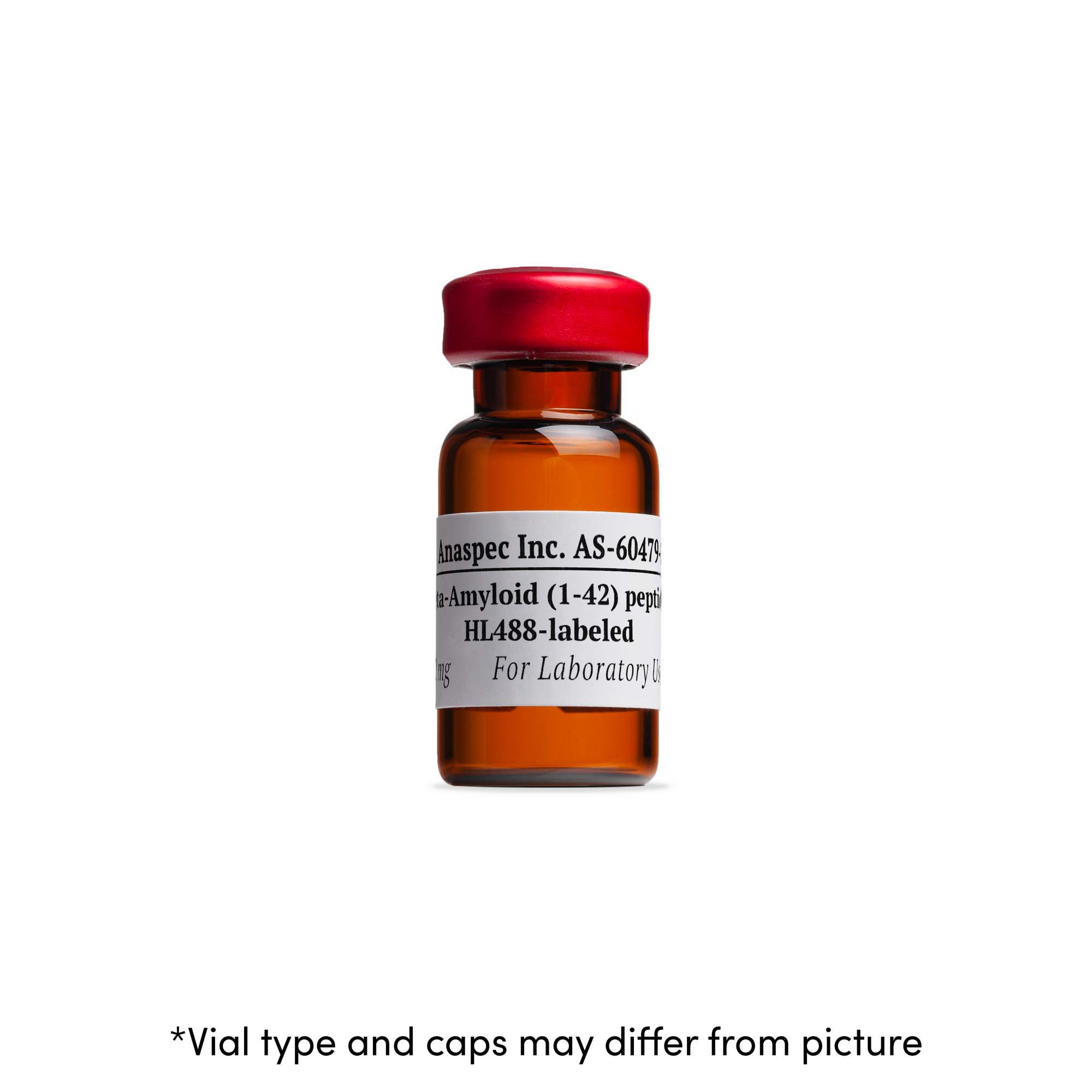
Beta-Amyloid (1-42), HiLyte™ Fluor 488-labeled – 0.1 mg
$327.00
Beta-Amyloid (1-42), HiLyte™ Fluor 488-labeled. Aß (1-42), a major component of amyloid plaques, accumulates in neurons of Alzheimer’s disease brains.
Overview
Introducing the Beta-Amyloid (1-42), HiLyte™ Fluor 488-labeled peptide, a valuable tool for researchers studying Alzheimer’s disease. This peptide is integral to understanding the formation of amyloid plaques, which accumulate in the brains of individuals suffering from this neurodegenerative condition. The Aß (1-42) variant is recognized as the primary species associated with senile plaque amyloids, making it essential for biochemical analyses of Alzheimer’s pathology.
Key Features
- HiLyte™ Fluor 488 labeling for enhanced fluorescence
- Specific for Aß (1-42), a key player in Alzheimer’s disease
- Excitation/Emission spectra at 503/528 nm for optimal visualization
- Available in a convenient 0.1 mg size
- Ideal for studies on amyloid plaques and related neurological indicators
Specifications
| Product Name | Beta-Amyloid (1-42), HiLyte™ Fluor 488-labeled |
|---|---|
| Size | 0.1 mg |
| Labeling | HiLyte™ Fluor 488 |
| Abs/Em | 503/528 nm |
FAQ
What is the significance of Aß (1-42) in Alzheimer’s research?
Aß (1-42) is crucial as it is the predominant peptide found in amyloid plaques linked to Alzheimer’s disease, making it vital for studying the disease mechanism.
How do I use the HiLyte™ Fluor 488 labeled peptide?
The peptide can be used in various applications, including fluorescence microscopy and other assays designed to detect amyloid deposits in brain tissue.
Is this peptide suitable for diagnostic purposes?
While primarily intended for research, the insights gained from using HiLyte™ Fluor 488-labeled Aß (1-42) can inform diagnostic approaches in Alzheimer’s disease.
For a deeper understanding of peptide applications, check out our selection of other peptides. You may also be interested in our PKG Substrate for related studies or explore Autocamtide-2 for additional insights into biochemical research.
Related Products
Be the first to review “Beta-Amyloid (1-42), HiLyte™ Fluor 488-labeled – 0.1 mg”
Related products
Peptides
Peptides
Peptides
Peptides
Peptides
Reviews
There are no reviews yet.