
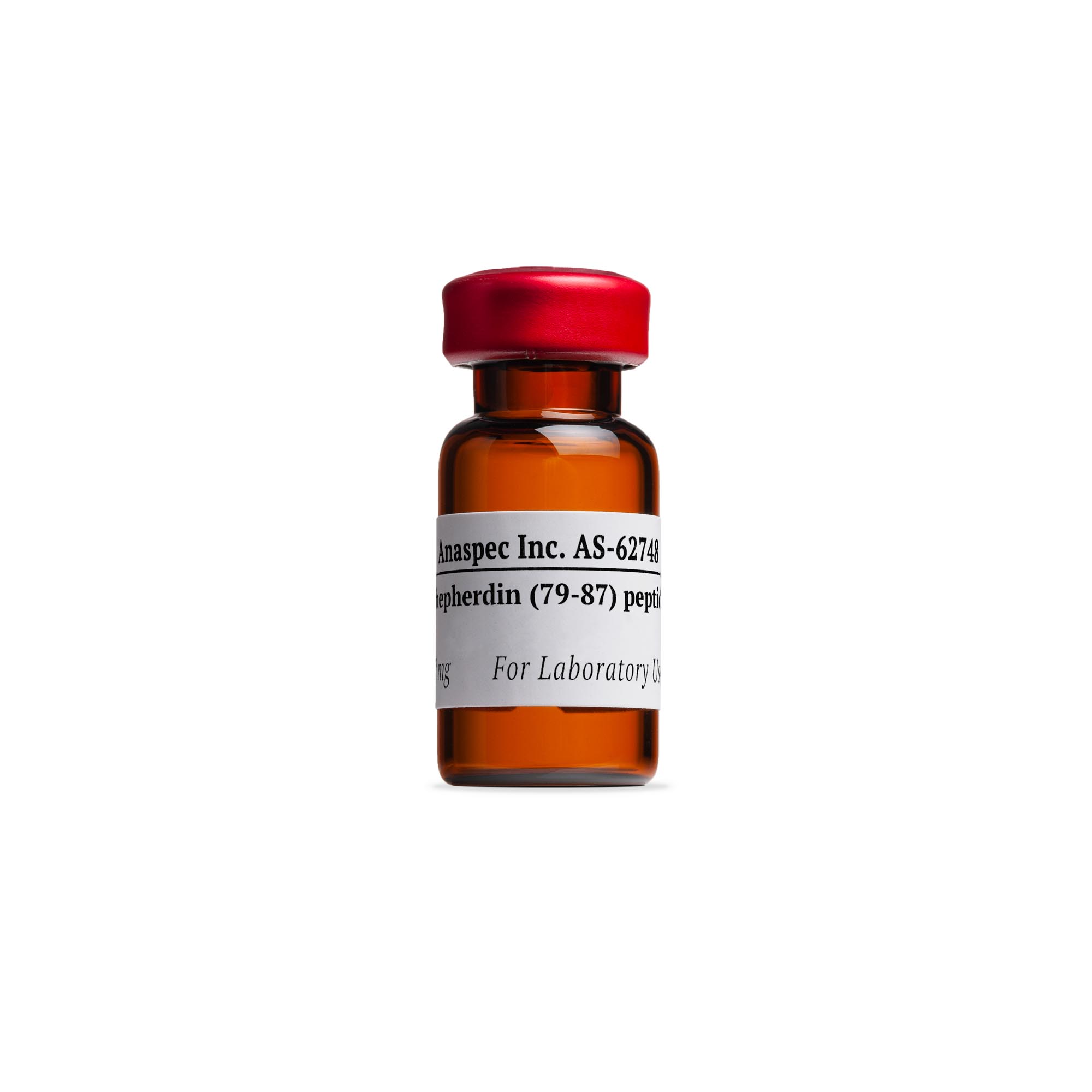
Shepherdin (79–87) – 1 mg
$105.00
Shepherdin (79–87) peptidomimetic antagonist of the complex between Hsp90 and survivin, another key regulator of tumor cell viability, antitumor activity,
Overview
Introducing Shepherdin (79, 87), a powerful peptidomimetic antagonist specifically designed to disrupt the complex between Hsp90 and survivin. This critical interaction plays a significant role in regulating tumor cell viability. As cancer research evolves, the demand for targeted therapies grows, and Shepherdin stands out for its potential. By focusing on tumor cells while sparing normal tissues, this peptide offers a promising tool for advancing cancer treatments.
Key Features
- Comprised of amino acids 79 to 87 of the shepherdin sequence
- Effectively inhibits tumor growth without toxicity
- Demonstrates potent antitumor activity
- Selectivity for tumor cells over normal tissues
- Potential for applications in rational cancer therapy
Specifications
| Attribute | Details |
|---|---|
| Name | Shepherdin (79, 87) |
| Quantity | 1 mg |
| Cascade | Peptides |
| Applications | Research, Cancer Therapy |
FAQ
What is Shepherdin (79, 87) used for?
Shepherdin (79, 87) is used primarily in cancer research, especially for studying its effects on tumor cell viability and growth inhibition.
How does Shepherdin (79, 87) work?
This peptide acts as a peptidomimetic antagonist, disrupting the interaction between Hsp90 and survivin, thereby affecting tumor cell viability.
What are the benefits of using Shepherdin (79, 87)?
Its selectivity for tumor cells, potent antitumor activity, and lack of toxicity make Shepherdin (79, 87) a promising candidate for rational cancer therapy.
For related products in the peptide category, consider exploring options like PKG Substrate or Autocamtide-2. Each can complement your research needs and enhance your understanding of peptide interactions.
Related Products
Browse more in Peptides.
Be the first to review “Shepherdin (79–87) – 1 mg”
Related products
Peptides
Peptides
Peptides
Reviews
There are no reviews yet.