
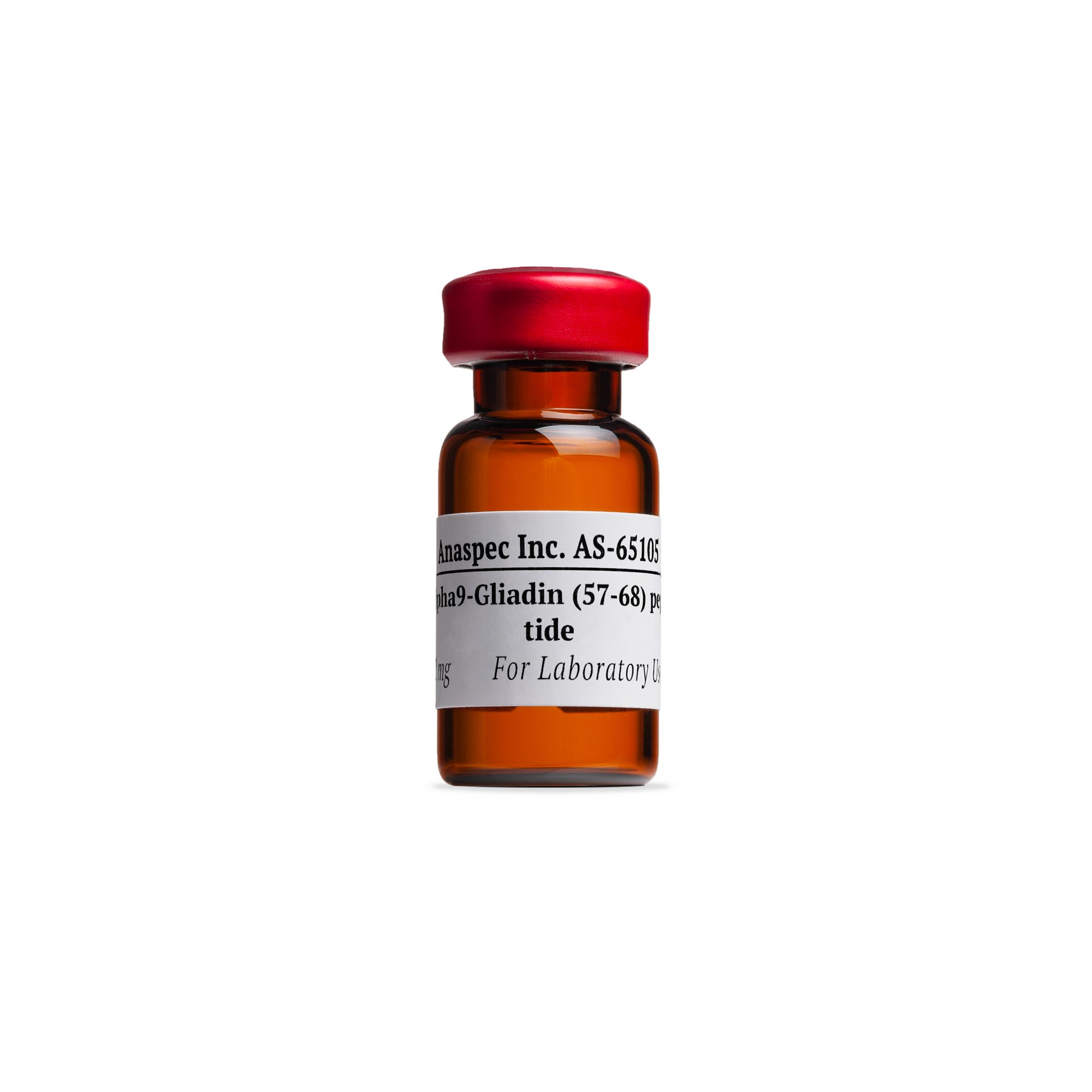
alpha9-Gliadin (57-68) – 1 mg
$97.00
alpha9-Gliadin (57-68) is gluten component derived from aa 57-68 of a9-gliadin, epitope elicits HLA-DQ2-restricted T-cell responses in celiac patients.
Overview
alpha9-Gliadin (57-68) is a crucial peptide derived from the gluten protein a9-gliadin, specifically from amino acid residues 57 to 68. This peptide is significant for its role as an immunodominant epitope that triggers HLA-DQ2-restricted T-cell responses in individuals with celiac disease. Understanding the mechanisms of gluten sensitivity is essential for developing effective diagnostics and therapies. The alpha9-Gliadin (57-68) peptide is resistant to pancreatic proteolysis, making it a stable component in research applications.
Key Features
- Derived from amino acids 57-68 of a9-gliadin
- Immunodominant epitope eliciting HLA-DQ2-restricted T-cell responses
- Resistant to pancreatic proteolysis for reliable experimental results
- Available in a convenient 1 mg quantity
- Ideal for research and development in celiac disease studies
Specifications
| Property | Value |
|---|---|
| Product Name | alpha9-Gliadin (57-68) |
| Quantity | 1 mg |
| Category | Peptides |
FAQ
What is the importance of alpha9-Gliadin (57-68) in celiac disease research?
This peptide is vital for studying the immune response in celiac disease, where it acts as an epitope that activates HLA-DQ2-restricted T-cells, providing insight into gluten sensitivity.
Is alpha9-Gliadin (57-68) stable for use in experiments?
Yes, this peptide is designed to be resistant to pancreatic proteolysis, ensuring its stability and reliability in various research settings.
How can I order alpha9-Gliadin (57-68)?
You can easily purchase alpha9-Gliadin (57-68) directly from our peptides catalog. Each order includes 1 mg of this essential peptide.
For more advanced peptide research, consider exploring related products such as Autocamtide-2 or our PKG Substrate. These products can complement your studies and enhance your understanding of peptide interactions in biological systems.
Related Products
Be the first to review “alpha9-Gliadin (57-68) – 1 mg”
Related products
Peptides
Peptides
Peptides
Reviews
There are no reviews yet.