
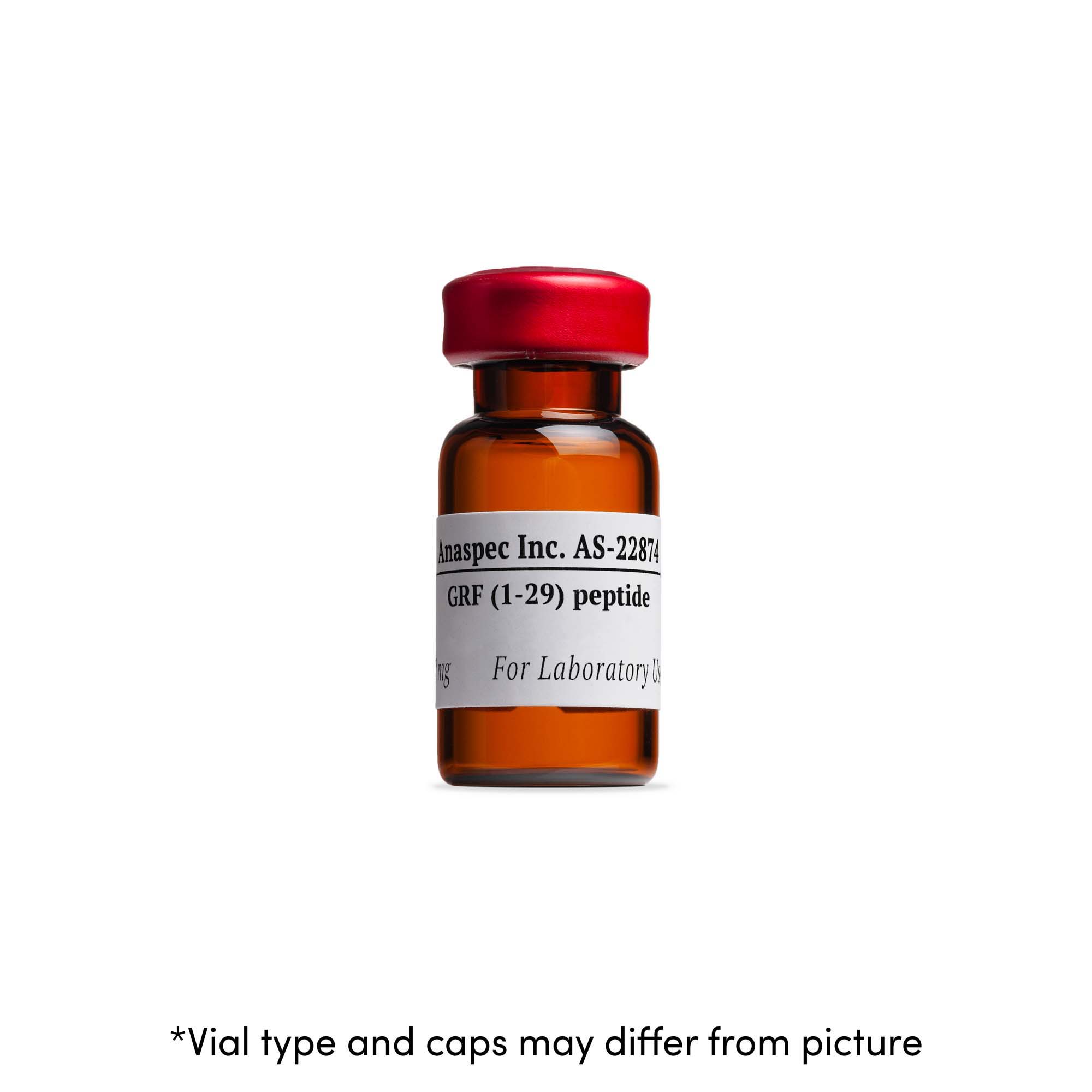
Growth Hormone Releasing Factor, GRF (1-29), amide, human
Price range: $113.00 through $172.00
Growth Hormone Releasing Factor, GRF (1-29), amide is hypophysiotropic peptide that was isolated from human hypothalamic-hypophysial tissues.
Overview
Growth Hormone Releasing Factor, GRF (1-29), amide is a highly specific hypophysiotropic peptide derived from human hypothalamic-hypophysial tissues, making it an essential tool for research and diagnostic applications. This peptide fragment, consisting of 29 amino acids, plays a crucial role in stimulating growth hormone release. While the entire sequence is important, studies indicate that amino acids 13 to 21 are pivotal for high affinity receptor binding, underscoring the precision of this product for your applications.
Key Features
- Composed of 29 amino acids with full intrinsic activity.
- High potency for stimulating growth hormone release in vitro.
- Over 93% homology with similar GRF peptides from porcine, bovine, and ovine sources.
- Ideal for research in neurobiology and physiology.
- Available in a user-friendly format to ensure accurate dosing.
Specifications
| Product Name | Growth Hormone Releasing Factor, GRF (1-29), amide |
| Category | Peptides |
| Origin | Human hypothalamic-hypophysial tissues |
| Homology | >93% with porcine, bovine, and ovine |
| Form | Lyophilized powder |
FAQ
What is the primary use of GRF (1-29), amide?
This peptide is primarily used in research settings to stimulate growth hormone release, which can help in studies related to growth disorders and metabolic functions.
How should I store the GRF (1-29), amide?
To maintain peptide stability, we recommend storing it in a cool, dry place, preferably at -20°C, and protecting it from light.
Can I use this peptide for in vivo studies?
While GRF (1-29), amide has shown high potency in vitro, its use in vivo should be carefully evaluated based on your specific research parameters and regulatory guidelines.
For all your peptide needs, consider exploring our range of products. Whether you are looking for PKG SubstrateAutocamtide-2or various other peptideswe have what you need to advance your research.
Related Products
| Size | 0.5 mg, 1 mg |
|---|
Be the first to review “Growth Hormone Releasing Factor, GRF (1-29), amide, human”
Related products
Peptides
Peptides
Peptides
Peptides
Reviews
There are no reviews yet.