
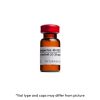
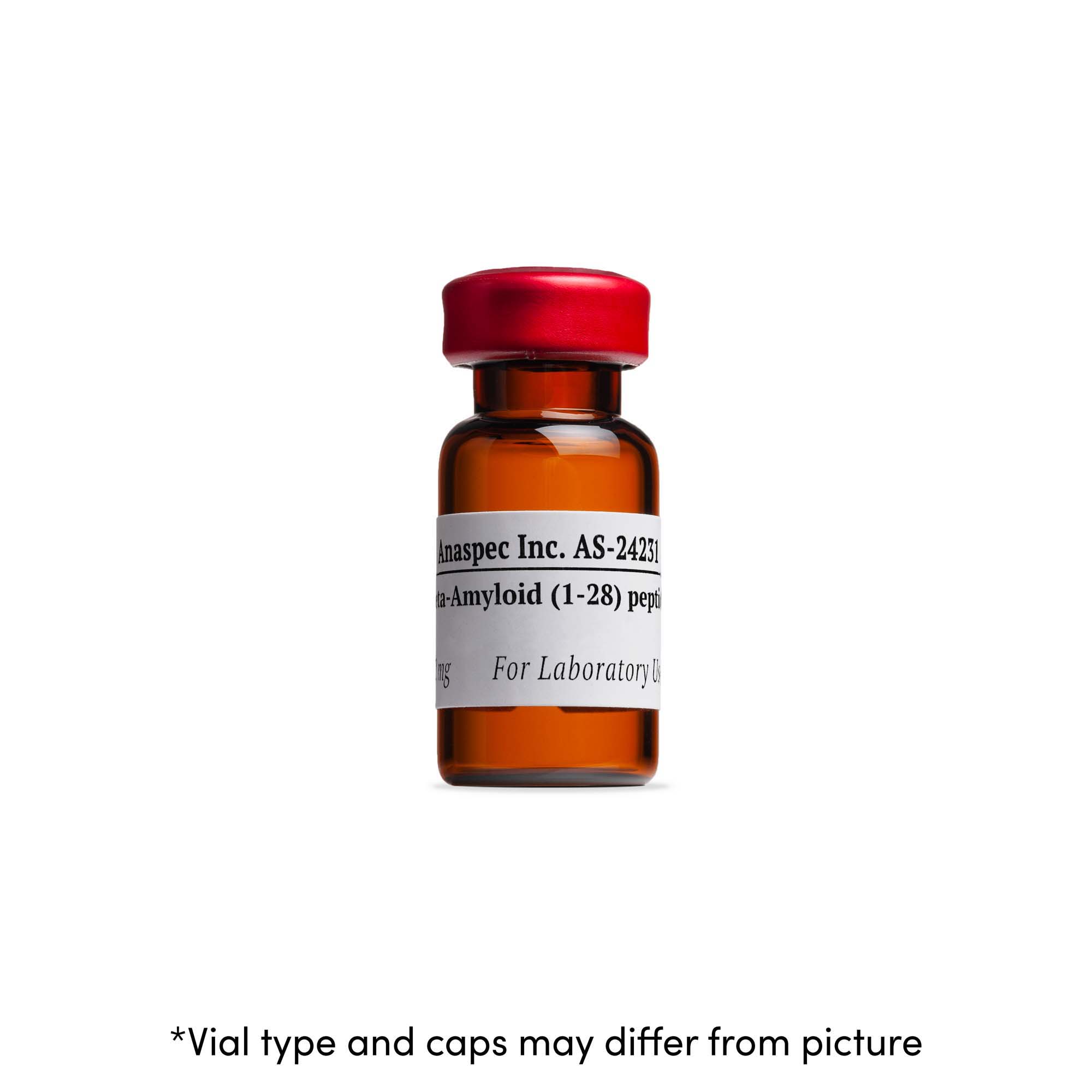
Beta-Amyloid (1-28) Peptide
Price range: $148.00 through $875.00
Aß (1-28) is highly hydrophilic and shares sequences with Aß (1-42), the major component of Aß. Its assembly is fibrillar, elongated in a single direction.
Overview
Beta-Amyloid (1-28) Peptide is an essential reagent for research into neurological conditions, particularly in studies related to Alzheimer’s disease. This peptide, with its highly hydrophilic nature, resembles Aβ (1-42), the principal form found in amyloid plaques. Understanding its structure and behavior is crucial for diagnosing and treating neurodegenerative disorders. This peptide assembles into fibrillar structures, allowing for key insights into amyloid pathology.
Key Features
- Predominantly a-helical structure provides structural stability
- Shares sequences with Aβ (1-42) for relevant research applications
- Hydrophilic properties enhance solubility for easy handling
- Fibrillar assembly mimics natural amyloid formations
- Potential interaction with heparan sulfate proteoglycans
Specifications
| Property | Details |
|---|---|
| Composition | Beta-Amyloid (1-28) Peptide |
| Format | Powder |
| Storage Conditions | -20°C |
| Certificate of Analysis | Available upon request |
FAQ
What is Beta-Amyloid (1-28) Peptide used for?
This peptide is primarily used in research settings to study its role in amyloid plaque formation and its implications in Alzheimer’s disease.
How should I store this peptide?
For optimal stability, store the Beta-Amyloid (1-28) Peptide at -20°C.
Can I use this peptide for therapeutic purposes?
Beta-Amyloid (1-28) Peptide is intended for research use only and is not approved for therapeutic applications.
Order your Beta-Amyloid (1-28) Peptide today to enhance your research on neurodegenerative diseases. With its unique properties and relevance, it’s a crucial addition to your laboratory’s assays and studies. Don’t miss the opportunity to enrich your research toolkit with this essential peptide.
Related Products
- PKG Substrate [RKRSRAE], Glasstide
- Autocamtide-2 [KKALRRQETVDAL]
- CREBtide [KRREILSRRPSYR], 5-FAM labeled
Browse more in Peptides.
| Size | 0.5 mg, 1 mg, 5 mg |
|---|
Be the first to review “Beta-Amyloid (1-28) Peptide”
Related products
Peptides
Peptides
Reviews
There are no reviews yet.