
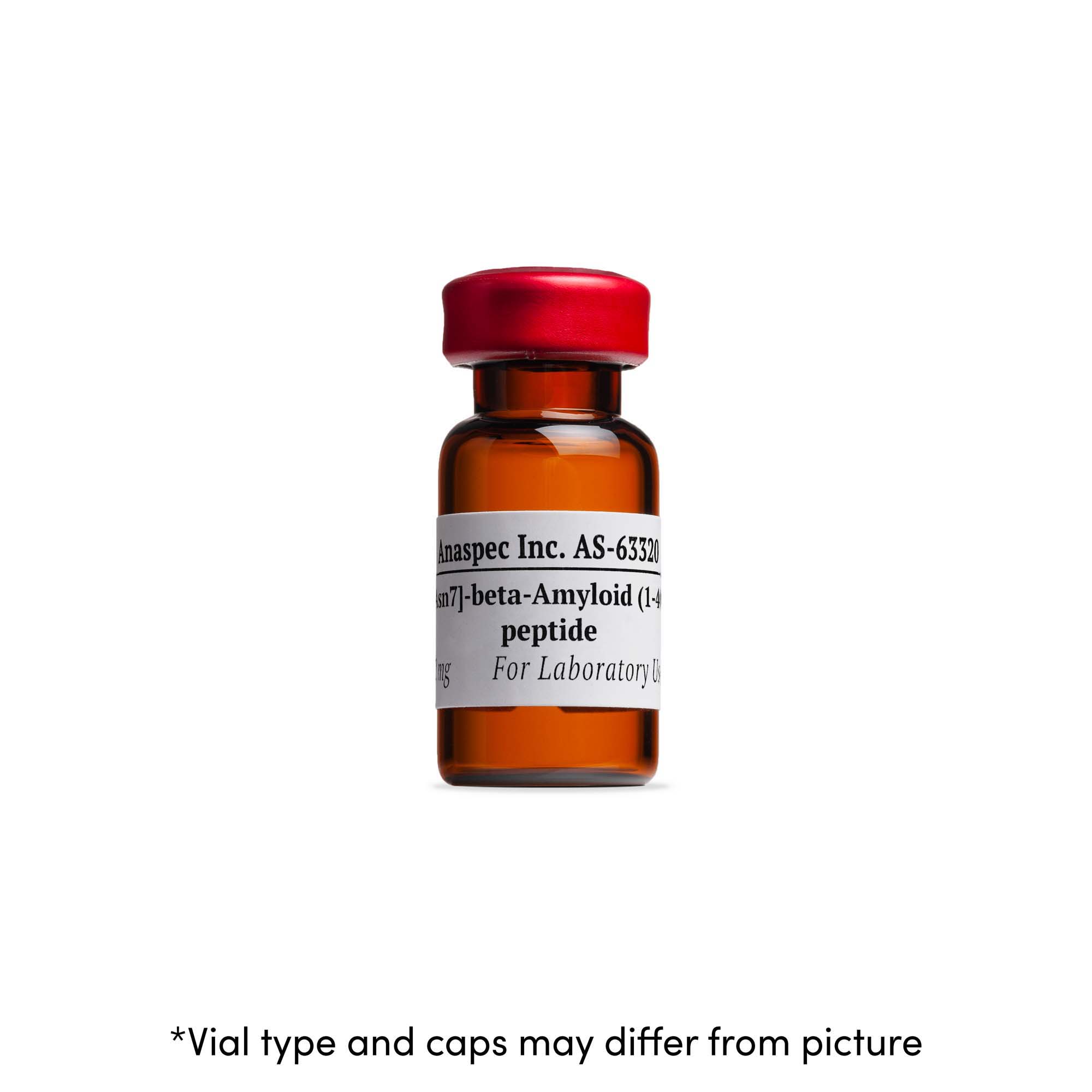
[Asn7]-beta-Amyloid (1-40), Tottori-Japan Mutation – 0.5 mg
$327.00
[Asn7]-beta-Amyloid (1-40), Tottori-Japan Mutation produces beta amyloid peptides with the D7N substitution at the peptide N terminus.
Overview
The [Asn7]-beta-Amyloid (1-40), Tottori-Japan Mutation is a crucial peptide for research focused on Alzheimer’s disease. This specific variant incorporates a D7N substitution at the peptide N terminus, which is known to significantly impact the behavior of beta amyloid peptides. These peptides are essential for scientists studying the mechanisms of Alzheimer’s pathology, providing insights into peptide oligomerization and toxicity in neuronal cells.
Key Features
- Contains the Tottori mutation with D7N substitution
- Critical for investigating Alzheimer’s disease mechanisms
- Promotes the formation of oligomers that are toxic to neurons
- High-quality synthesis for reliable research results
- Available in a convenient 0.5 mg size
Specifications
| Product Name | [Asn7]-beta-Amyloid (1-40), Tottori-Japan Mutation |
| Size | 0.5 mg |
| Category | Peptides |
FAQ
What is the significance of the D7N substitution?
The D7N substitution in the beta-amyloid peptide is linked to an increase in the formation of oligomers, which are considered toxic to neurons and may play a critical role in the pathology of Alzheimer’s disease.
How is this peptide synthesized?
This peptide is synthesized using high-quality methods to ensure its integrity and reliability for research applications. Each batch undergoes rigorous quality control to meet research standards.
Can this peptide be used in cellular models?
Yes, the [Asn7]-beta-Amyloid (1-40) can be used in various cellular models to study its effects on neuronal cells and to explore the underlying mechanisms of Alzheimer’s disease.
Shop now for the [Asn7]-beta-Amyloid (1-40), Tottori-Japan Mutation and enhance your research into Alzheimer’s disease. For a comprehensive view of related products, check out our full range of peptides to discover valuable options for your study.
Related Products
Be the first to review “[Asn7]-beta-Amyloid (1-40), Tottori-Japan Mutation – 0.5 mg”
Related products
Peptides
Reviews
There are no reviews yet.