
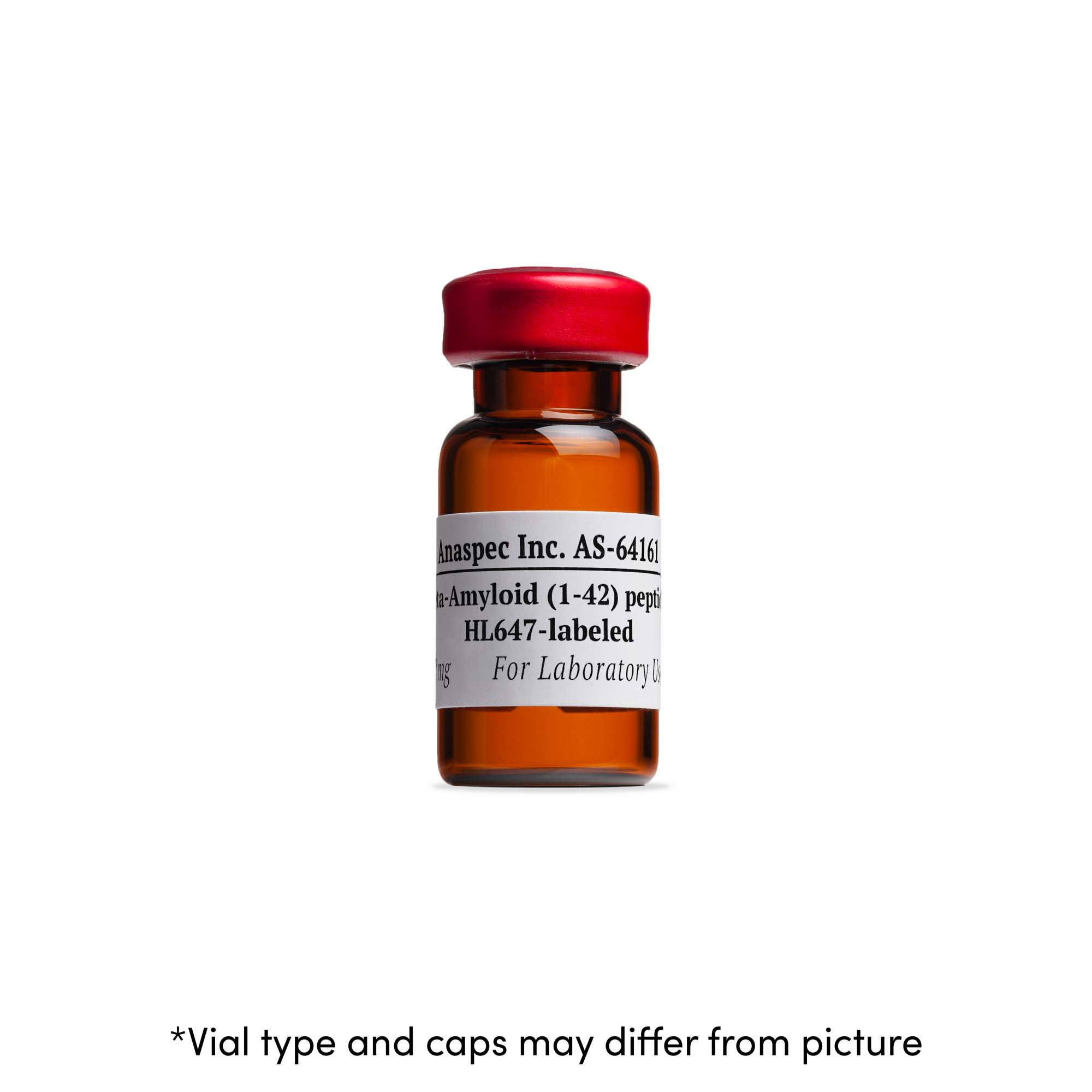
beta-Amyloid (1-42), HiLyte™ Fluor 647-labeled – 0.1 mg
$353.00
beta-Amyloid (1-42), HiLyte™ Fluor 647-labeled Aß, (1-42), a major component of amyloid plaques, accumulates in neurons of Alzheimer’s disease brains.
Overview
The beta-Amyloid (1-42), HiLyte™ Fluor 647-labeled peptide is a critical tool for scientists studying Alzheimer’s disease. It represents the principal component of amyloid plaques that accumulate in the brains of affected individuals. This peptide, with its unique fluorescent properties, enables precise labeling and detection in various biochemical assays, facilitating advanced research in neurological studies.
Key Features
- HiLyte™ Fluor 647 label enhances visibility for detection in assays.
- Specifically targets beta-Amyloid (1-42), a key indicator of Alzheimer’s disease.
- Supports a range of applications in peptide research and diagnostics.
- High purity and reliable performance ensure reproducible results.
- Available in a convenient 0.1 mg size.
Specifications
| Product Name | beta-Amyloid (1-42), HiLyte™ Fluor 647-labeled |
| Size | 0.1 mg |
| Label | HiLyte™ Fluor 647 |
| Abs/Em | 649/674 nm |
FAQ
What is the significance of beta-Amyloid (1-42)?
beta-Amyloid (1-42) is a significant biomarker for Alzheimer’s disease, as it accumulates in plaques within the brain, which are characteristic of this neurological condition.
How can I use this labeled peptide in my research?
This HiLyte™ Fluor 647-labeled peptide can be used in assays that require precise detection of beta-Amyloid (1-42). You can incorporate it into your studies involving amyloid plaque formation and its mechanisms in Alzheimer’s pathology.
What other related products do you offer?
AnaSpec offers a variety of related products, including other peptides and protein labeling kits. You can explore our full range of peptides designed for diverse research needs.
Order your beta-Amyloid (1-42), HiLyte™ Fluor 647-labeled peptide today to enhance your research on Alzheimer’s disease. With its reliable performance and advanced labeling features, it’s an essential addition to your laboratory toolkit.
Related Products
Be the first to review “beta-Amyloid (1-42), HiLyte™ Fluor 647-labeled – 0.1 mg”
Related products
Peptides
Peptides
Reviews
There are no reviews yet.