
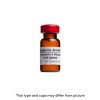
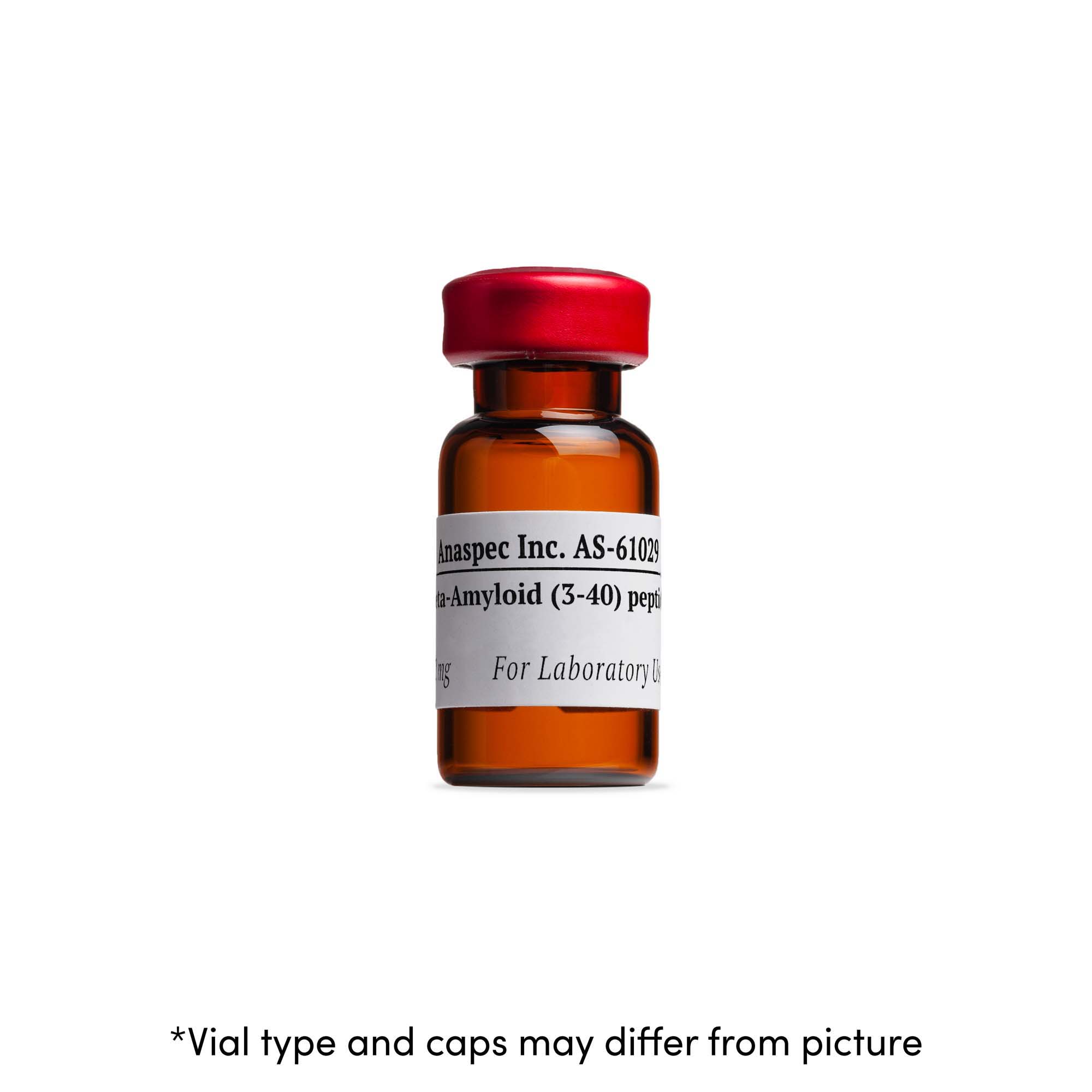
Beta-Amyloid (3-40) – 0.1 mg
$131.00
Beta-Amyloid (3-40) N-terminally truncated pyroglutamate-modified beta-Amyloid forms Aß(3-40) and Aß (11- 40) are major compounds in senile plaques.
Overview
Experience a more profound understanding of neurodegenerative conditions with our Beta-Amyloid (3-40) peptide. This product offers a high-purity, N-terminally truncated version of beta-Amyloid (1-40), specifically designed for researchers exploring the complex nature of Alzheimer’s disease. The non-pyroglutamate form, integral to your studies, enables better observation of the aggregation properties and toxicity associated with beta-Amyloid formations.
Key Features
- N-terminally truncated beta-Amyloid (3-40) peptide
- Non-pyroglutamate variant for accurate research
- Highly pure and stable for reliable results
- Essential for studying senile plaques in Alzheimer’s research
- Increased aggregation propensity compared to non-modified forms
Specifications
| Product Name | Quantity | CAS Number | Purity |
|---|---|---|---|
| Beta-Amyloid (3-40) | 0.1 mg | Not Available | 95% |
FAQ
What is the significance of the N-terminal truncation?
N-terminally truncated forms of beta-Amyloid, such as Aß(3-40), are known to be major components of senile plaques, making them critical for studying Alzheimer’s disease pathology.
How does the non-pyroglutamate form differ from other beta-Amyloid peptides?
This non-pyroglutamate beta-Amyloid (3-40) is less prone to degradation and provides a better model for examining the toxicity and aggregation behavior essential to research.
What applications can I use this peptide for?
This peptide is ideal for laboratory studies focused on neurodegenerative diseases, particularly those investigating the biochemical role of beta-Amyloid in Alzheimer’s pathology.
Explore related products such as PKG Substrate or Autocamtide-2 to complement your research. For more options on peptides, visit our peptides category for a comprehensive selection that meets your research needs.
Related Products
Be the first to review “Beta-Amyloid (3-40) – 0.1 mg”
Related products
Peptides
Peptides
Reviews
There are no reviews yet.