
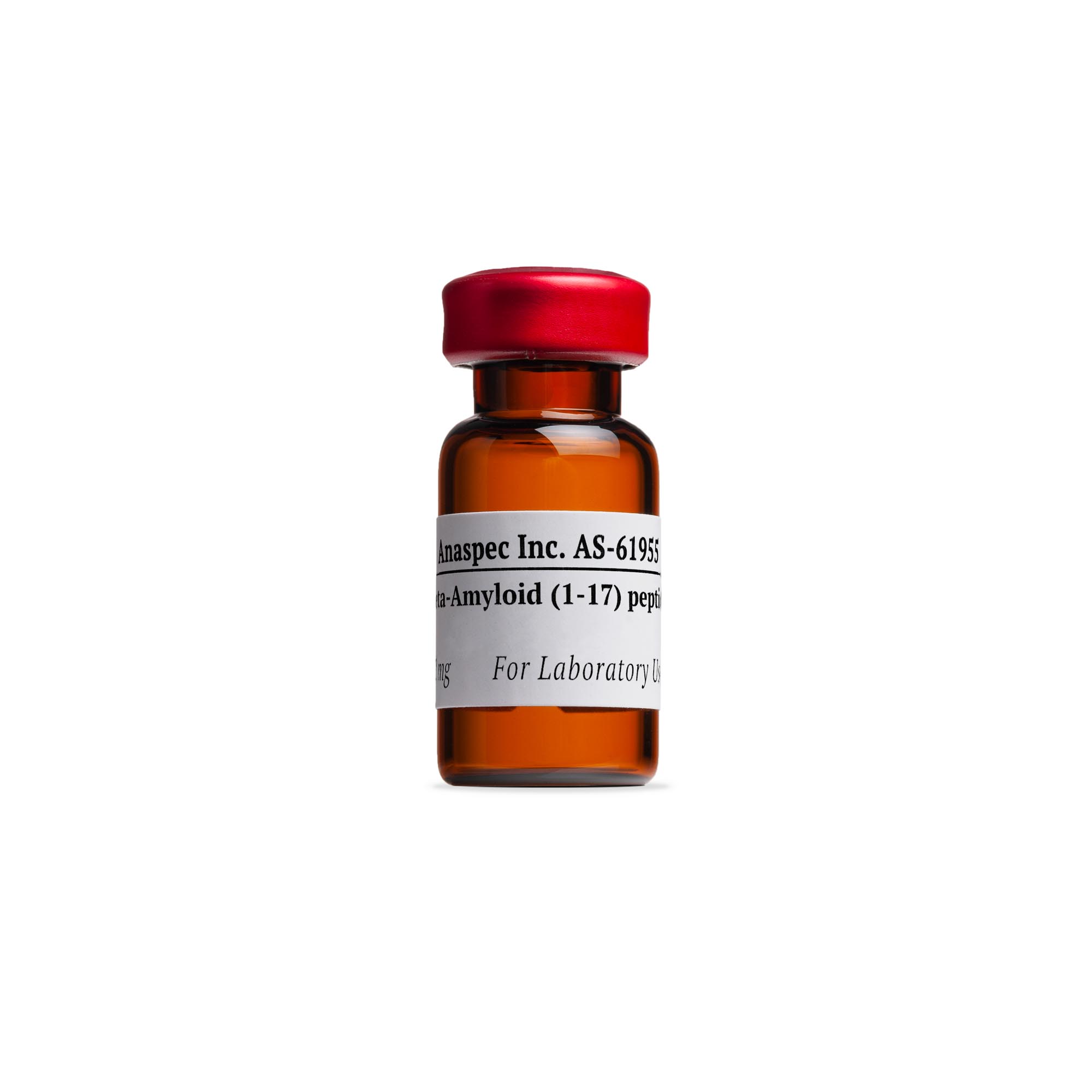
Beta-Amyloid (1-17) – 1 mg
$155.00
Beta-Amyloid (1-17). This peptide was employed in the b-Amyloid solubility studies.
Overview
Beta-Amyloid (1-17) is a crucial peptide fragment derived from the first 17 amino acids of the beta-amyloid protein. It plays a key role in various solubility studies that are essential for understanding Alzheimer’s disease and related neurological conditions. As one of the primary focus areas in amyloid research, this peptide fragment aids scientists in investigating the aggregation and solubility of amyloid proteins, which are linked to neurodegenerative diseases.
Key Features
- Derived from amino acids 1 to 17, specifically related to beta-amyloid studies
- Essential for research into Alzheimer’s disease
- High purity and reliable performance in lab settings
- Available in a 1 mg quantity, ideal for various experimental needs
- Compatible with broader peptide and protein applications
Specifications
| Property | Details |
|---|---|
| Peptide Sequence | Beta-Amyloid (1-17) |
| Weight | 1 mg |
| Category | Peptides |
| Purity | >95% |
| Storage | -20°C |
FAQ
What is the significance of Beta-Amyloid (1-17)?
This peptide fragment is crucial for studying the solubility and aggregation of beta-amyloid proteins, which are known to form plaques in the brains of Alzheimer’s patients.
How should I store Beta-Amyloid (1-17)?
For optimal stability, store this peptide at -20°C. Ensure that the container is tightly sealed to prevent moisture ingress.
Can I use Beta-Amyloid (1-17) in other assays?
Yes, this peptide is versatile and can be used in various assays, including those related to peptide enzyme substrates and protein interactions. For related applications, check out our PKG Substrate and Autocamtide-2.
Explore the potential of Beta-Amyloid (1-17) for your research. This peptide can provide essential insights into neurodegenerative processes. Don’t miss out on enhancing your studies, purchase yours today!
Related Products
Browse more in Peptides.
Be the first to review “Beta-Amyloid (1-17) – 1 mg”
Related products
Peptides
Peptides
Peptides
Reviews
There are no reviews yet.