
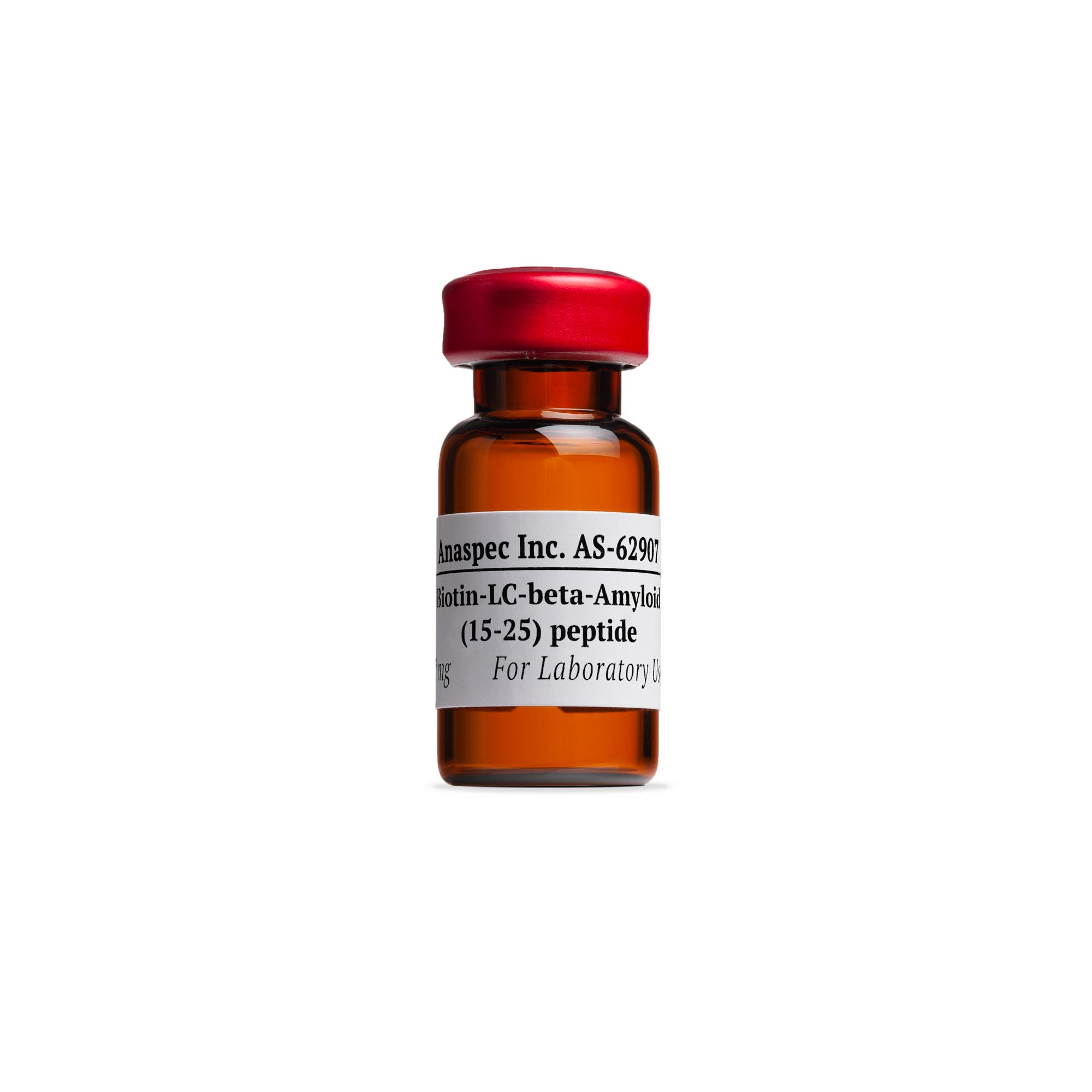
Biotin-LC-beta-Amyloid (15-25) – 1 mg
$162.00
Biotin-LC-beta-Amyloid (15-25)
Overview
Biotin-LC-beta-Amyloid (15-25) is a specialized biotinylated peptide fragment derived from the human, mouse, and rat beta-amyloid protein. This specific segment, also known as the amyloid beta peptide, plays a crucial role in Alzheimer’s disease research, making it invaluable for studies focused on neurodegeneration and plaque formation. Researchers often utilize biotinylated peptides like this one for their high affinity and specificity, allowing for effective binding and detection in various assays. With 1 mg of this product, you’ll have ample quantity to support your experimental needs while providing accurate and reliable results.
Key Features
- Biotinylated fragment facilitates easy detection in assays.
- Supports Alzheimer’s research through targeted studies.
- Derived from human, mouse, and rat sources for versatile applications.
- High-quality synthesis ensures purity and performance.
- 1 mg quantity suitable for a range of experimental applications.
Specifications
| Property | Details |
|---|---|
| Product Name | Biotin-LC-beta-Amyloid (15-25) |
| Category | Peptides |
| Quantity | 1 mg |
| Application | Research and diagnostics |
FAQ
What is the significance of the biotinylated form?
The biotinylated form of beta-amyloid helps in the easy detection and quantification of the peptide in various assays, enhancing the accuracy of research related to Alzheimer’s pathology.
Can this peptide be used for in vivo studies?
This peptide is primarily designed for in vitro studies. While it provides great utility in assay development, in vivo studies should be approached with caution and require further validation.
How should I store Biotin-LC-beta-Amyloid?
For optimal stability, store Biotin-LC-beta-Amyloid at -20°C, ensuring it is protected from light and moisture. Proper storage will maintain its effectiveness for your research applications.
To enhance your experiments, consider pairing this product with our PKG Substrate or exploring other peptides in our catalog. This biotinylated peptide is essential for advancing your research into neurological disorders.
Related Products
Be the first to review “Biotin-LC-beta-Amyloid (15-25) – 1 mg”
Related products
Peptides
Peptides
Peptides
Reviews
There are no reviews yet.