
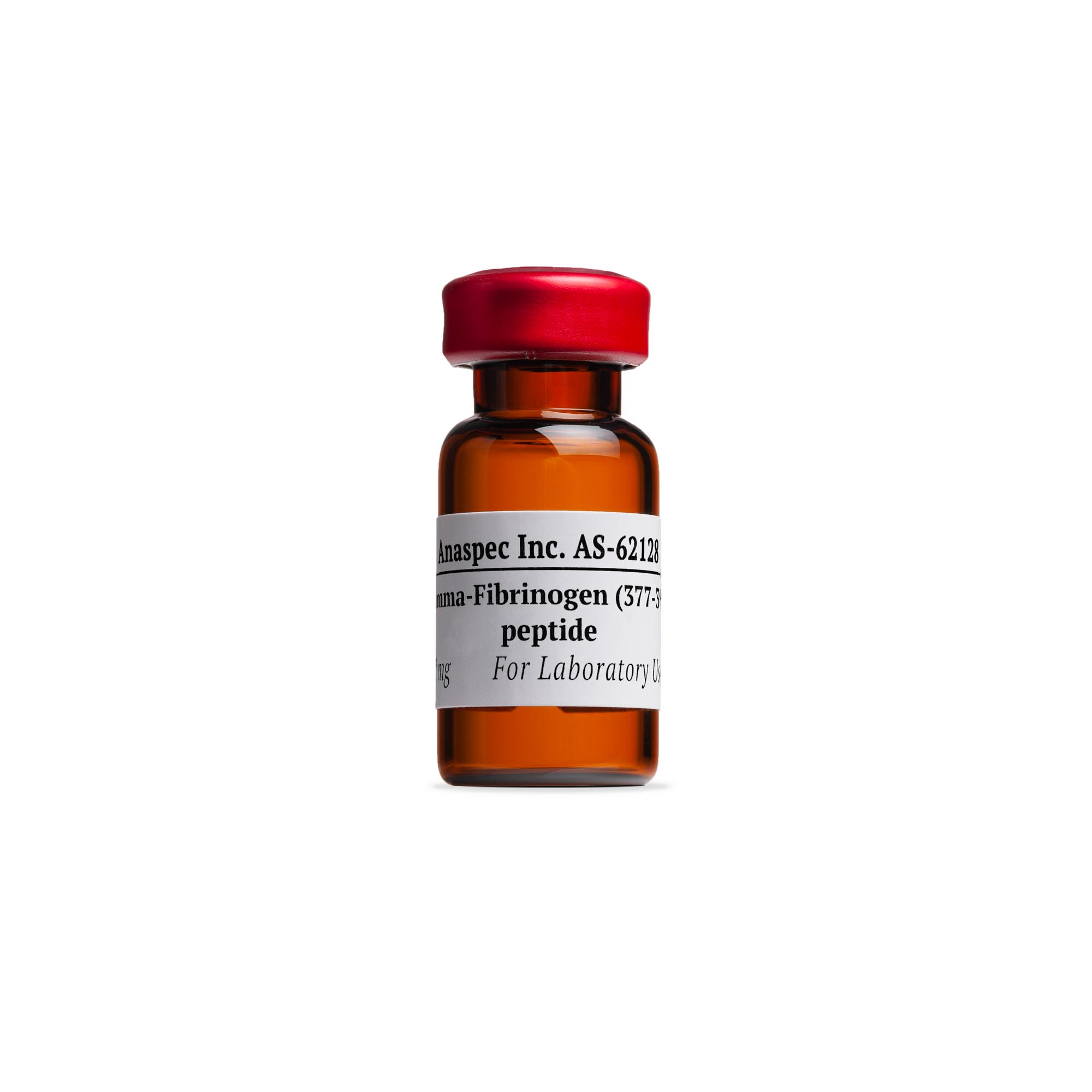
Fibrinogen gamma-Chain (377-395) – 1 mg
$162.00
Fibrinogen gamma-Chain (377-395). Activation of coagulation cascade converts fibrinogen to fibrin, through binding fibrinogen ? chain (?377–395) to Mac-1.
Overview
The Fibrinogen gamma-Chain (377-395) is a pivotal peptide for studying coagulation processes and inflammation. This peptide is crucial in activating the coagulation cascade, which converts fibrinogen into fibrin through its interaction with the Mac-1 integrin. The specific sequence of the gamma chain, particularly residues 377 to 395, binds to CD11b/CD18 integrin (Mac-1), making it essential for research into neuroinflammation and demyelination, particularly in conditions such as multiple sclerosis.
Key Features
- Effective in studying the coagulation cascade
- Supports research on neuroinflammatory diseases
- Interferes with fibrinogen-Mac-1 interactions
- Available in a 1 mg quantity
- Purity guaranteed for reliable experiments
Specifications
| Specification | Details |
|---|---|
| Product Name | Fibrinogen gamma-Chain (377-395) |
| Quantity | 1 mg |
| Category | Peptides |
FAQ
What is the primary function of the Fibrinogen gamma-Chain (377-395)?
This peptide activates the coagulation cascade by binding to Mac-1, a process significant for studies on blood clotting and inflammation.
How is this peptide relevant in multiple sclerosis research?
Fibrinogen has been linked to demyelination and microglial activation, and this specific peptide can attenuate those processes and help in understanding MS mechanisms.
Where can I find more peptide options?
You can explore our extensive selection of peptidesincluding various substrates and labeled proteins.
For those interested in more specialized applications, consider checking our PKG Substrate or the Autocamtide-2 for unique research opportunities. Additionally, our CREBtide may enhance your experimental outcomes.
Be the first to review “Fibrinogen gamma-Chain (377-395) – 1 mg”
Related products
Peptides
Reviews
There are no reviews yet.