
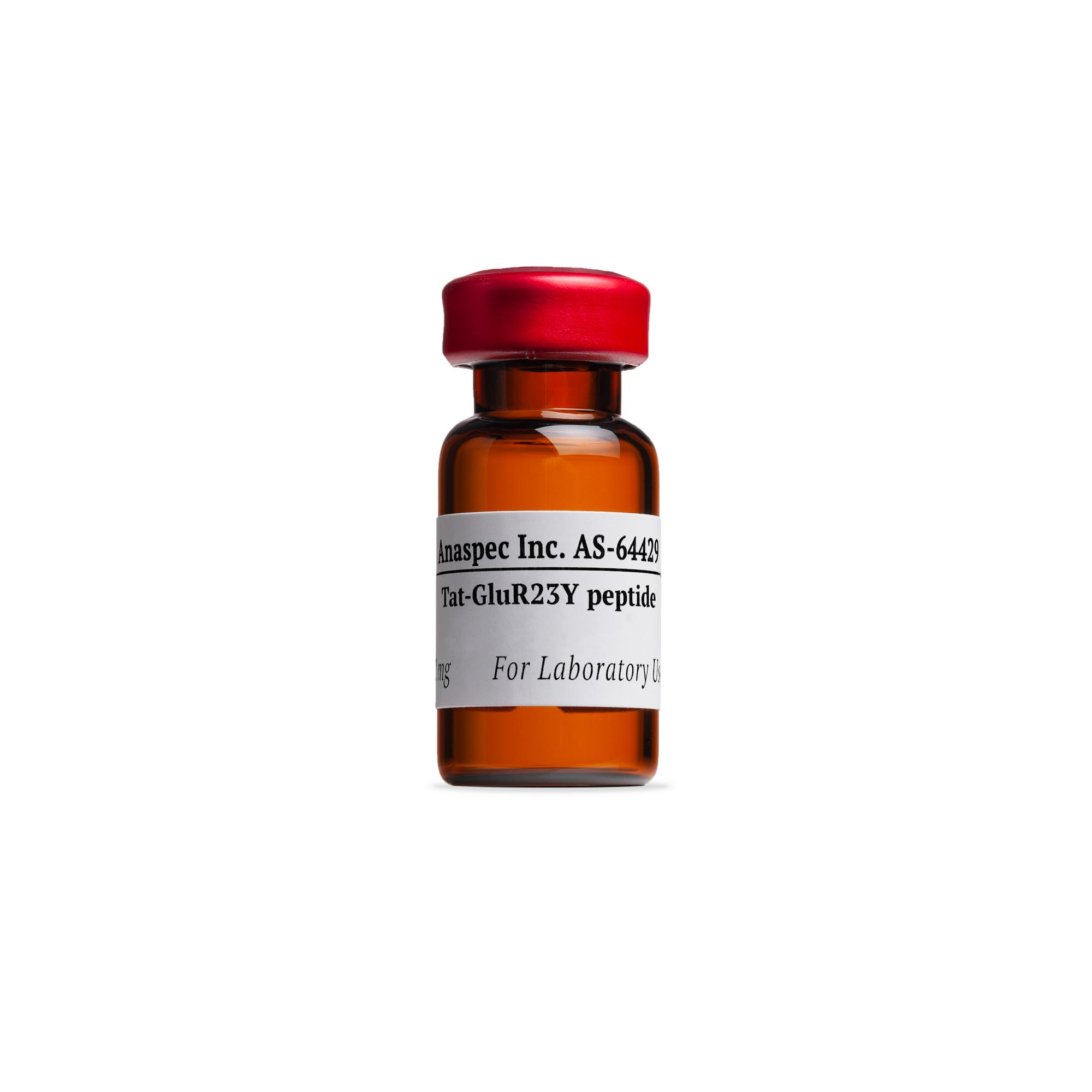
Tat-GluR23Y – 1 mg
$155.00
Tat-GluR23Y contains tyrosine residues that blocks phosphorylation of AMPA receptor endocytosis.
Overview
Tat-GluR23Y is a synthetic peptide designed to specifically block the phosphorylation of alpha-amino-3-hydroxy-5-methyl-isoxazole-4-propionic acid (AMPA) receptor endocytosis. By incorporating tyrosine residues, this peptide plays a crucial role in neurobiological studies, particularly in areas involving synaptic plasticity. Research indicates that Tat-GluR23Y effectively prevents regulated AMPA release and inhibits long-term depression (LTD) in brain structures such as the nucleus accumbens and dorsal hippocampus.
Key Features
- Synthetic peptide specifically targeting the AMPA receptor
- Blocks phosphorylation to prevent receptor endocytosis
- Contributes to the understanding of neuroplasticity
- Available in a convenient 1 mg format
- High purity level ensuring reliable results
Specifications
| Property | Details |
|---|---|
| Product Name | Tat-GluR23Y |
| Concentration | 1 mg |
| Category | Peptides |
| Functionality | Phosphorylation blockade |
FAQ
What is Tat-GluR23Y used for?
Tat-GluR23Y is primarily used in research to study the mechanisms of synaptic plasticity and to explore the role of AMPA receptors in neurobiological functions.
How should Tat-GluR23Y be stored?
For optimal stability, Tat-GluR23Y should be stored at -20°C in a dry place. Avoid repeated freeze-thaw cycles to maintain peptide integrity.
Can Tat-GluR23Y be used in vivo studies?
While primarily utilized in vitro, some studies suggest potential applications for in vivo experiments. It’s advisable to review specific protocols and consult with experts in the field when considering in vivo use.
If you’re involved in neuroscience research or related fields, you can find more valuable resources and related products like our PKG Substrate or Autocamtide-2 to complement your work. Each of these products, including Tat-GluR23Y, has been developed to help you achieve precise and reliable results in your studies.
Related Products
Browse more in Peptides.
Be the first to review “Tat-GluR23Y – 1 mg”
Related products
Peptides
Peptides
Peptides
Reviews
There are no reviews yet.