
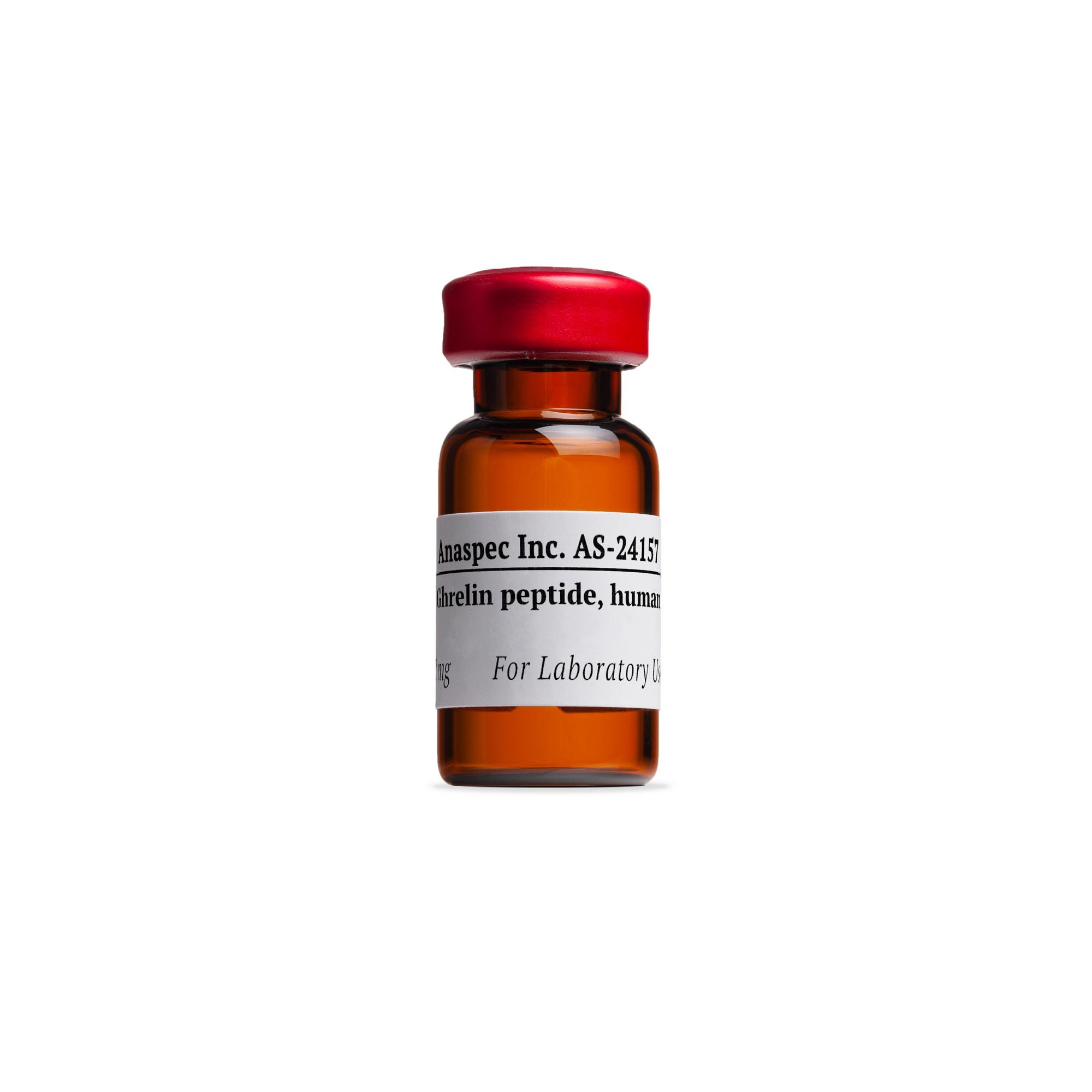
Ghrelin, human Peptide
Price range: $334.00 through $1,308.00
Ghrelin is appetite stimulating peptide hormone secreted by stomach P/D1-type cells in humans, circulates in the bloodstream during fasting conditions.
Overview
Ghrelin is a crucial peptide hormone that plays a key role in appetite regulation. Secreted by P/D1-type cells in the stomach, this 28-amino acid peptide circulates in the bloodstream, particularly during fasting states. Ghrelin, also known as acyl-Ghrelin (AG), is characterized by an enzymatically n-octanoylated Serine3, which serves as the endogenous ligand for the growth hormone secretagogue receptor 1a (GHSR1a). This receptor is widely expressed across various tissues, emphasizing the importance of Ghrelin in numerous physiological processes.
Key Features
- Stimulates appetite and regulates energy balance
- Crucial for growth hormone secretion
- Widely studied in neurological and metabolic research
- Available in high purity, suitable for research applications
- Compatible with various experimental protocols
Specifications
| Component | Details |
|---|---|
| Peptide Name | Ghrelin, human |
| Sequence | H-Ac-GHSR1a |
| Purity | ≥ 95% |
| Storage Conditions | -20°C |
FAQ
What is the function of Ghrelin in the human body?
Ghrelin is primarily known for its role in stimulating appetite. It signals the brain to increase food intake and promotes fat storage during times of energy deficit.
How is Ghrelin used in research?
Researchers utilize Ghrelin to study its effects on metabolism, growth hormone release, and its potential role in various neurological disorders. Its applications in research extend to understanding feeding behaviors and energy homeostasis.
Can I purchase Ghrelin for experimental use?
Yes, Ghrelin is available for sale in our Peptides category. You can find a range of high-quality peptides, including Ghrelin and other related peptides, to suit your research needs.
If you’re in need of high-quality peptides for your research, consider checking out our selection of Peptides. Additionally, our PKG Substrate and Autocamtide-2 can further enhance your experimental outcomes.
Related Products
| Size | 1 mg, 5 mg |
|---|
Be the first to review “Ghrelin, human Peptide”
Related products
Reviews
There are no reviews yet.