
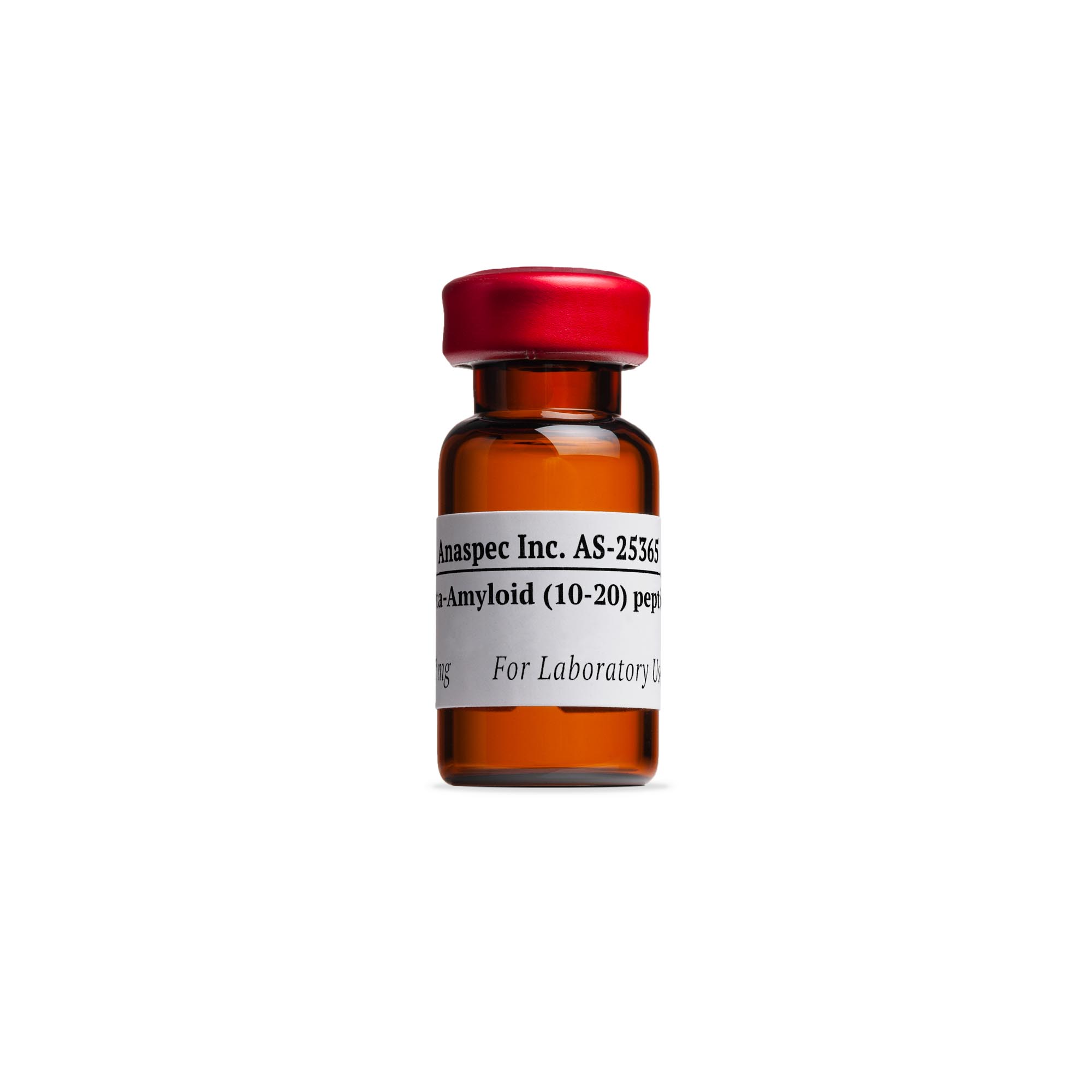
Beta-Amyloid (10-20) – 1 mg
$89.00
Aß fragments including Aß (10-20) enhances aggregation of Aß (1-40). All the Aß peptides that enhance aggregation contain residues 17 to 20 or 30 to 35
Overview
Introducing our Beta-Amyloid (10-20) peptide, a crucial tool for enhancing your research into Alzheimer’s disease and related neurological conditions. With our 1 mg offering, this peptide fragment is instrumental in studying the aggregation of Aß (1-40). The Beta-Amyloid (10-20) plays a significant role in promoting the aggregation of full-length Aß by targeting specific residues, making it essential for researchers focused on neurodegenerative disorders.
Key Features
- Enhances aggregation of Aß (1-40)
- Targets critical residues (17-20, 30-35) for aggregation
- Formulated for high purity and stability
- Available in convenient 1 mg quantities
- Ideal for neurological and physiological studies
Specifications
| Product Name | Beta-Amyloid (10-20) |
| Size | 1 mg |
| Category | Peptides |
FAQ
What is the significance of the Beta-Amyloid (10-20) peptide?
This peptide fragment is crucial for studying the aggregation process of Aß (1-40), particularly in the context of Alzheimer’s disease. By focusing on the relevant residues, researchers can better understand the underlying mechanisms of plaque formation.
How should I store the Beta-Amyloid (10-20) peptide?
For optimal stability, store the Beta-Amyloid (10-20) peptide at -20°C in a dry environment. Reconstitution should be done with appropriate buffers as per experimental requirements.
Can I use this peptide for in vivo studies?
While the Beta-Amyloid (10-20) peptide is primarily designed for in vitro applications, any in vivo use should be carefully evaluated and validated according to specific study protocols.
Enhance your research today by purchasing the Beta-Amyloid (10-20) peptide. Explore our range of peptides for more options to suit your experimental needs.
Related Products
Be the first to review “Beta-Amyloid (10-20) – 1 mg”
Related products
Reviews
There are no reviews yet.