
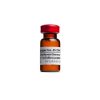
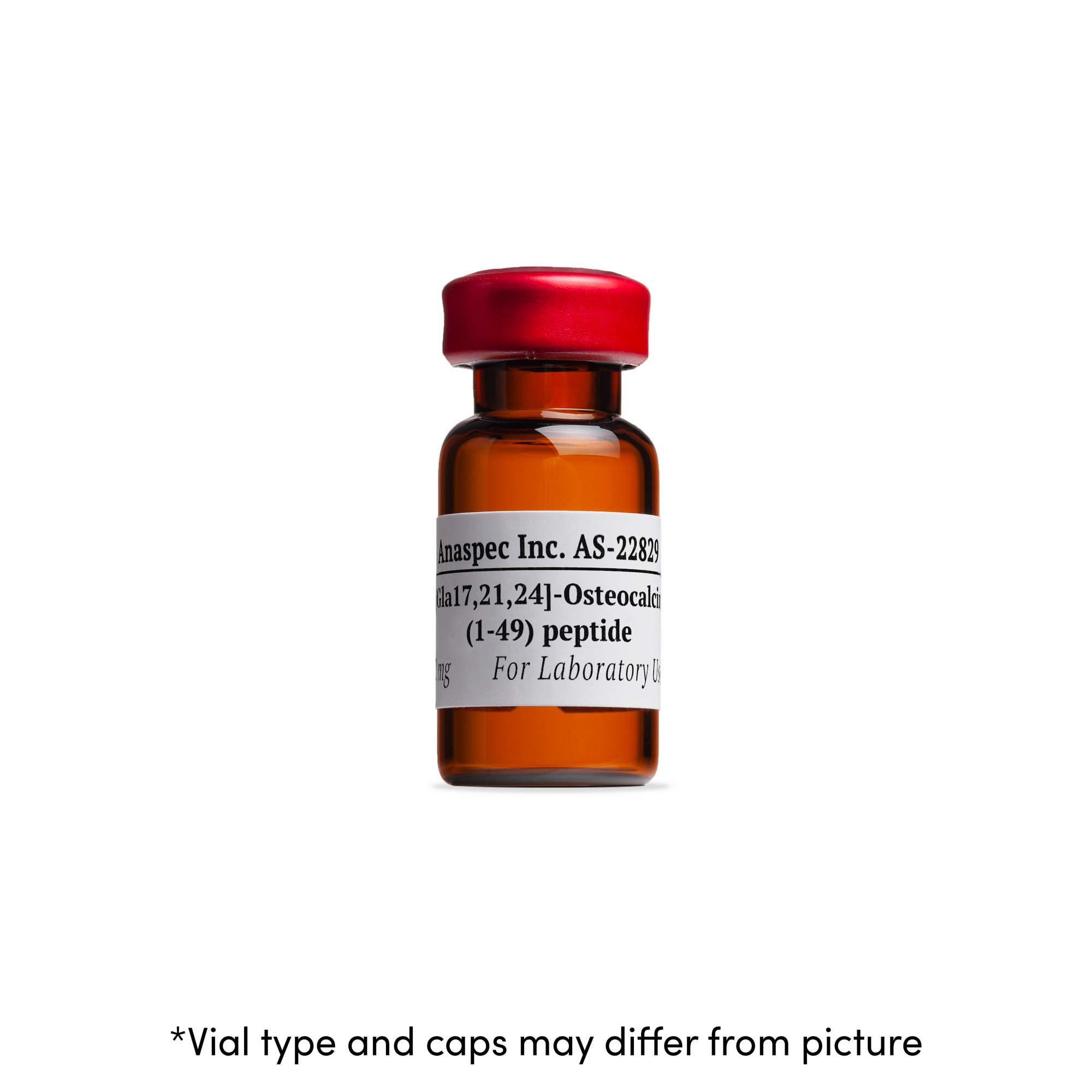
[Gla17,21,24]-Osteocalcin (1-49)
Price range: $181.00 through $1,051.00
[Gla17,21,24]-Osteocalcin (1-49) is a 49 amino acid peptide found exclusively in bone tissue. Vitamin K- and D-dependent protein.
Overview
[Gla17,21,24]-Osteocalcin (1-49) is a unique 49 amino acid peptide primarily found in bone tissue. This specific form of osteocalcin plays a crucial role in bone health and metabolism. Produced by osteoblasts and osteocytes, this vitamin K- and D-dependent protein is integral to bone formation and remodeling, making it a valuable biomarker for assessing osteoblast activity. If you’re conducting research in bone biology or exploring applications in osteoporosis and other bone diseases, consider adding this peptide to your assay kit.Key Features
- 49 amino acids in length, specific to bone tissue
- Vitamin K- and D-dependent protein
- Produced by osteoblasts, osteocytes, and odontoblasts
- Deposited in the extracellular bone matrix
- Marker for osteoblast activity and bone formation rate
- Involved in the regulation of bone metabolism
Specifications
| Specification | Details |
|---|---|
| Peptide Length | 49 amino acids |
| Source | Bone tissue |
| Purity | ≥95% (HPLC) |
| Storage | -20°C |
FAQ
What is [Gla17,21,24]-Osteocalcin used for?
This peptide serves as a biomarker for osteoblast function and bone formation. It is essential for studies related to bone health and disorders.
How should I store [Gla17,21,24]-Osteocalcin?
Store the peptide at -20°C to maintain its stability and integrity over time.
Can I use [Gla17,21,24]-Osteocalcin in vivo?
While it is primarily used for in vitro studies, consult your regulatory guidelines for potential in vivo applications.
Explore our complete selection of peptides to enhance your research. By incorporating [Gla17,21,24]-Osteocalcin (1-49) into your experiments, you can gain deeper insights into bone metabolism and potentially accelerate your discoveries.
Related Products
| Size | 0.1 mg, 0.5 mg, 1 mg |
|---|
Be the first to review “[Gla17,21,24]-Osteocalcin (1-49)”
Related products
Reviews
There are no reviews yet.