
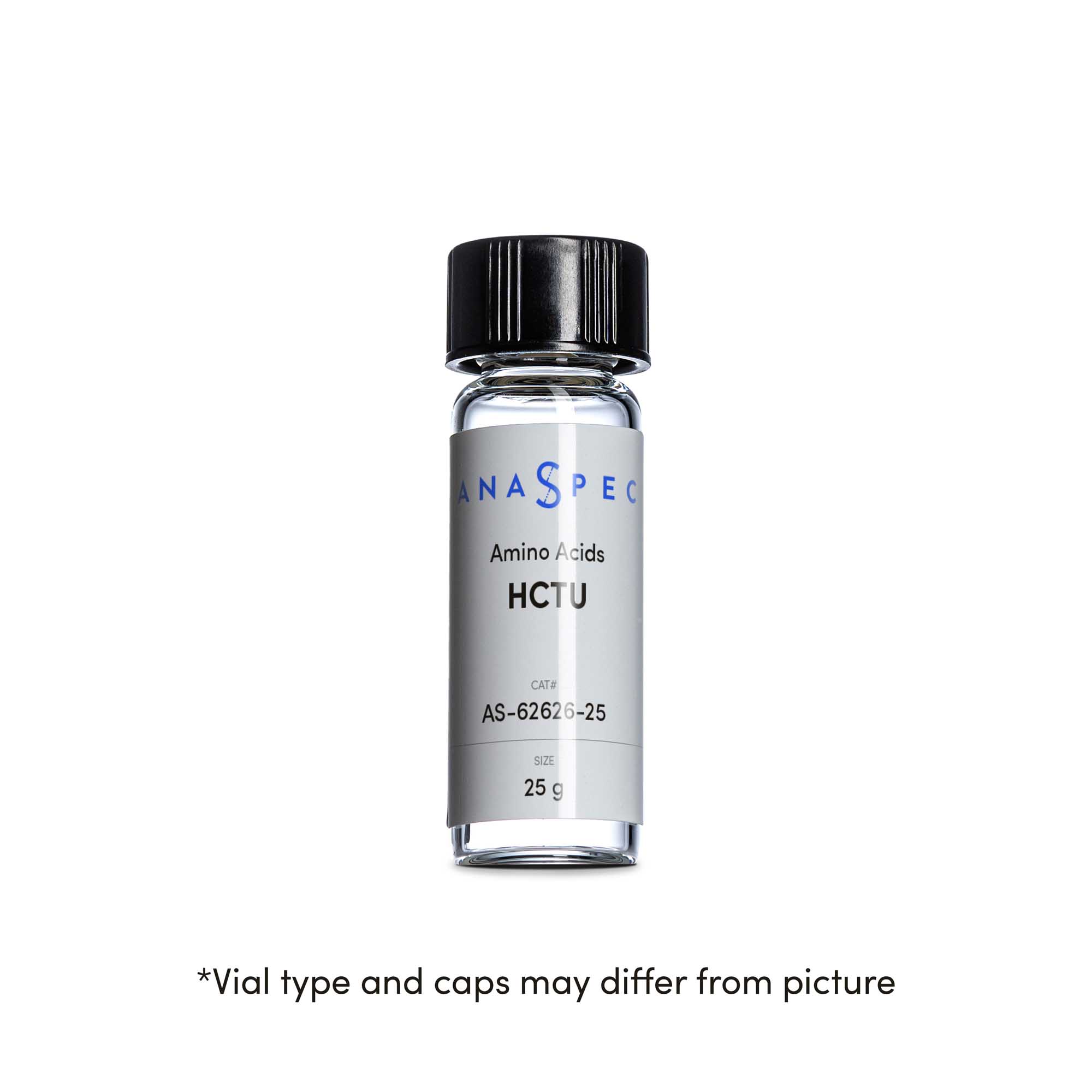
HCTU
Price range: $103.00 through $1,033.00
HCTU. Coupling Reagent. Peptide synthesis.
Overview
HCTU is a highly effective coupling reagent designed specifically for peptide synthesis. It facilitates the formation of peptide bonds between amino acids, ensuring that your synthesis process is efficient and yields high-quality results. Whether you’re working on complex peptide sequences or routine synthesis, HCTU can help streamline your workflow and enhance the overall success of your experiments.
Key Features
- High efficiency in coupling reactions
- Minimizes side reactions during peptide synthesis
- Ideal for both manual and automated synthesis
- Compatible with a variety of solvents and conditions
- Available in a convenient 25 g package
Specifications
| Product Name | HCTU |
| Category | Coupling Reagents |
| Weight | 25 g |
FAQ
What is HCTU used for?
HCTU is primarily used as a coupling reagent in peptide synthesis. It helps to efficiently form peptide bonds between amino acids, making it essential for successful peptide assembly in research and development.
How does HCTU compare to other coupling reagents?
HCTU is known for its high efficiency and low reactivity with nucleophiles, which minimizes side reactions. Compared to other reagents like HATU or Benzotriazole-1-yl-oxy-tris-pyrrolidino-phosphonium hexafluorophosphate, HCTU offers excellent performance in various synthesis conditions.
Is HCTU suitable for automated peptide synthesis?
Yes, HCTU is compatible with both manual and automated peptide synthesis systems. Its reliability and effectiveness make it a popular choice for laboratories utilizing automated synthesis protocols.
For further exploration of coupling reagents, consider checking out our extensive range of offerings in the coupling reagents category. If you’re looking for alternatives, you may also want to explore HATU and HOBt hydrate for your peptide synthesis needs. Ensure that your next research project is successful by incorporating HCTU into your arsenal of reagents.
Related Products
| Size | 100 g, 25 g, 250 g, 500 g |
|---|
Be the first to review “HCTU”
Related products
Hydrazide Resins
Chelators
Fmoc-Rink Amide MBHA Resins
Custom Reagents for Peptide
Special Quote – Peptide Synth. Reagents – Item only valid upon quote
Wang Resins
2-Chlorotrityl Resins
Reviews
There are no reviews yet.