
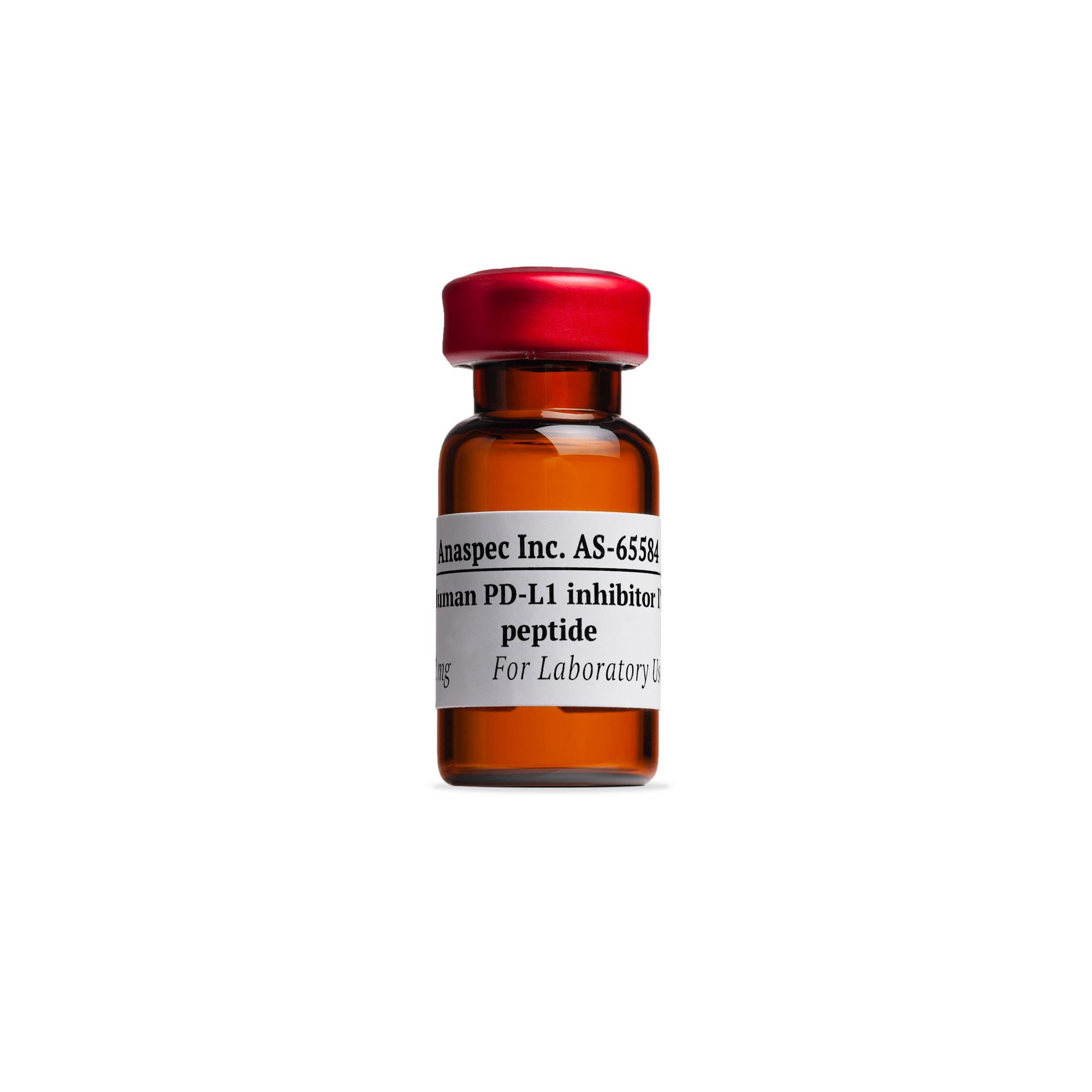
Human PD-L1 inhibitor IV – 1 mg
$258.00
Human PD-L1 inhibitor IV. Programed cell death 1 (PD-1) receptor and its ligand PD-L1 are crucial immune checkpoints to downregulate T cell activation.
Overview
The Human PD-L1 inhibitor IV is an essential peptide for researchers focusing on immunology and cancer studies. Recognizing the role of the Programmed cell death 1 (PD-1) receptor and its ligand PD-L1 as critical immune checkpoints in the regulation of T cell activity can lead to profound insights in the field of oncology. Many cancer cells exploit PD-L1 overexpression to evade immune system surveillance. With this inhibitor, you can effectively study PD-1/PD-L1 interactions and explore potential therapeutic interventions.
Key Features
- Designed to bind specifically to human PD-1, inhibiting the PD-1/PD-L1 interaction
- Contains crucial anchor residues for improved binding affinity
- Facilitates in-depth research on immune checkpoint pathways
- Useful for various cancer research applications, including immunotherapy studies
- High-purity peptide available in a 1 mg vial
Specifications
| Product | Human PD-L1 Inhibitor IV |
|---|---|
| Category | Peptides |
| Size | 1 mg |
| Sequence | GNWDYNSQRAQLYNQ |
FAQ
What applications can the Human PD-L1 Inhibitor IV be used for?
This inhibitor is primarily used in cancer research to study the mechanisms of immune evasion and to explore potential therapeutic applications, particularly in the development of immune checkpoint therapies.
How does the Human PD-L1 Inhibitor IV work?
The Human PD-L1 inhibitor IV binds to the PD-1 receptor on T cells, preventing its interaction with PD-L1. This blockade helps maintain T cell activation and enhances the immune response against tumors.
Where can I find more related products?
You can explore our complete range of peptidesincluding specific substrates and other inhibitors designed for similar applications, to enhance your research capabilities.
With the Human PD-L1 inhibitor IV, you gain access to a tool that opens new possibilities in cancer immunology research. Don’t miss out on this opportunity, buy yours today and take a step towards advancing your studies in immune checkpoint mechanisms.
Related Products
Be the first to review “Human PD-L1 inhibitor IV – 1 mg”
Related products
Peptides
Peptides
Reviews
There are no reviews yet.