
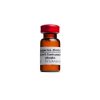
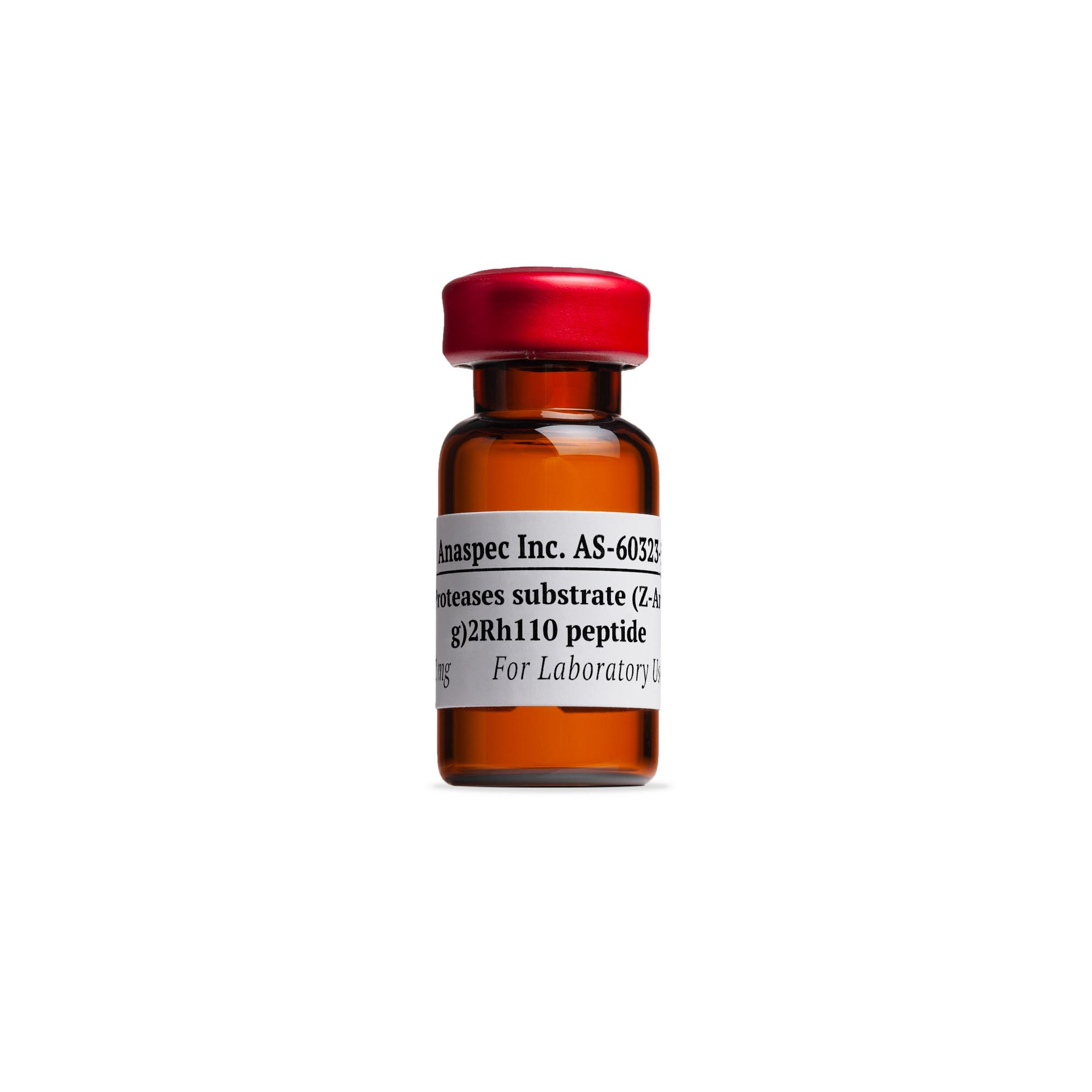
Proteases Substrate, Fluorogenic, (Z-R)2Rh110•2HCl – 5 mg
$162.00
Proteases Substrate, Fluorogenic, (Z-R)2Rh110•2HCl is a generic fluorogenic substrate for proteases such as trypsin, cathepsin B and L.
Overview
Introducing the Proteases Substrate, Fluorogenic, (Z-R)2Rh110•2HCl, your reliable choice for studying proteolytic activity. This substrate is specifically designed for use with proteases such as trypsin, cathepsin B, and L, providing accurate and consistent results in your assays. When hydrolyzed, the colorless (Z-Arg)2Rh110 transforms into rhodamine 110, a compound that exhibits excellent fluorescent properties, making it ideal for use with most fluorescence detection instruments. With optimal absorption and emission wavelengths at 501 nm and 527 nm respectively, you can expect reliable results that meet your research needs.
Key Features
- Fluorogenic substrate for proteases.
- Transforms into highly fluorescent rhodamine 110 upon hydrolysis.
- Excellent spectral properties for optimal fluorescence detection.
- Configured for use with common proteases like trypsin and cathepsin B.
- Effective for both research and diagnostic applications.
Specifications
| Product Name | Weight | Application |
|---|---|---|
| Proteases Substrate, Fluorogenic, (Z-R)2Rh110•2HCl | 5 mg | Protease assays |
FAQ
What is the primary use of (Z-R)2Rh110•2HCl?
This substrate is primarily used for measuring the activity of various proteases in biological samples, providing important insights into proteolytic processes.
How does the substrate work?
Upon interaction with proteases, (Z-R)2Rh110•2HCl is hydrolyzed, leading to the release of a fluorescent compound (rhodamine 110), which can then be detected using fluorescence instruments.
Where can I find more related products?
For a broader selection of substrates and related tools, check out our full range of peptides and other assay kits available on our store.
Related Products
Be the first to review “Proteases Substrate, Fluorogenic, (Z-R)2Rh110•2HCl – 5 mg”
Related products
Peptides
Peptides
Reviews
There are no reviews yet.