
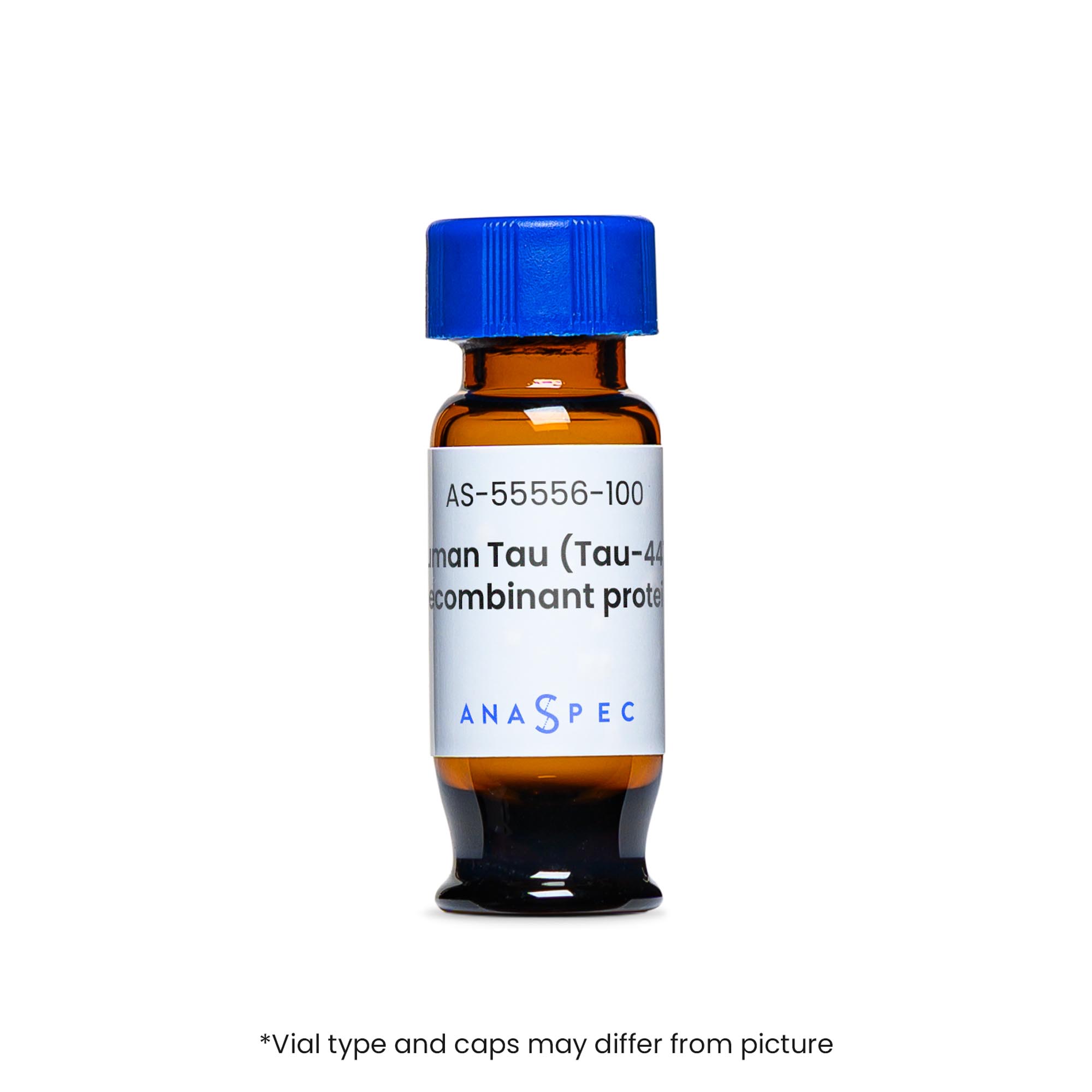
Tau (Tau-441), human recombinant
Price range: $276.00 through $468.00
Tau (Tau-441), human recombinant. Microtubule associated protein (Tau) found in CNS, its function is to promote assembly, stabilize neuronal microtubules.
Overview
Tau (Tau-441) is a crucial human recombinant microtubule-associated protein predominantly found in the central nervous system (CNS). It plays an essential role in promoting assembly and stabilizing neuronal microtubules, which are vital for maintaining neuronal structure and function. Tau-441 is the longest isoform of Tau, consisting of 441 amino acids and a molecular mass of 45.8 kDa. Its significance in neuroscience research is underscored by the implications of Tau dysregulation in neurodegenerative diseases, making it a key protein to study in the context of conditions such as Alzheimer’s disease.
Key Features
- Human recombinant Tau protein isoform Tau-441
- Promotes assembly and stabilizes neuronal microtubules
- Comprises 441 amino acids with a molecular weight of 45.8 kDa
- Important for understanding neurodegenerative disease mechanisms
- Available for research and diagnostic use
Specifications
| Property | Details |
|---|---|
| Protein Source | Human recombinant |
| Isoform | Tau-441 |
| Molecular Weight | 45.8 kDa |
| Protein Length | 441 amino acids |
FAQ
What research applications is Tau (Tau-441) suitable for?
Tau (Tau-441) is commonly used in studies related to neurodegenerative diseases, particularly to understand the mechanisms of Tau hyperphosphorylation and aggregation in conditions like Alzheimer’s.
How is Tau (Tau-441) provided for purchase?
The Tau (Tau-441) protein is available in vials, ensuring you receive a precise amount suitable for your experimental needs.
Can Tau (Tau-441) be used in co-immunoprecipitation studies?
Yes, Tau (Tau-441) is often utilized in co-immunoprecipitation studies to investigate interactions with other proteins involved in neuronal stability and integrity.
For more related proteins, you may also want to check out our Recombinant human MOG (1-125) or explore our full range of catalog recombinant proteins.
Related Products
| Size | 100 µg, 50 µg |
|---|
Be the first to review “Tau (Tau-441), human recombinant”
Related products

Catalog recombinant
Reviews
There are no reviews yet.