
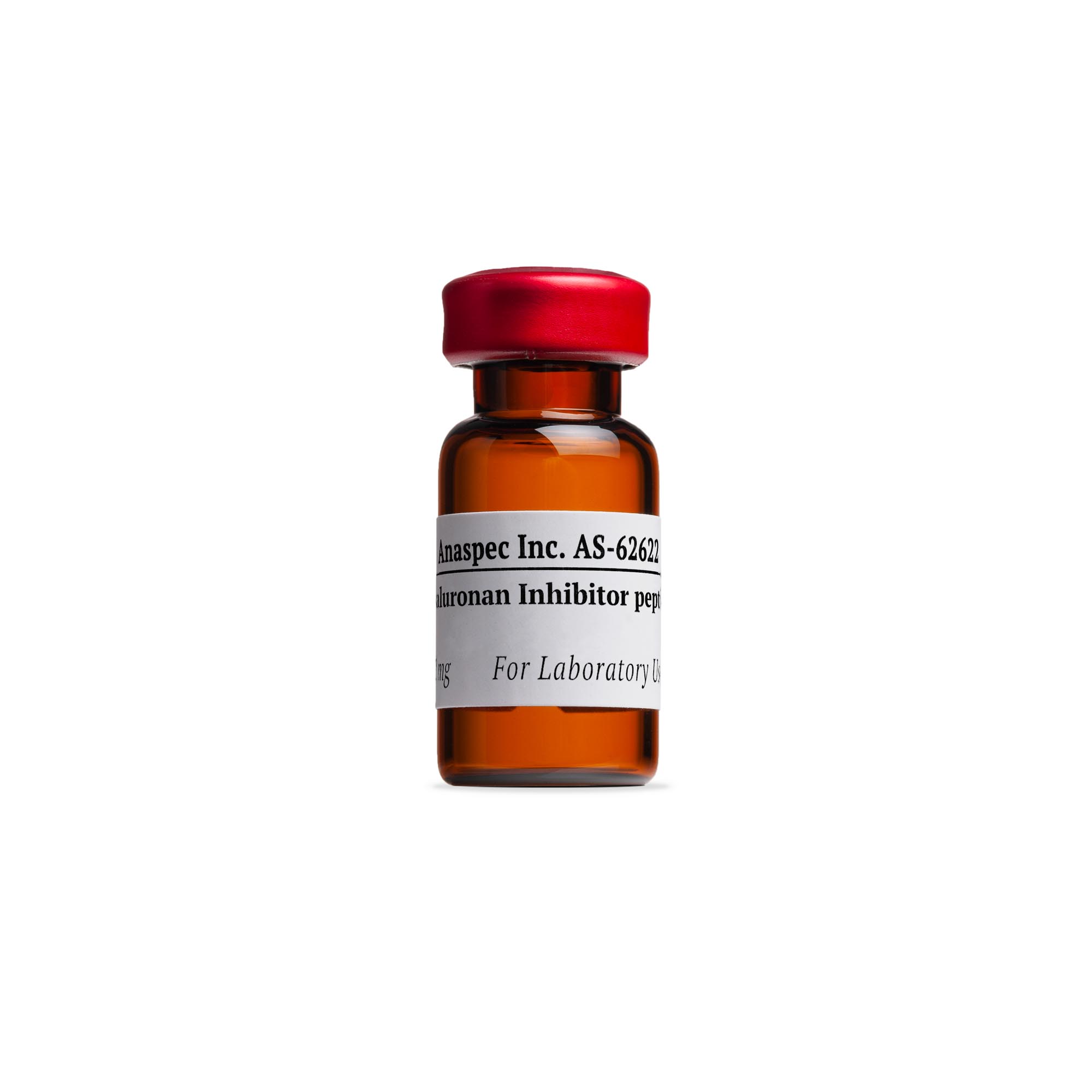
Hyaluronan Inhibitor – 1 mg
$122.00
Hyaluronan Inhibitor, shows specific binding to soluble, immobilized, cell-associated forms of hyaluronan, inhibits leukocyte adhesion to HA substrates.
Overview
The Hyaluronan Inhibitor is a specialized peptide designed to target hyaluronan, a high molecular weight glycosaminoglycan that plays a crucial role in the extracellular matrix and on cell surfaces. This 12 amino acid peptide exhibits specific binding to various forms of hyaluronan, including soluble, immobilized, and cell-associated types. Its unique ability to inhibit leukocyte adhesion to hyaluronan substrates is almost complete, making it a valuable tool in research related to inflammation and cellular interactions.
Key Features
- Targets soluble, immobilized, and cell-associated forms of hyaluronan
- Inhibits leukocyte adhesion effectively
- Contains 12 amino acids for precision in binding
- Useful for research in inflammation, cancer, and tissue engineering
- Available for sale in a 1 mg quantity
Specifications
| Product Name | Hyaluronan Inhibitor |
| Category | Peptides |
| Size | 1 mg |
| Amino Acid Count | 12 |
FAQ
What is the mechanism of action for the Hyaluronan Inhibitor?
This peptide works by specifically binding to hyaluronan and effectively blocking leukocyte adhesion to hyaluronan substrates, thereby interfering with cellular processes associated with inflammation.
In what types of research is the Hyaluronan Inhibitor used?
Researchers utilize this peptide in various studies, particularly those focusing on inflammation, cancer biology, and tissue engineering, where hyaluronan plays a significant role.
How can I use the Hyaluronan Inhibitor in my experiments?
The Hyaluronan Inhibitor can be incorporated into cell culture assays or in vivo studies to evaluate its effects on leukocyte behavior and hyaluronan interactions, providing insights into cellular responses in various biological contexts.
To explore more peptides that complement your research, consider browsing our selection of peptides. You might also find interesting applications for Autocamtide-2 and CREBtide. Enhance your research today with our advanced assay kits and protein labeling options!
Related Products
Be the first to review “Hyaluronan Inhibitor – 1 mg”
Related products
Peptides
Peptides
Peptides
Reviews
There are no reviews yet.