
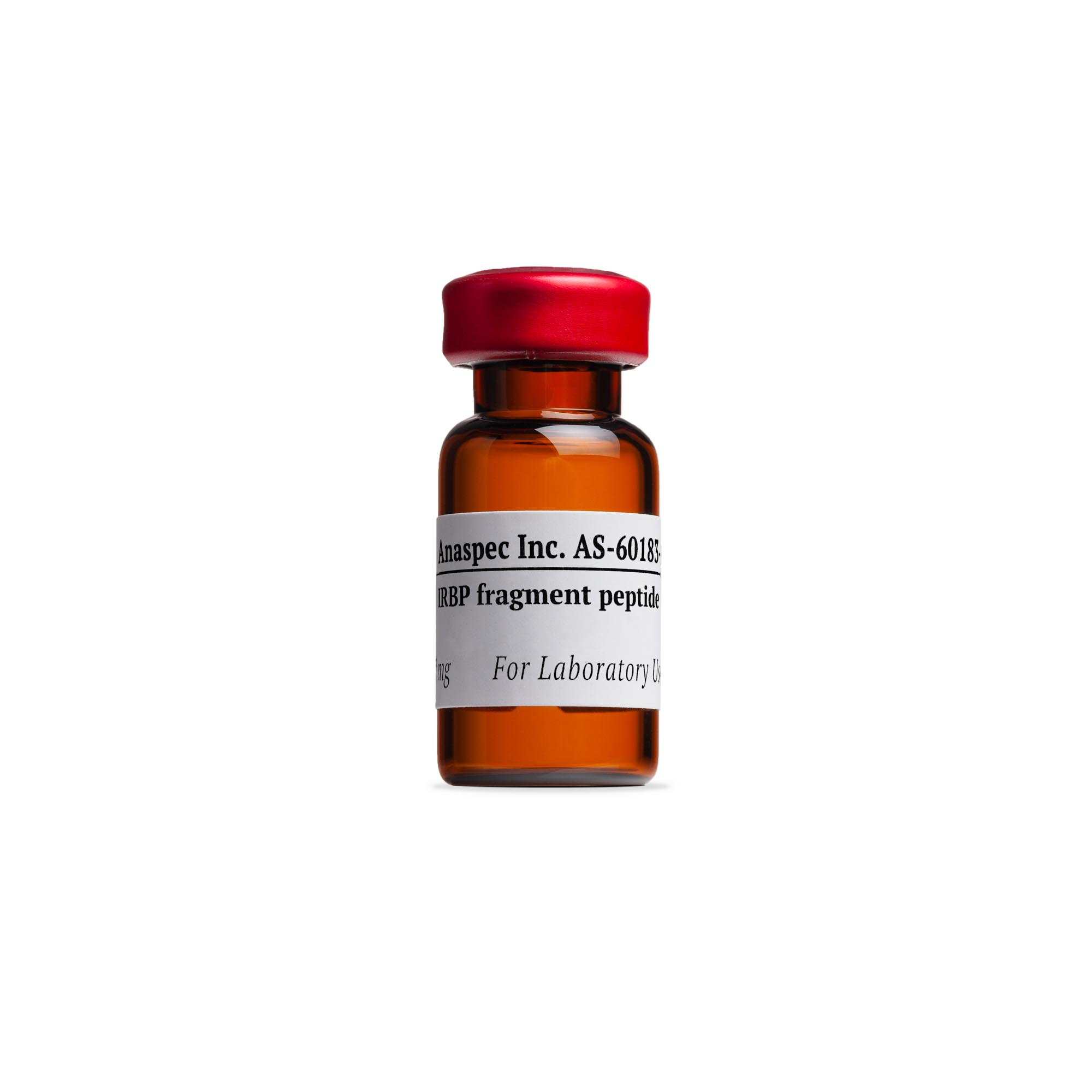
IRBP, Interphotoreceptor Retinoid Binding Protein Fragment
Price range: $172.00 through $648.00
IRBP, Interphotoreceptor Retinoid Binding Protein fragment, a major pathogenic T-cell epitope (161–180), present in the first homologous repeat of IRBP.
Overview
The IRBP, Interphotoreceptor Retinoid Binding Protein Fragment, is a key peptide that contains a significant pathogenic T-cell epitope (161, 180). This 20-residue peptide is derived from the first homologous repeat of the interphotoreceptor retinoid binding protein (IRBP), making it a crucial tool for medical and scientific research. Its role in inducing posterior uveitis (experimental autoimmune uveitis, or EAU) positions this peptide as an important element in studies related to retinal health and immune response.
Key Features
- Composed of 20 residues critical for T-cell interactions
- Facilitates research into retinal diseases and immune responses
- Suitable for various assays and experimental setups
- Available in high purity for reliable results
- Supports the development of diagnostic and therapeutic strategies
Specifications
| Property | Details |
|---|---|
| Product Name | IRBP, Interphotoreceptor Retinoid Binding Protein Fragment |
| Sequence | 161, 180 |
| Size | 20 residues |
| Purity | High |
FAQ
What is the function of the IRBP fragment?
The IRBP fragment acts as a major pathogenic T-cell epitope, essential for inducing immune responses in diseases such as posterior uveitis.
How can I use the IRBP peptide in my research?
You can incorporate the IRBP fragment in various assays or experimental procedures to study its role in immune response and retinal health.
Where can I find more peptides related to retinal research?
Explore our complete selection of peptides, including options like PKG Substrate and Autocamtide-2designed for various research applications.
Invest in your research with the IRBP, Interphotoreceptor Retinoid Binding Protein Fragment. This peptide is not just a product but a vital component for advancing your understanding of retinal immunology.
Related Products
Browse more in Peptides.
| Size | 1 mg, 5 mg |
|---|
Be the first to review “IRBP, Interphotoreceptor Retinoid Binding Protein Fragment”
Related products
Peptides
Peptides
Reviews
There are no reviews yet.