
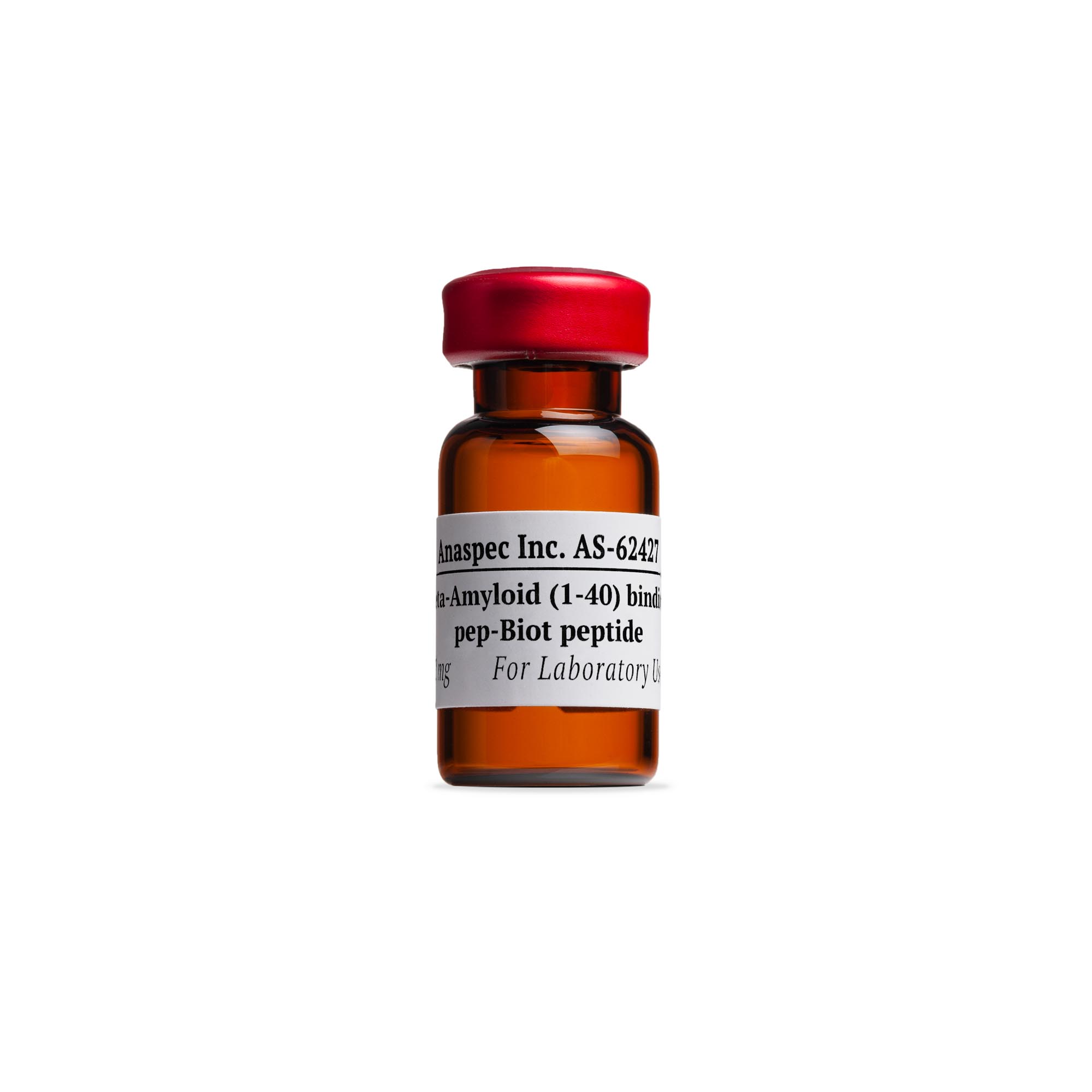
Beta-Amyloid (1-40) Binding Peptide, Biotin-labeled – 1 mg
$259.00
Beta-Amyloid (1-40) Binding Peptide, Biotin-labeled. 20 aa peptide binds to amyloid form of beta-Amyloid (1-40) but not to monomeric beta-Amyloid (1-40)
Overview
The Beta-Amyloid (1-40) Binding Peptide, Biotin-labeled is a specialized 20 amino acid peptide designed to bind specifically to the amyloid form of beta-Amyloid (1-40). This innovative peptide does not bind to the monomeric form, making it a valuable tool for researchers studying Alzheimer’s disease. With its unique targeting capabilities, this peptide could serve as a carrier molecule for delivering therapeutic agents directly to amyloid plaques in the brains of Alzheimer’s patients, potentially reversing some of the plaque’s toxic effects.
Key Features
- Biotin-labeled for easy detection and isolation.
- Highly specific binding to amyloid beta plaques.
- Potential for targeted therapy delivery in Alzheimer’s research.
- Facilitates imaging of amyloid plaques in affected brains.
- Comprises a sequence of 20 amino acids for effective binding.
Specifications
| Product Name | Beta-Amyloid (1-40) Binding Peptide, Biotin-labeled |
| Size | 1 mg |
| Amino Acid Sequence | 20 aa peptide |
FAQ
How can this peptide help in Alzheimer’s research?
This peptide can potentially target amyloid plaques directly, allowing for the delivery of neuroprotective agents or imaging agents specifically to those plaques, which is crucial for both therapeutic and diagnostic purposes.
What is the significance of biotin labeling?
Biotin labeling allows for the easy detection and isolation of the peptide in experimental setups, making it simpler to study its interactions and effects in biological systems.
Can this peptide be used for in vivo studies?
Yes, researchers are exploring its potential for in vivo studies to assess its efficacy in targeting amyloid plaques and delivering therapeutic agents successfully.
If you’re involved in Alzheimer’s research or studying protein interactions, consider adding the Beta-Amyloid (1-40) Binding Peptide, Biotin-labeled to your toolkit. It’s an essential component for advancing understanding and therapy in neurodegenerative diseases. Explore our full range of peptides and consider pairing this peptide with our PKG Substrate for enhanced research capabilities.
Related Products
Be the first to review “Beta-Amyloid (1-40) Binding Peptide, Biotin-labeled – 1 mg”
Related products
Peptides
Peptides
Peptides
Peptides
Reviews
There are no reviews yet.