
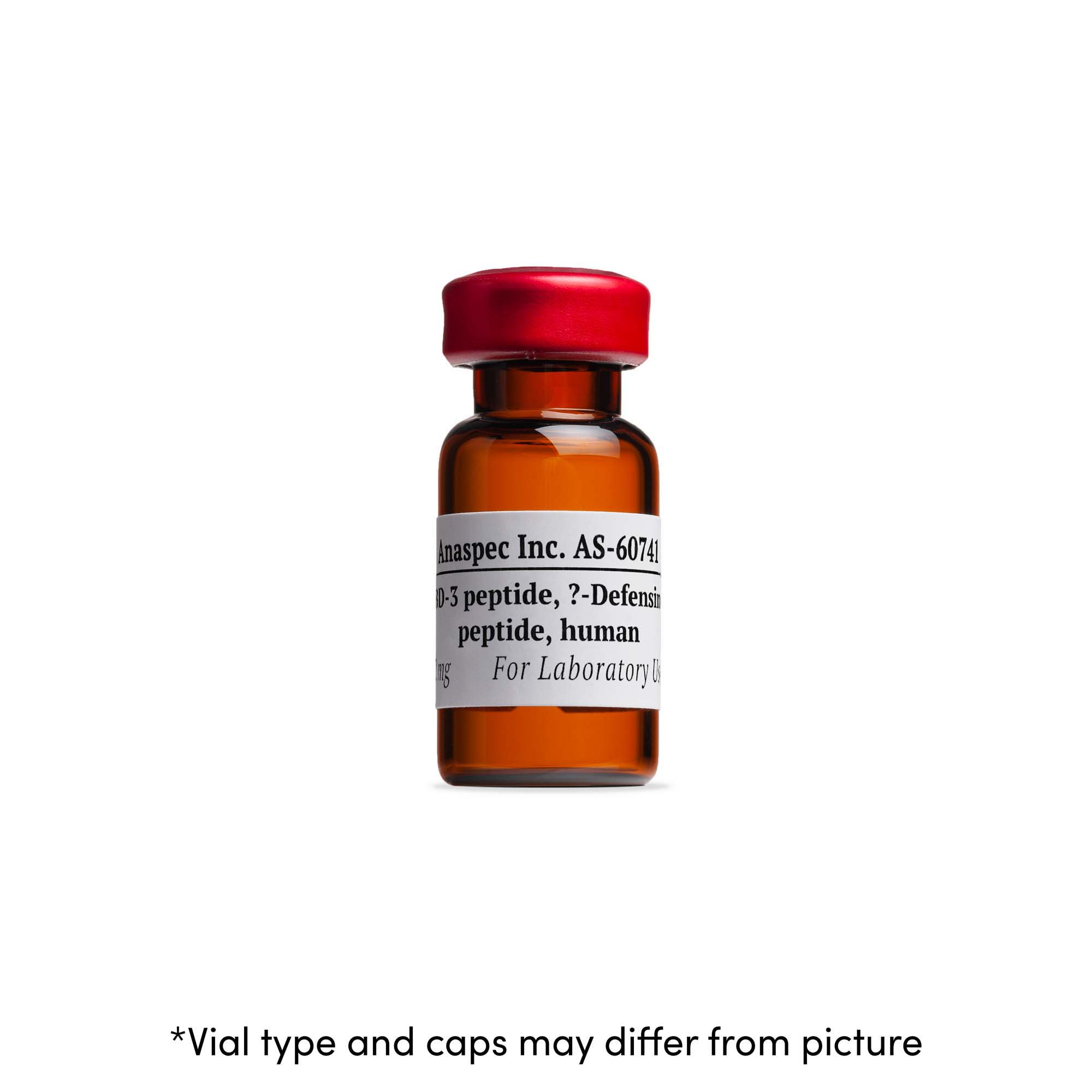
hBD-3, b-Defensin-3, human – 0.1 mg
$417.00
hBD-3, b-Defensin-3, demonstrates a salt-insensitive antimicrobial activity towards pathogenic microorganisms at physiologic salt concentrations.
Overview
hBD-3, or human beta-defensin 3, is a powerful antimicrobial peptide with a molecular weight of 5.1 kDa. Available for purchase at AnaSpec, this 45-amino acid peptide exhibits salt-insensitive antimicrobial activity, making it effective against various pathogenic microorganisms even under physiological salt concentrations. Found abundantly in keratinocytes, hBD-3 plays a crucial role in the immune response by targeting bacteria, fungi, and certain viruses. With its substantial host defense properties, adding this peptide to your research toolkit can enhance your studies in microbiological and immunological fields.
Key Features
- Salt-insensitive antimicrobial activity
- Effective against bacteria, fungi, and viruses
- 45-amino acid structure with three intramolecular disulfide bonds
- High expression in keratinocytes
- Ideal for research in immunology and microbiology
Specifications
| Property | Details |
|---|---|
| Product Name | hBD-3, b-Defensin-3, human |
| Amount | 0.1 mg |
| Molecular Weight | 5.1 kDa |
| Amino Acids | 45 |
FAQ
What types of pathogens does hBD-3 target?
hBD-3 is effective against a wide range of pathogens, including various bacteria, fungi, and even some viruses, making it suitable for diverse applications in antimicrobial research.
How should I store hBD-3?
For optimal stability, it is recommended to store hBD-3 at -20°C and avoid repeated freeze-thaw cycles, which can degrade the peptide.
Can hBD-3 be used for in vitro studies?
Yes, hBD-3 is highly applicable for in vitro studies focused on antimicrobial activity and immune response assessments, contributing valuable insights into the behavior of immune peptides.
If you’re looking to enhance your research capabilities, consider exploring our range of peptides for your experiments. Also, check out solutions like our PKG Substrate or the unique Autocamtide-2 to complement your studies.
Related Products
Be the first to review “hBD-3, b-Defensin-3, human – 0.1 mg”
Related products
Peptides
Peptides
Reviews
There are no reviews yet.