
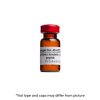
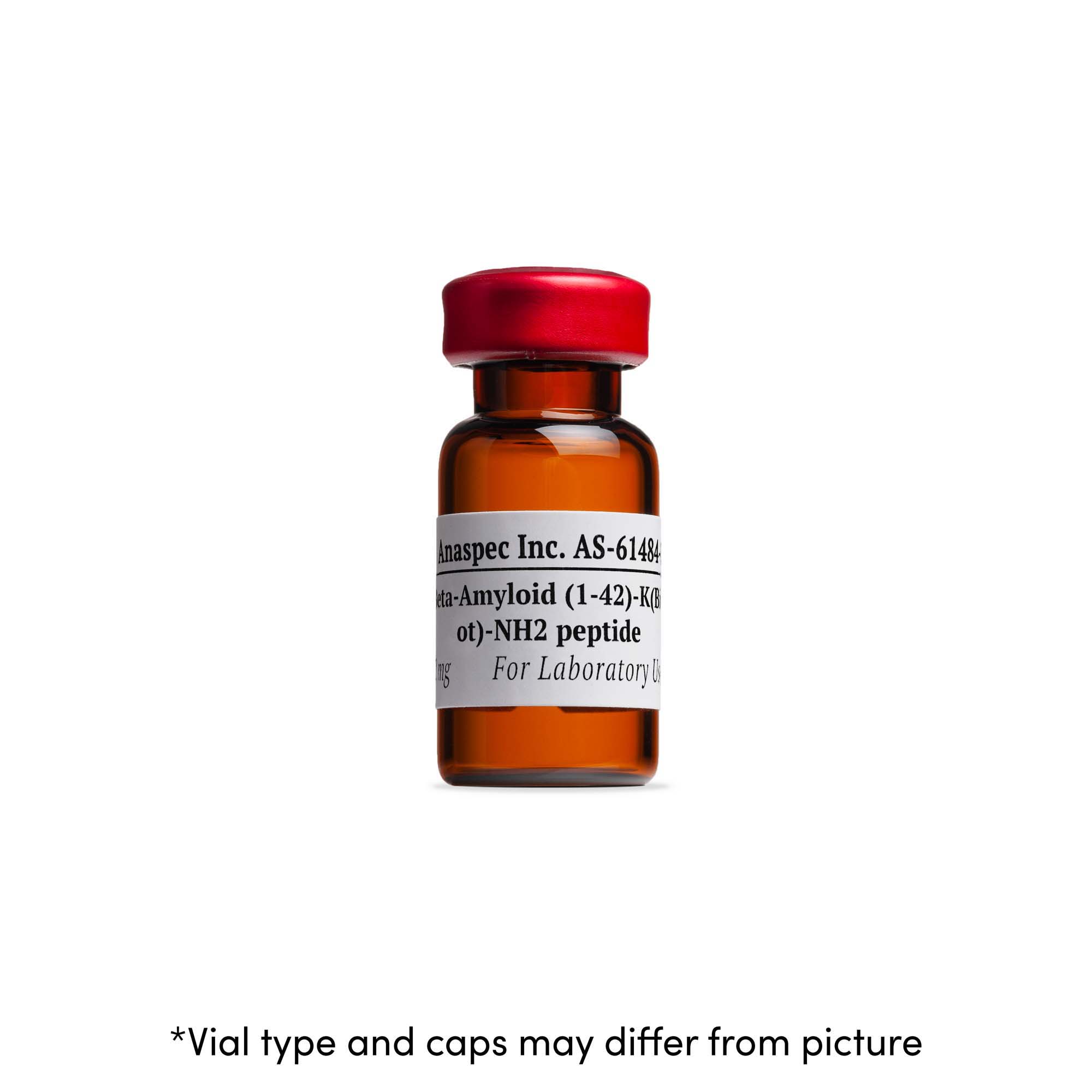
Beta-Amyloid (1-42)-Lys(Biotin)-NH2
Price range: $251.00 through $817.00
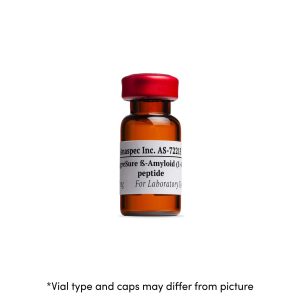
Beta-Amyloid (1-42)-Lys(Biotin)-NH2. Aß (1-42), a major component of amyloid plaques, accumulates in neurons of Alzheimer’s disease brains.
Overview
Beta-Amyloid (1-42)-Lys(Biotin)-NH2 is an essential peptide for researchers studying Alzheimer’s disease. This peptide, a crucial component of amyloid plaques, is known to accumulate in the neurons of individuals affected by this devastating condition. The Aß (1-42) species is primarily associated with senile plaque amyloids, while Aß (1-40) is found more abundantly in cerebrovascular amyloid deposits. Our biotinylated version at the C-terminus allows easy detection and analysis, making it invaluable for your assays and experiments.
Key Features
- Biotinylated at the C-terminus for enhanced detection
- Optimal for studying amyloid plaques and Alzheimer’s disease
- Supports various biochemical applications
- High purity and reliable performance
- Available in multiple quantities for your research needs
Specifications
| Product Name | Beta-Amyloid (1-42)-Lys(Biotin)-NH2 |
| Molecular Weight | Approx. 4518.78 Da |
| Purity | ≥95% |
| Form | Lyophilized Powder |
| Storage | -20°C |
FAQ
What is the significance of Beta-Amyloid (1-42) in Alzheimer’s research?
Beta-Amyloid (1-42) plays a vital role in the formation of amyloid plaques, which are characteristic of Alzheimer’s disease. Studying this peptide helps researchers understand the disease’s mechanisms and potential treatment pathways.
How should I store this peptide?
For optimal stability, store Beta-Amyloid (1-42)-Lys(Biotin)-NH2 at -20°C. Ensure that it is tightly sealed and protected from moisture.
Can this peptide be used in various assay formats?
Yes, this biotinylated peptide is versatile and can be utilized in different assay formats, including ELISA and Western blotting, enhancing the reliability of your experimental results.
Invest in Beta-Amyloid (1-42)-Lys(Biotin)-NH2 today and advance your Alzheimer’s research. Explore our range of peptides and related products to find everything you need for your studies!
Related Products
- PKG Substrate [RKRSRAE], Glasstide
- Autocamtide-2 [KKALRRQETVDAL]
- CREBtide [KRREILSRRPSYR], 5-FAM labeled
Browse more in Peptides.
| Size | 0.1 mg, 0.5 mg |
|---|
Be the first to review “Beta-Amyloid (1-42)-Lys(Biotin)-NH2”
Related products
Peptides
Peptides
Peptides
Reviews
There are no reviews yet.