
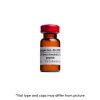
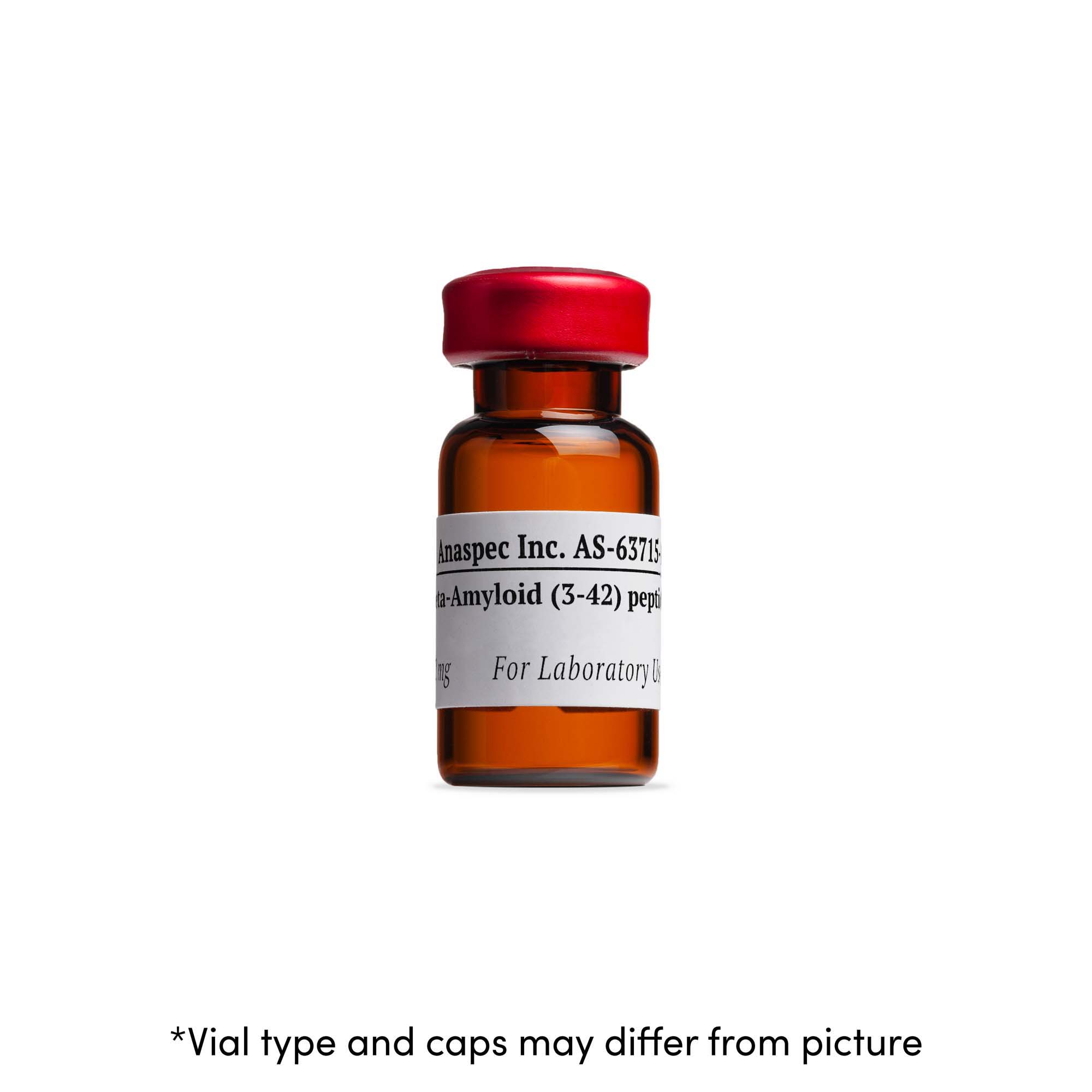
Beta-Amyloid (3-42)
Price range: $131.00 through $648.00
Beta-Amyloid (3-42), It is the non-pyroglatamate form of beta-Amyloid (3-42).
Overview
Beta-Amyloid (3-42) is a critical peptide in Alzheimer’s disease research, representing the non-pyroglutamate form of beta-Amyloid (3-42). This peptide is the N-terminally truncated version of beta-Amyloid (1-42), which plays a significant role in the formation of senile plaques. Understanding its structure and function is crucial for studying neurodegenerative conditions and developing therapeutic strategies.
Key Features
- Non-pyroglutamate form of beta-Amyloid (3-42)
- N-terminally truncated version, key for plaque formation research
- Higher aggregation propensity compared to other forms
- Essential for neurological studies, particularly Alzheimer’s
- Available for purchase in precise quantities
Specifications
| Property | Details |
|---|---|
| Peptide Sequence | Beta-Amyloid (3-42) |
| Modification | Non-pyroglutamate |
| Application | Research in neurodegenerative diseases |
| Quality | High purity, suitable for in vitro assays |
FAQ
What is Beta-Amyloid (3-42) used for?
Beta-Amyloid (3-42) is used in research related to Alzheimer’s disease, particularly in studies focusing on the aggregation of amyloid plaques.
How is this peptide delivered?
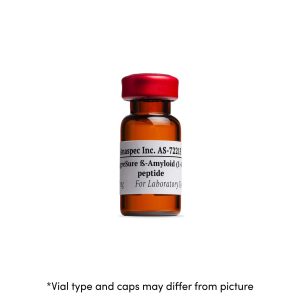
The peptide is provided in a vial, ensuring that you receive a controlled amount for your experiments. Each vial contains a precise measurement, allowing for accurate dosing in your assays.
Can I use Beta-Amyloid (3-42) in vivo studies?
While Beta-Amyloid (3-42) is primarily used for in vitro studies, its applications may extend to in vivo investigations based on specific research needs and protocols.
For those engaged in advanced research, our Beta-Amyloid (3-42) peptide is just one of many essential peptides we offer. Explore our full range of peptides for various applications, including our PKG substrate and Autocamtide-2. Enhance your research with our high-quality products tailored for precision and effectiveness.
Related Products
Browse more in Peptides.
| Size | 0.1 mg, 1 mg |
|---|
Be the first to review “Beta-Amyloid (3-42)”
Related products
Peptides
Peptides
Reviews
There are no reviews yet.