
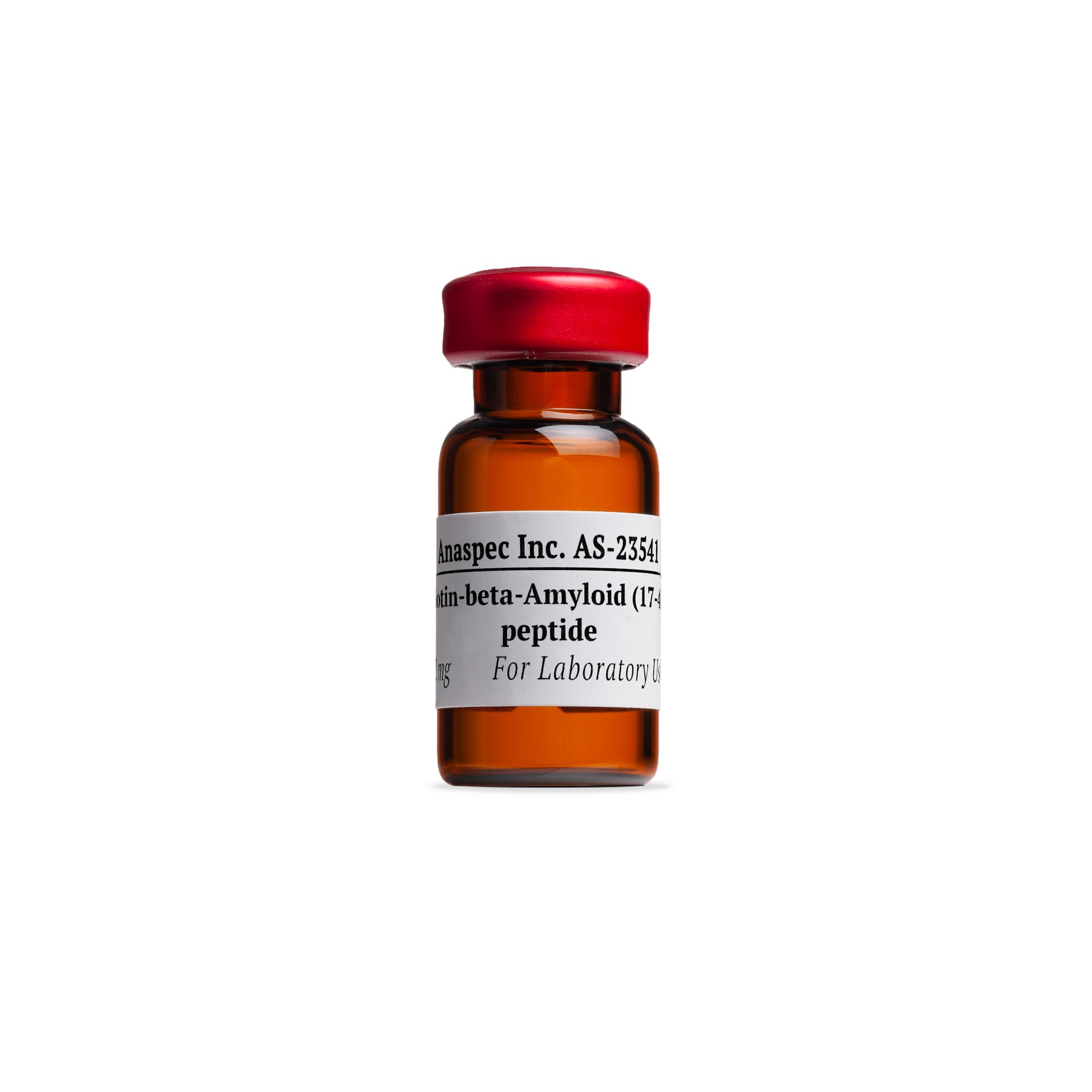
Biotin-beta-Amyloid (17-40) – 1 mg
$816.00
In Alheimer's Disease brains plaques contain amino-terminal truncated Aß peptides including the alpha secretase-generated p3 fragment, beta-Amyloid 17-40.
Overview
Biotin-beta-Amyloid (17-40) is a crucial peptide used in research focused on Alzheimer’s Disease. In the brains of individuals affected by this condition, plaques are formed from amino-terminal truncated beta-Amyloid peptides, particularly the alpha secretase-generated p3 fragments, 17-40 and 17-42. These peptides play a significant role in inducing the production of pro-inflammatory cytokines and chemokines both in vitro and in vivo. Our biotinylated peptide is designed to facilitate easy detection and study of these critical processes, making it an essential part of your research toolkit.
Key Features
- Biotinylated at the N-terminus for enhanced detection
- Essential for studying Alzheimer’s Disease pathology
- Induces pro-inflammatory responses in various models
- Available in a convenient 1 mg size
- Suitable for a range of laboratory applications
Specifications
| Product Name | Biotin-beta-Amyloid (17-40) |
| Amount | 1 mg |
| Category | Peptides |
FAQ
What is the significance of biotinylation in this peptide?
Biotinylation at the N-terminus enhances the peptide’s ability to be detected in various assays, making it easier for researchers to study its interactions and effects.
How is Biotin-beta-Amyloid (17-40) used in research?
This peptide is primarily used to investigate the mechanisms of Alzheimer’s Disease, including the role of beta-Amyloid peptides in the formation of plaques and their inflammatory responses.
What assays can I use Biotin-beta-Amyloid (17-40) for?
You can utilize this peptide in immunoassays, binding studies, and other experimental setups focused on neurobiology and Alzheimer’s research. For related applications, check out our PKG Substrate and Autocamtide-2.
With Biotin-beta-Amyloid (17-40), you gain the ability to explore and understand crucial biochemical pathways relevant to Alzheimer’s Disease. Invest in this essential peptide today and advance your research efforts effectively.
Related Products
Browse more in Peptides.
Be the first to review “Biotin-beta-Amyloid (17-40) – 1 mg”
Related products
Peptides
Reviews
There are no reviews yet.