
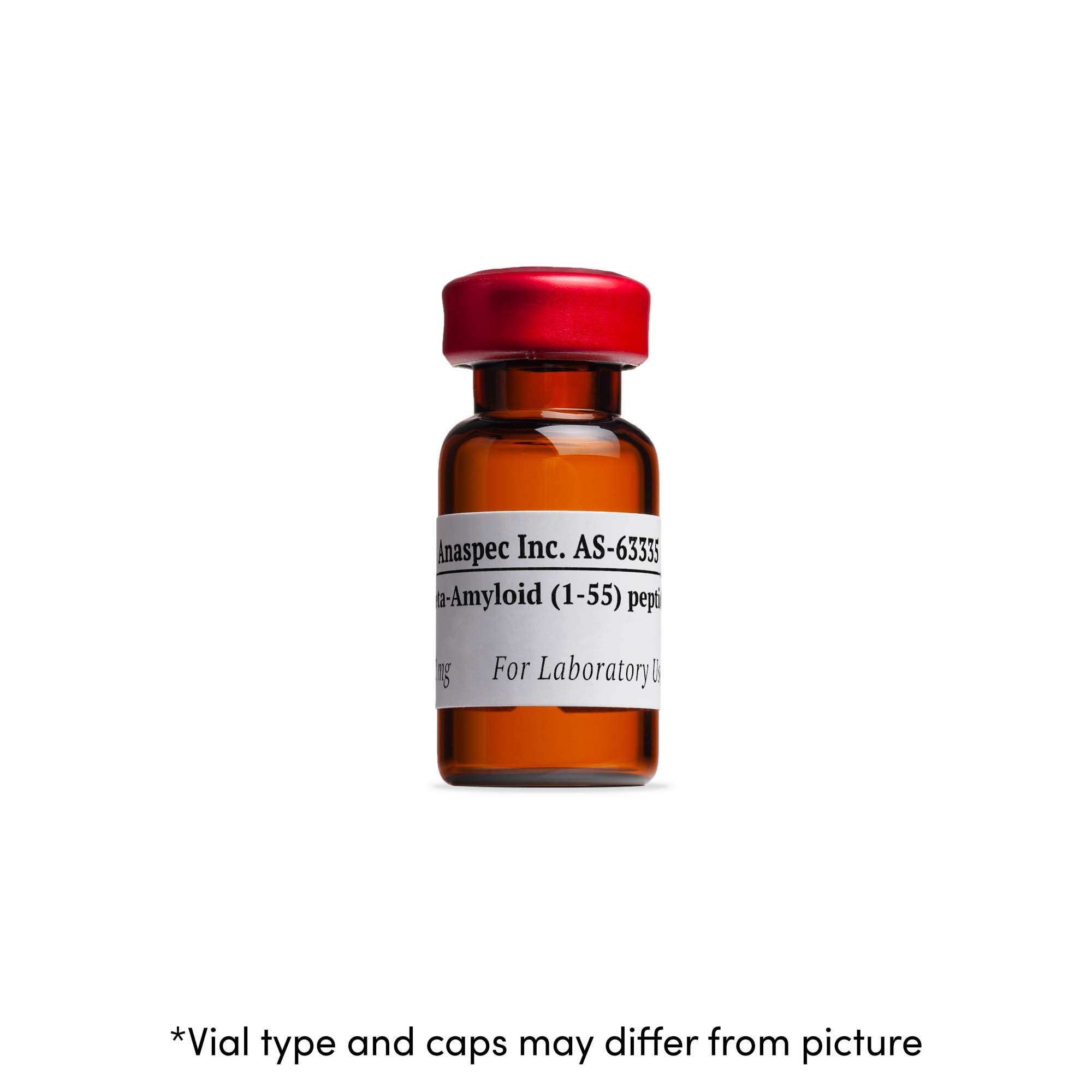
Beta-Amyloid (1-55) – 0.1 mg
$318.00
Beta-Amyloid (1-55), 672-726 fragment of Amyloid Precursor Protein.
Overview
Beta-Amyloid (1-55) is a key peptide derived from the Amyloid Precursor Protein (APP), specifically the 672-726 fragment. This peptide plays a crucial role in Alzheimer’s disease research, serving as an important marker in understanding amyloid plaque formation. With a focus on neurological and physiological indicators, this peptide can aid scientists in their search for effective diagnostic and therapeutic strategies. The 0.1 mg quantity is ideal for various experimental applications, allowing for precise dosing and effective utilization in research settings.
Key Features
- Derived from the Amyloid Precursor Protein, crucial for Alzheimer’s research
- High purity and consistent quality for reliable results
- Facilitates exploration of amyloid beta’s role in neurodegenerative diseases
- Available in 0.1 mg quantities for flexibility in research
Specifications
| Item | Value |
|---|---|
| Peptide Name | Beta-Amyloid (1-55) |
| Reference | 672-726 fragment of APP |
| Quantity | 0.1 mg |
FAQ
What is Beta-Amyloid (1-55) used for?
This peptide is primarily utilized in research related to Alzheimer’s disease, helping to understand amyloid plaque formation and its implications in neurodegeneration.
How pure is this peptide?
Our Beta-Amyloid (1-55) is manufactured to high standards of purity, ensuring that you receive consistent and reliable results for your research.
Can this peptide be used in diagnostic assays?
Yes, Beta-Amyloid (1-55) can be utilized in various diagnostic assays, aiding researchers in the development of Alzheimer-related tests. For those interested, you may also explore options like our PKG Substrate or Autocamtide-2 for complementary studies.
If you’re ready to advance your research, consider adding Beta-Amyloid (1-55) to your toolkit. This peptide, along with our extensive selection of peptidescan enhance your studies on neurological diseases. Order now to drive your research forward!
Related Products
Be the first to review “Beta-Amyloid (1-55) – 0.1 mg”
Related products
Peptides
Peptides
Peptides
Peptides
Reviews
There are no reviews yet.