
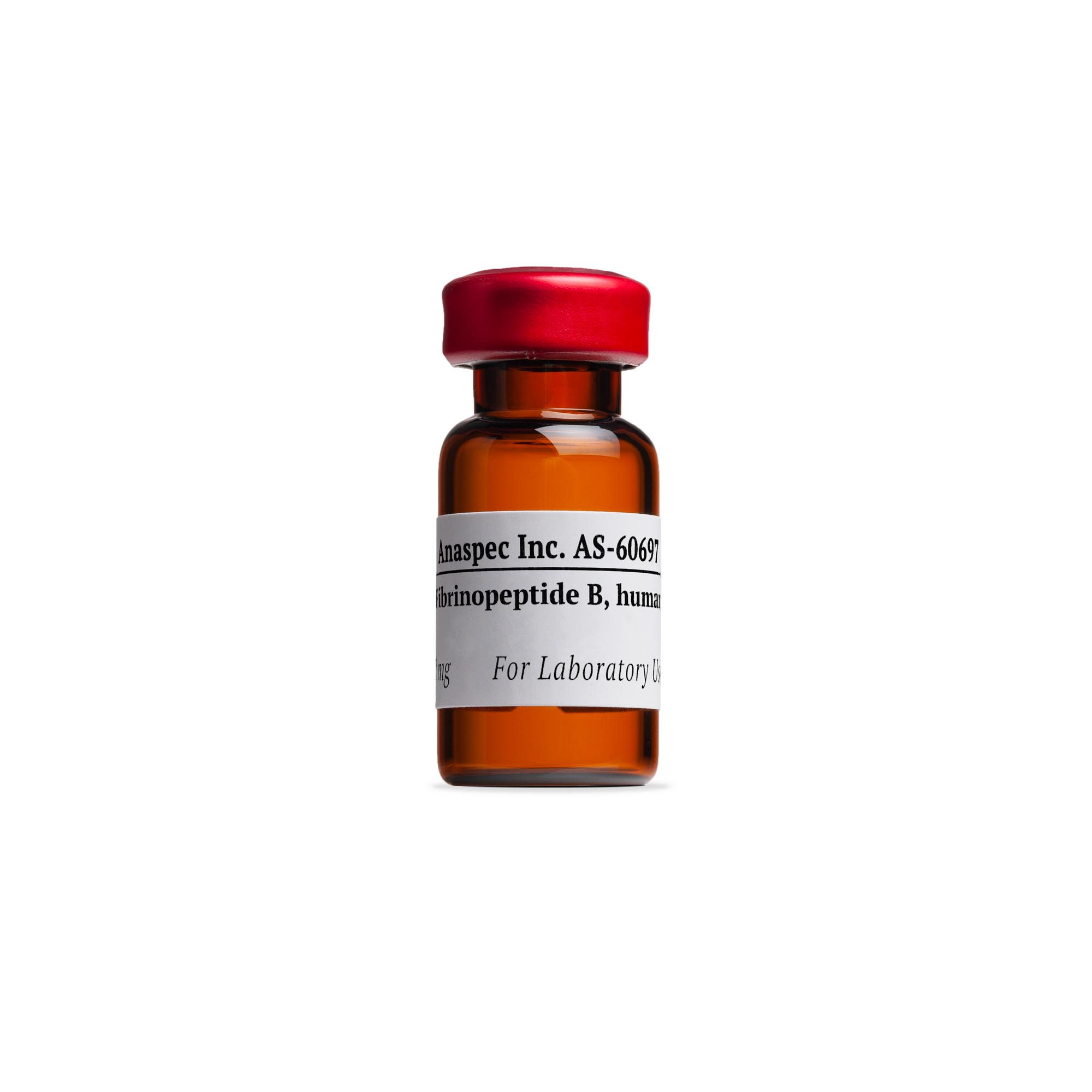
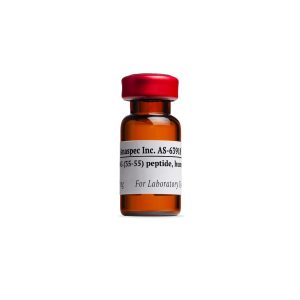
Fibrinopeptide B, human – 1 mg
$100.00
Fibrinopeptide B is N-terminal modified peptide with pyroglutamylation, a common post-translational process.
Overview
Fibrinopeptide B (FPB) is a vital component in the coagulation pathway, specifically tailored for those studying the intricate process of blood clotting. This human-derived peptide, at 1 mg, is N-terminal modified, featuring pyroglutamylation, a modification that plays a key role in its function. Understanding fibrinopeptides like FPB is integral for research in hematology, cardiovascular studies, and various diagnostic applications.
Key Features
- Human-derived Fibrinopeptide B for accurate research.
- N-terminal modified with pyroglutamylation for enhanced functionality.
- Essential for studying coagulation pathways and thrombin activity.
- High purity and stability for reliable results.
- Versatile applications in research and diagnostic assays.
Specifications
| Product Name | Fibrinopeptide B |
|---|---|
| Supplier | AnaSpec |
| Quantity | 1 mg |
| Modification | N-terminal pyroglutamylation |
FAQ
What is Fibrinopeptide B used for?
Fibrinopeptide B is primarily used in research related to blood coagulation and thrombin activity. It’s essential for studies investigating bleeding disorders and clotting mechanisms.
How does Fibrinopeptide B relate to fibrinogen?
Fibrinopeptide B is cleaved from fibrinogen by thrombin during the conversion of soluble fibrinogen to insoluble fibrin, which is crucial for the blood clotting process.
Where can I find related products?
You can explore our range of peptides, including our PKG substrate and Autocamtide-2for various research needs.
For those working specifically with peptides, our selection, including the highly purposed CREBtideis designed to meet your research requirements. Purchasing Fibrinopeptide B is a straightforward step toward advancing your research in coagulation pathways.
Browse more in Peptides.
Be the first to review “Fibrinopeptide B, human – 1 mg”
Related products
Peptides
Reviews
There are no reviews yet.