
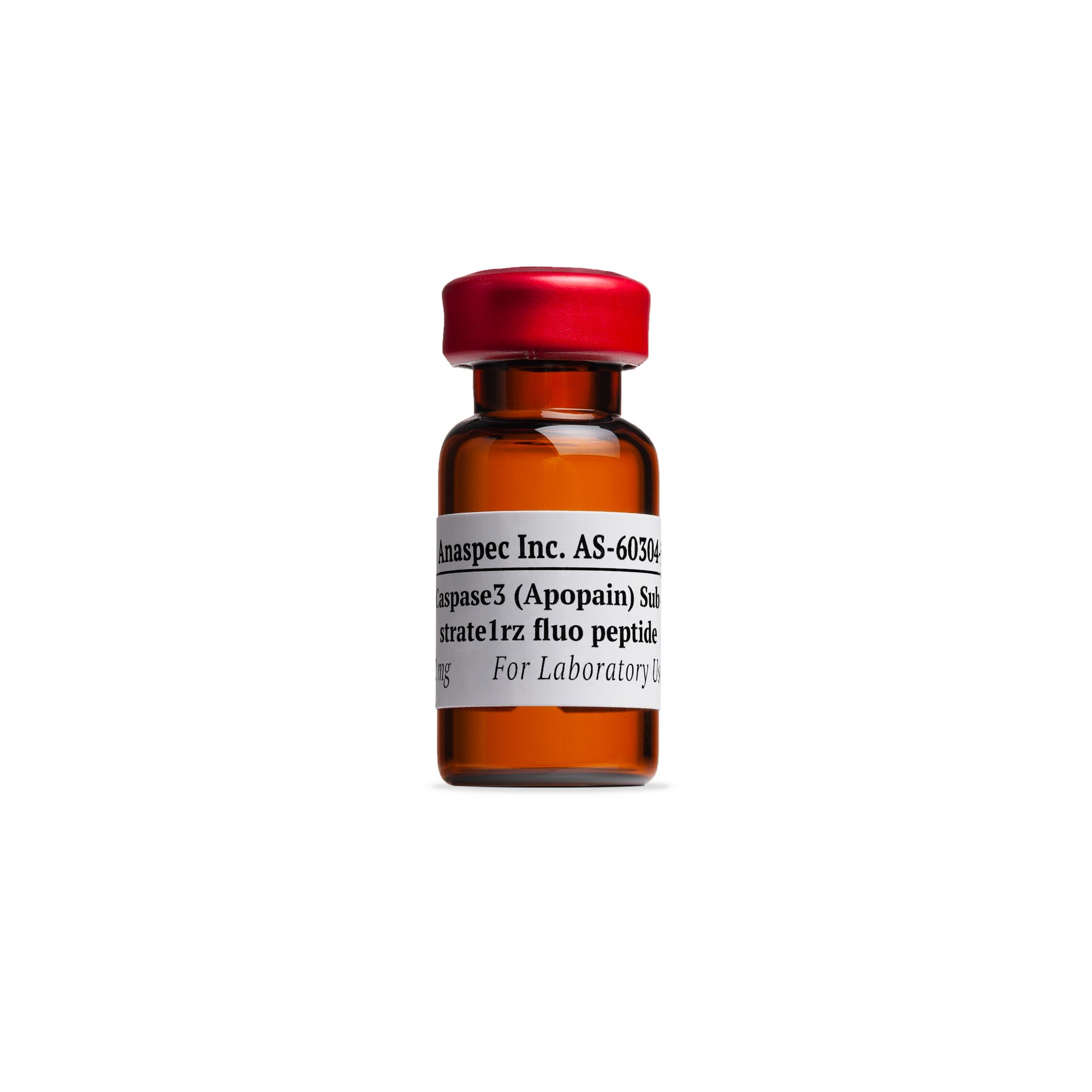
Caspase 3 (Apopain) Substrate 1r-z, fluorogenic – 5 mg
$475.00
Caspase 3 (Apopain) Substrate 1r-z, fluorogenic, Rh110 (rhodamine 110)-derived, the most sensitive indicator used for detection of caspase activities.
Overview
The Caspase 3 (Apopain) Substrate 1r-z is a fluorogenic substrate specifically designed for detecting caspase activity, a critical process in apoptosis. Rh110 (rhodamine 110)-derived, this substrate is notably sensitive and ideal for researchers looking to study the nuances of caspase functions in various biological processes.
Key Features
- Derived from Rh110 for high sensitivity in detecting caspase activity.
- Fluorimetric detection capabilities with output fluorescence monitored at 510-530 nm.
- Excitation wavelength of 488 nm, compatible with most fluorescence instruments.
- Supports the study of apoptotic pathways, providing insights into cellular processes.
- 5 mg quantity, suitable for various experimental needs and applications.
Specifications
| Product Name | Caspase 3 (Apopain) Substrate 1r-z |
| Category | Peptides |
| Quantity | 5 mg |
| Fluorescent Marker | Rh110 |
| Detection Wavelength | 510-530 nm |
| Excitation Wavelength | 488 nm |
FAQ
How does the Caspase 3 substrate work?
This substrate is cleaved by active caspases, resulting in a fluorescent product that can be measured. The increase in fluorescence correlates with caspase activity, making it a reliable indicator for your experiments.
Can I use this substrate for caspase 7 detection?
Yes, this substrate can also be used for detecting caspase 7 activity, as it shares similar characteristics with caspase 3 in terms of substrate specificity.
What instruments are compatible with this substrate?
The Caspase 3 substrate can be used with any fluorescence instrument that has an excitation light source at 488 nm and measurement capabilities at 510-530 nm. This makes it highly versatile for various laboratory settings.
Explore our extensive range of peptides and discover other related products like the PKG substrate and Autocamtide-2 for your research needs. When it comes to studying apoptosis, don’t miss out on the most sensitive tools available.
Related Products
Be the first to review “Caspase 3 (Apopain) Substrate 1r-z, fluorogenic – 5 mg”
Related products
Peptides
Peptides
Reviews
There are no reviews yet.