
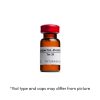
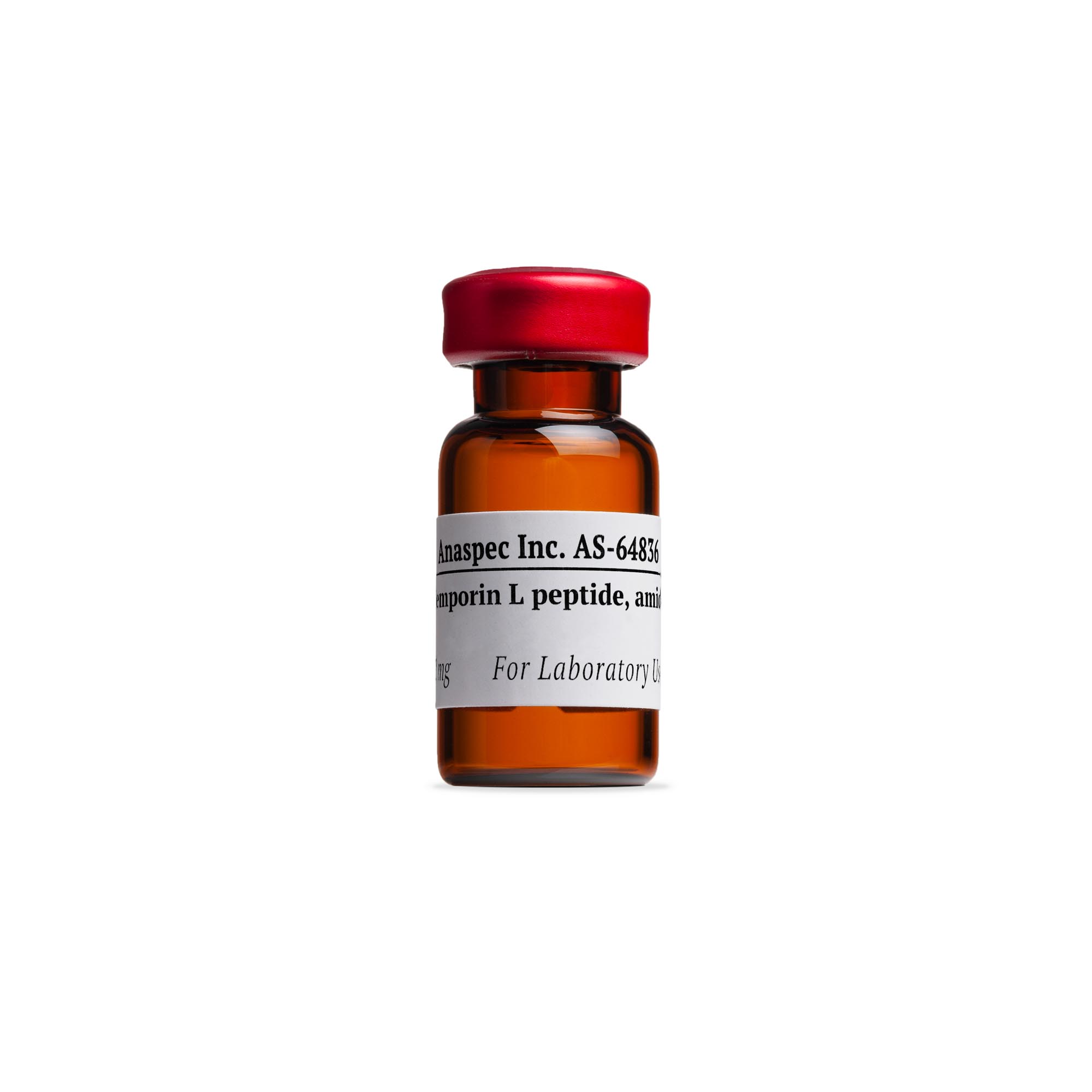
Temporin L, amide – 1 mg
$122.00
Temporin L, amide hydrophobic peptide, penetrates the hydrophobic core of the cell membrane to penetrate and disrupt the lipid bilayer.
Overview
Temporin L, amide is a unique hydrophobic peptide derived from the common frog, Rana temporaria. This potent peptide penetrates the hydrophobic core of cell membranes, allowing it to disrupt lipid bilayers effectively. Its mechanism enhances the activity of similar peptides, Temporin A and Temporin B, by preventing their oligomerization with Lipopolysaccharide (LPS). By bypassing LPS, Temporin L enables these peptides to access the cytoplasmic membrane, making it a valuable tool in antimicrobial research.
Key Features
- Effective against Gram-positive and Gram-negative bacteria
- Helps enhance peptide activity by interfering with LPS interactions
- Derived from the natural peptide source of Rana temporaria
- Available in a convenient 1 mg package
- Ideal for research in microbiology and cell biology
Specifications
| Product Name | Temporin L, amide |
|---|---|
| Source | Rana temporaria |
| Form | Lipid-interacting peptide |
| Concentration | 1 mg |
FAQ
What types of bacteria is Temporin L effective against?
This peptide shows activity against both Gram-positive and Gram-negative bacteria, including species such as B. megaterium and E. coli.
How does Temporin L enhance the activity of other temporins?
Temporin L prevents the oligomerization of Temporin A and Temporin B with LPS, allowing these peptides to effectively penetrate the cytoplasmic membrane.
How can I use Temporin L in my research?
Researchers can utilize Temporin L in various applications, including antimicrobial studies and cell membrane interaction experiments. You may also explore our full range of peptides for additional research needs.
Explore the benefits of Temporin L, amide and discover how this versatile peptide can enhance your research. Purchase now to take advantage of our high-quality assay kits and reliable reagents.
Related Products
Be the first to review “Temporin L, amide – 1 mg”
Related products
Peptides
Peptides
Peptides
Reviews
There are no reviews yet.