
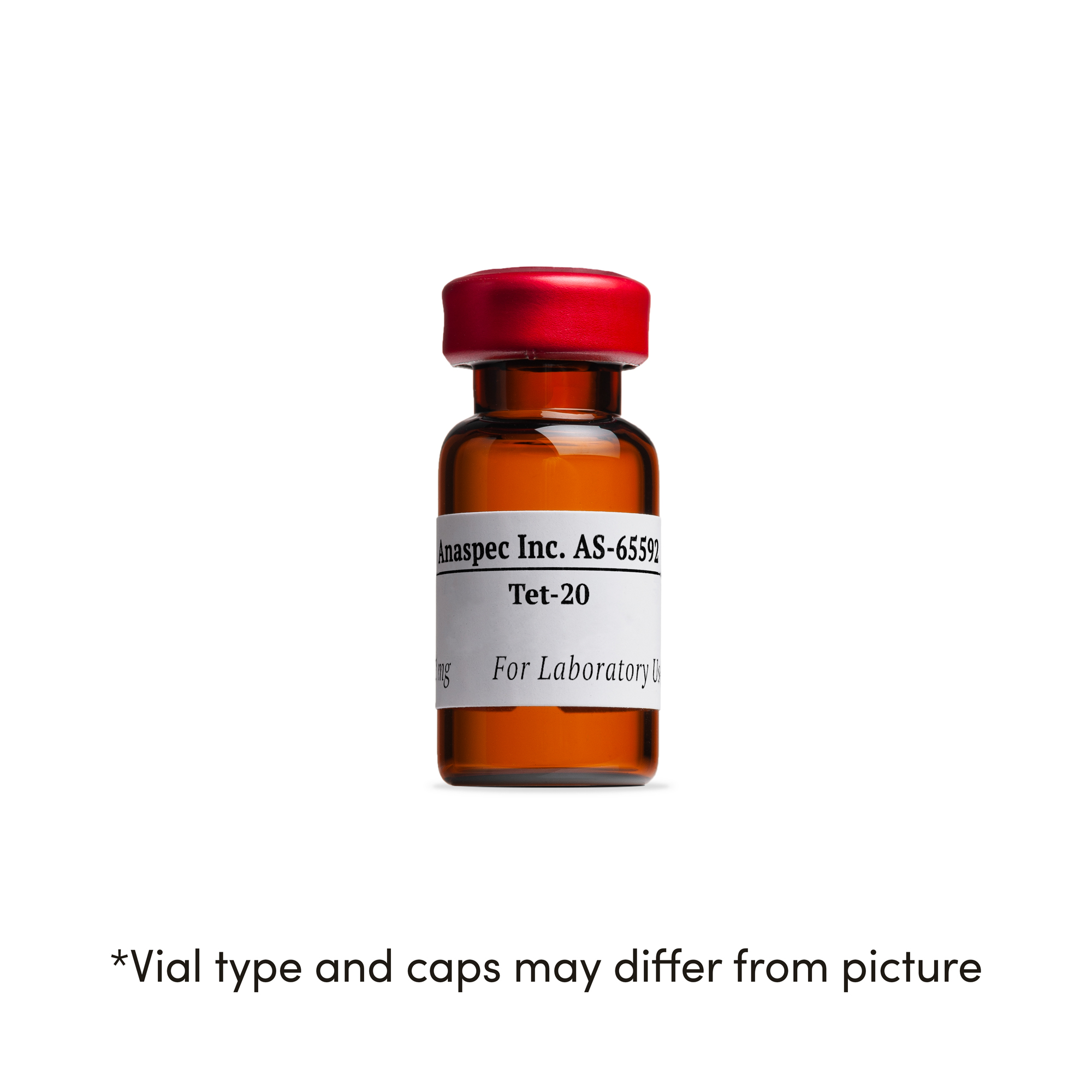
Tet-20
$155.00
Tet-20 is a synthetic cathelicidin-derived peptide. It was tested as infection-resistant coating for medical devices.
Overview
Tet-20 is a synthetic peptide derived from cathelicidin, a well-known antimicrobial protein. This innovative peptide has been rigorously tested for its effectiveness as an infection-resistant coating for medical devices. When Tet-20 is tethered to an implant surface, it exhibits a notable ability to combat microbial growth, both in vivo and in vitro. Its broad-spectrum antimicrobial activities make it a promising alternative in healthcare applications where preventing infection is critical.
Key Features
- Derived from natural cathelicidin, ensuring biological relevance
- Demonstrates robust antimicrobial properties against a variety of pathogens
- Prevents biofilm formation, a key contributor to device-related infections
- Non-toxic to eukaryotic cells, making it safe for medical applications
- Ideal for coating medical devices, implants, and other surfaces
Specifications
| Product Name | Tet-20 |
| Category | Peptides |
| Source | Synthetic Cathelicidin |
| Usage | Infection-resistant coating |
| Price | Contact for pricing |
FAQ
What applications can Tet-20 be used for?
Tet-20 is primarily designed for use as an infection-resistant coating on medical devices, implants, and other surfaces that require antimicrobial protection.
Is Tet-20 safe for use in humans?
Yes, Tet-20 is non-toxic to eukaryotic cells, making it suitable for various medical applications, including those involving human contact.
How does Tet-20 compare to other antimicrobial peptides?
Tet-20 offers broad-spectrum antimicrobial activity and has been specifically tested to inhibit biofilm formation, a common challenge in medical settings, setting it apart from many other peptides.
If you’re looking for a reliable solution to improve the safety of your medical devices, consider integrating Tet-20 into your product design. For additional options, explore our range of other peptides, including Autocamtide-2 and CREBtide for enhanced performance.
Related Products
Browse more in Peptides.
Be the first to review “Tet-20”
Related products
Peptides
Reviews
There are no reviews yet.