
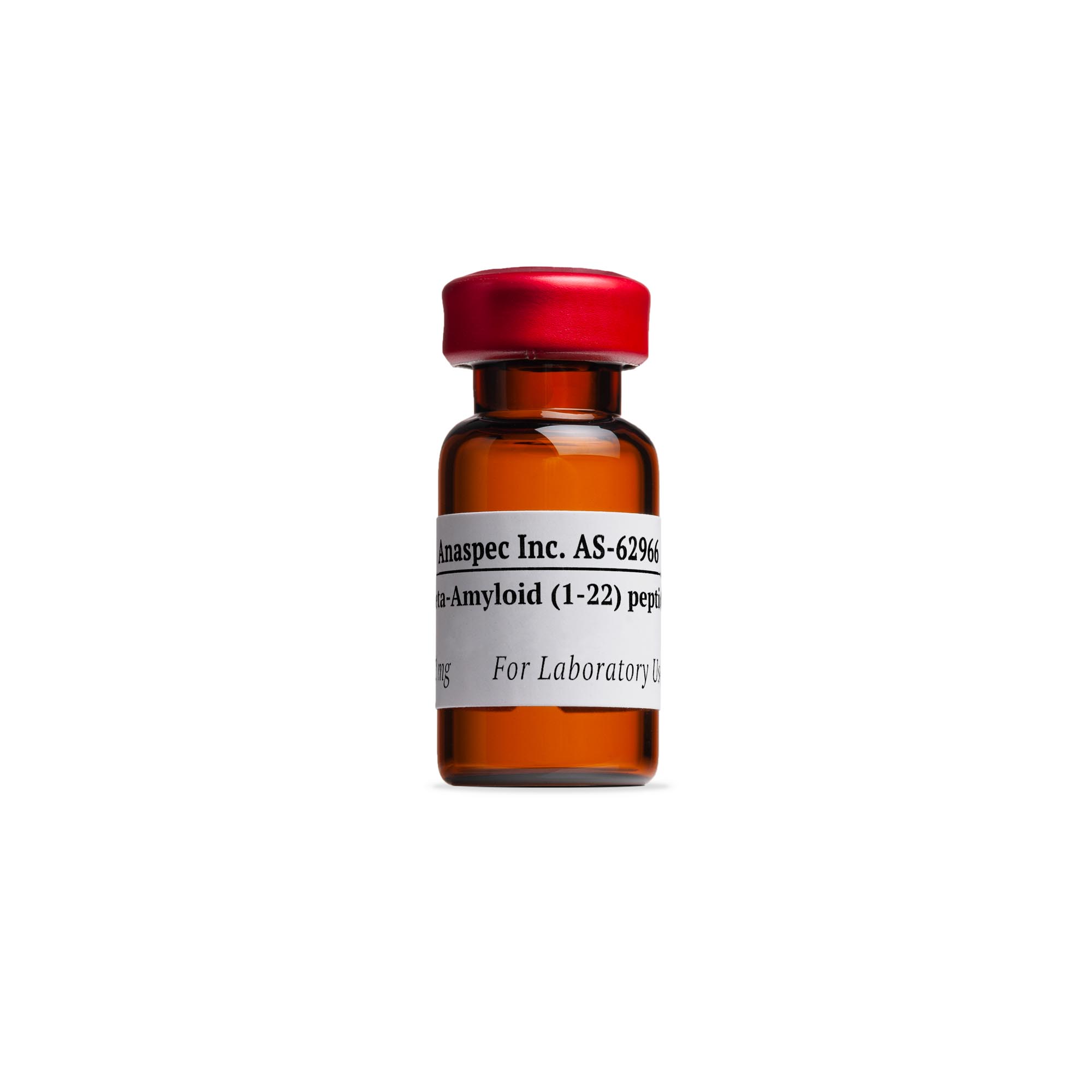
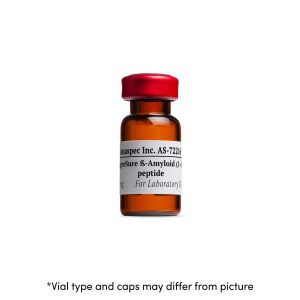
Beta-Amyloid (1-22) – 1 mg
$244.00
Beta-Amyloid (1-22)
Overview
The Beta-Amyloid (1-22) peptide is a crucial fragment of the beta-amyloid protein, specifically comprising amino acids 1 to 22. This peptide plays a significant role in Alzheimer’s disease research, making it an essential component for assays and studies focusing on neurological and physiological indicators. With a molecular weight of approximately 2,560 Da, it is designed for ease of use in various applications, including the development of detection methodologies and understanding its pathological implications.
Key Features
- High purity Beta-Amyloid (1-22) for reliable results
- Essential for Alzheimer’s research and studies
- Produced under strict quality controls
- Comes in a convenient 1 mg size for multiple experimental runs
- Ideal for use in various labeling and detection assays
Specifications
| Category | Peptides |
|---|---|
| Size | 1 mg |
| Molecular Weight | 2560 Da |
FAQ
What is the primary use of Beta-Amyloid (1-22)?
This peptide is primarily used in research to investigate the mechanisms of Alzheimer’s disease, as well as for developing assay kits for detecting amyloid-beta aggregates.
How should I store the Beta-Amyloid (1-22) peptide?
For optimal stability, store the peptide at -20°C and avoid repeated freeze-thaw cycles. Ensure it’s in a dry and dark environment to maintain its integrity.
Can I use this peptide for labeling applications?
Yes, Beta-Amyloid (1-22) is suitable for various labeling and detection applications. You might consider pairing it with our selection of fluorescent labeling dyes for enhanced visibility in experiments.
When you choose Beta-Amyloid (1-22), you invest in quality and reliability for your research. Explore more about our peptide options, including other peptides like Autocamtide-2 and see how our products can enhance your studies in neurobiology. Don’t miss out on the chance to boost your research capabilities with our high-quality assays and detection solutions.
Related Products
Browse more in Peptides.
Be the first to review “Beta-Amyloid (1-22) – 1 mg”
Related products
Peptides
Peptides
Reviews
There are no reviews yet.