
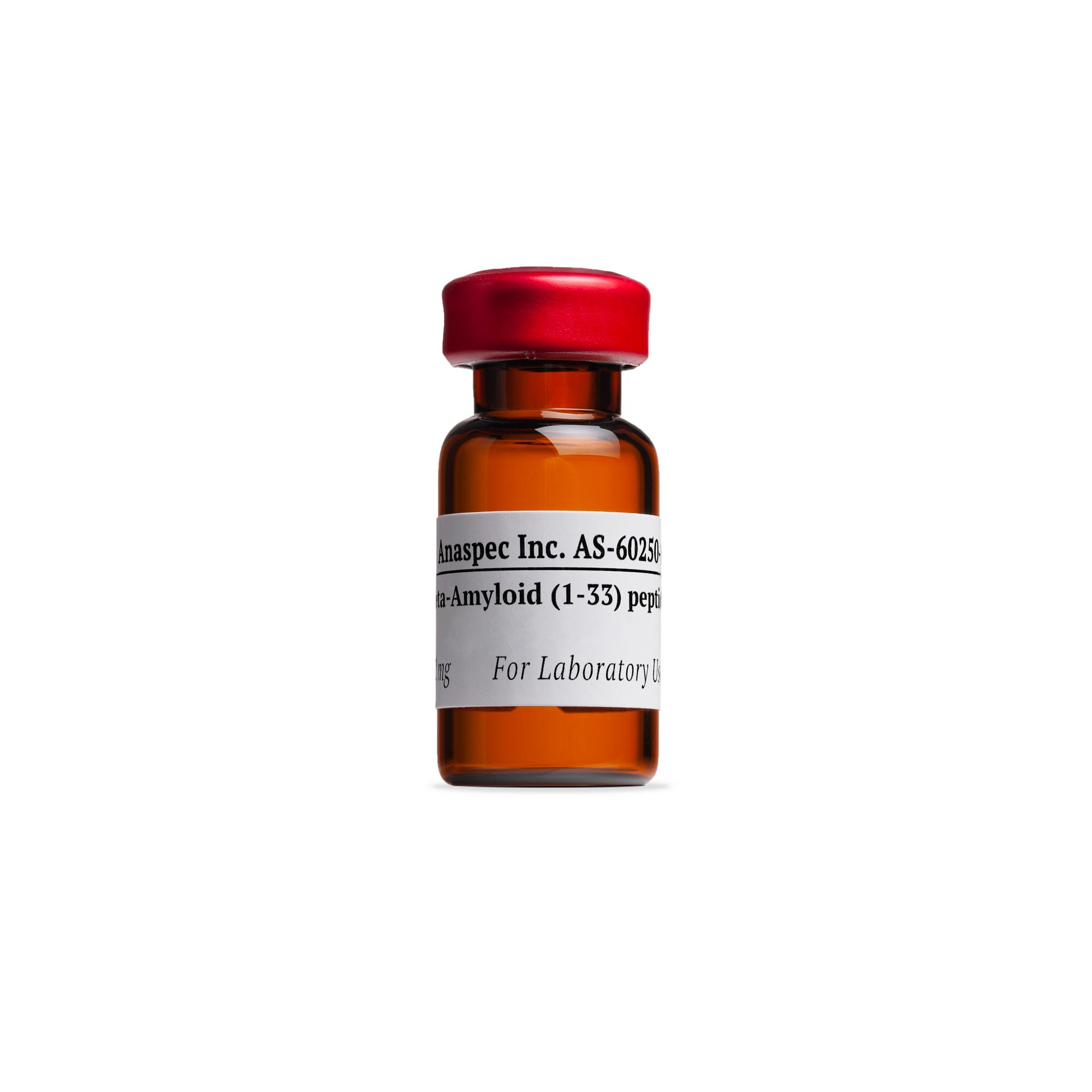
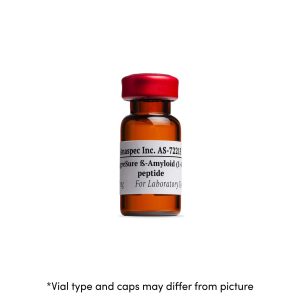
Beta-Amyloid (1-33) – 1 mg
$552.00
Beta-Amyloid (1-33). Metalloendopeptidase cleaves the Gly33-Leu34 bond of Alzheimer Aß (1-40) peptide producing soluble 1-33 and 34-40 fragments.
Overview
Beta-Amyloid (1-33) is a crucial peptide derivative used extensively in Alzheimer’s research. This purified form of the peptide is produced by a metalloendopeptidase that cleaves the Gly33-Leu34 bond of the Alzheimer Aß (1-40) peptide, resulting in soluble fragments: 1-33 and 34-40. Notably, these fragments are generated without inducing any neurotoxic effects, making them ideal for your experimental needs.
Key Features
- Purified form of Beta-Amyloid (1-33)
- Produced via selective cleavage of Aß (1-40) peptide
- Soluble fragments 1-33 and 34-40
- No neurotoxic effects observed
- Ideal for Alzheimer’s disease studies
Specifications
| Product Name | Beta-Amyloid (1-33) |
| Size | 1 mg |
FAQ
What is the application of Beta-Amyloid (1-33)?
This peptide is primarily used in research related to Alzheimer’s disease, allowing scientists to study the effects and characteristics of amyloid peptides.
How is Beta-Amyloid (1-33) produced?
It is created by cleaving the Alzheimer Aß (1-40) peptide using a purified metalloendopeptidase, allowing for safe and effective research applications.
Are there any neurotoxic effects associated with Beta-Amyloid (1-33)?
No, this peptide is produced to ensure that it does not have neurotoxic effects, making it a safer option for your studies compared to other forms of amyloid peptides.
Invest in your Alzheimer’s research today with Beta-Amyloid (1-33). Discover the benefits of using this specialized peptide to enhance the accuracy and reliability of your studies. You can find more related products in our Peptides section. Don’t miss out on other useful substrates like PKG Substrate or the specific Autocamtide-2. Order now to elevate your research!
Related Products
Be the first to review “Beta-Amyloid (1-33) – 1 mg”
Related products
Peptides
Peptides
Reviews
There are no reviews yet.